India textile and apparel sector to add 14 million jobs by 2030: Report
Synopsis
India's textile and apparel sector — already the country's second-largest employer with 46 million workers — needs 14 million more skilled hands by 2030 to capitalise on a market projected to hit $130–150 billion. With the India-UK FTA opening new export doors and AI upskilling flagged as non-negotiable, the sector's growth story hinges entirely on whether India can close a widening skills gap in time.
Key Takeaways
India's textile and apparel sector needs 14 million additional skilled workers over the next decade, per industry estimates released on 23 July .
The sector currently employs nearly 46 million people ; employment is projected to reach 60 million by 2030 .
India's apparel market is projected to touch $130–150 billion by 2030 , growing at a CAGR of 10–12 per cent .
The India-UK Free Trade Agreement was cited as a key milestone opening fresh export opportunities for Indian manufacturers.
The AMHSSC Skill Gap Study will guide alignment of training programmes with evolving industry requirements, including AI and emerging technologies .
India's textile and apparel industry will need 14 million additional skilled workers over the next decade to fully capitalise on expanding domestic and global opportunities, according to a report citing industry estimates released on Thursday, 23 July. The findings were presented at a workshop organised by the Apparel, Made-Ups & Home Furnishing Sector Skill Council (AMHSSC) in New Delhi, bringing together exporters, manufacturers, training partners, and policymakers.
Current Employment and Growth Projections
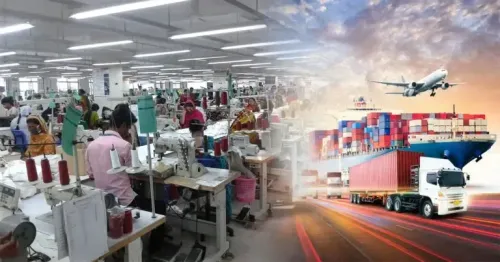
The sector currently employs nearly 46 million people, making it the second-largest employer in India after agriculture, according to industry leaders at the event. Government and industry projections estimate that total employment in the sector could rise to approximately 60 million by 2030.
India's apparel market is projected to reach $130–150 billion by 2030, growing at a compound annual growth rate (CAGR) of 10–12 per cent. The report attributes this surge to consumers increasingly seeking differentiated products across multiple occasions, with greater emphasis on fashion trends and value.
What Government and Industry Leaders Said
Manisha Sensarma, Senior Economic Advisor at the Ministry of Skill Development and Entrepreneurship, stressed the need for stronger public-private partnerships to build a globally competitive workforce. 'Industry must play a central role in identifying skill requirements, developing curriculum, establishing Centres of Excellence, upgrading ITIs through the PM SETU initiative, and shaping a flexible skilling ecosystem that responds to changing market demands,' she said. Sensarma also underlined that continuous upskilling in AI and emerging technologies will be essential to enhance productivity and competitiveness.
Premal Udani, Chairman of AMHSSC, noted that new Free Trade Agreements (FTAs) are creating fresh export opportunities, driving up demand for skilled workers. 'Our industry consultations and Skill Gap Study will help align skilling efforts with industry needs, ensuring a steady pipeline of productive and job-ready talent,' Udani said.
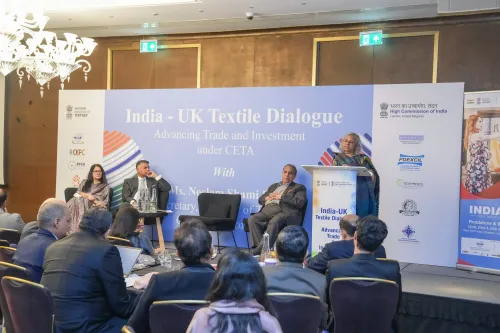
Ashish Srivastava, CEO of AMHSSC, highlighted the India-UK Free Trade Agreement as a significant milestone for the sector, opening new export avenues and strengthening the global competitiveness of Indian manufacturers.
The Skills Gap Challenge
The workshop underscored a structural challenge: while the sector is on a strong growth trajectory, the pipeline of trained, industry-ready workers has not kept pace. Participants deliberated on aligning skilling programmes with the rapidly evolving demands of India's textile and apparel ecosystem.
This comes amid broader national efforts to position India as a global manufacturing hub, with the textile sector seen as a key pillar given its labour-intensive nature and export potential. Notably, India's apparel exports have faced competitive pressure from Bangladesh and Vietnam in recent years, making workforce quality a strategic differentiator.
What Happens Next
The AMHSSC's Skill Gap Study is expected to serve as a blueprint for aligning training programmes with emerging industry requirements. Policymakers indicated that the PM SETU initiative will be central to upgrading Industrial Training Institutes (ITIs) to meet sector-specific needs. The coming months are likely to see intensified coordination between government ministries and industry bodies to build the talent pipeline required to hit the 60-million employment target by 2030.
Point of View
Partly because skilling infrastructure has lagged investment. The real stress test here is not the market projection — a $130-billion apparel market by 2030 is plausible — but whether the PM SETU and AMHSSC frameworks can actually produce industry-ready workers at scale, not just enrolled trainees. India's competitiveness against Bangladesh and Vietnam is ultimately a workforce-quality contest, and no FTA advantage survives a skills deficit. The mention of AI upskilling is welcome, but without specifics on curriculum and delivery, it risks being aspirational window dressing.
NationPress
22 Oct 2026
Frequently Asked Questions
How many jobs will India's textile and apparel sector create by 2030?
Industry projections estimate that employment in India's textile and apparel sector will rise from nearly 46 million currently to around 60 million by 2030, requiring 14 million additional skilled workers over the next decade.
What is the AMHSSC and what role does it play in textile skilling?
The Apparel, Made-Ups & Home Furnishing Sector Skill Council (AMHSSC) is the nodal body for skill development in India's apparel and textile sector. It is conducting a Skill Gap Study to align training programmes with evolving industry needs and ensure a pipeline of job-ready talent.
How will the India-UK Free Trade Agreement impact the textile sector?
According to AMHSSC CEO Ashish Srivastava, the India-UK Free Trade Agreement is a significant milestone that opens new export opportunities for Indian textile and apparel manufacturers and enhances their global competitiveness.
What is the projected size of India's apparel market by 2030?
India's apparel market is projected to reach $130–150 billion by 2030, growing at a compound annual growth rate of 10–12 per cent, driven by consumer demand for differentiated products and fashion-forward value offerings.
What skilling initiatives are being prioritised for the textile workforce?
Key initiatives include upgrading Industrial Training Institutes through the PM SETU programme, establishing Centres of Excellence, and integrating AI and emerging technologies into curricula — all aimed at producing a globally competitive, industry-ready workforce.