Is the Outlook for India's Apparel Sector Now 'Stable' After the US Trade Agreement?
Synopsis
The Indian apparel sector has received a positive outlook shift to 'Stable' after a significant reduction in US tariffs on Indian goods. This change is expected to boost export revenues and improve competitiveness in labor-intensive sectors, despite some short-term challenges.
Key Takeaways
Outlook Improved: Indian apparel sector upgraded to 'Stable'.
Tariff Reduction: US tariffs decreased from 25% to 18%.
Revenue Growth: Expected rebound of 8–11% in FY27.
Margin Compression: Operating profit margins expected to drop to 7.7% in FY26.
Future Prospects: Trade agreements may enhance manufacturing growth.
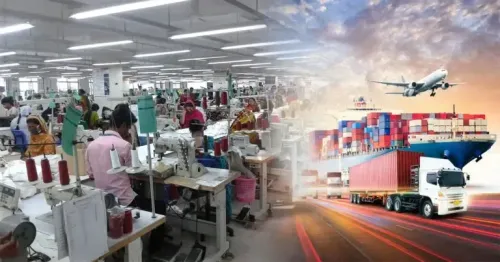
Mumbai, Feb 11 (NationPress) The Indian apparel export sector has seen its outlook shifted to 'Stable' from 'Negative' following the US's reduction of reciprocal tariffs on Indian products from 25 per cent to 18 per cent, according to a report released on Wednesday.
The report by the ratings agency ICRA has positively adjusted its forecast for the apparel sector, predicting an 8–11 per cent rebound in apparel export revenues in FY27, despite an estimated 3–5 per cent decline in shipments for FY26.
This growth in revenue is attributed to recent trade negotiations between India and the US aimed at alleviating specific pressures within the sector. The operating profit margins are expected to shrink to approximately 7.7 per cent in FY26 before recovering to around 9.5 per cent in FY27, the agency noted.
India’s apparel exports reached $16 billion in FY25, with the US representing nearly a third of these shipments.
“The significant rise in US tariffs last year has caused considerable hardship for export-centric companies in various sectors, including textiles, cut and polished diamonds, as well as leather and leather products,” stated Jitin Makkar, Senior Vice President and Group Head of Corporate Ratings at ICRA Limited.
Apparel exporters experienced a margin contraction of almost 200 basis points over recent quarters, as they were forced to offer discounts to maintain volume in the US market, he added.
Looking ahead, the report indicates that the reduction in US tariffs, the expected India-EU free trade agreement, and additional bilateral agreements should facilitate a steady enhancement in India’s manufacturing export growth in the medium term.
The tariff reductions provide a relatively smooth transition for Indian exporters amid fluctuating global trade conditions.
As a result of this change, labor-intensive export sectors—including textiles, cut and polished diamonds, seafood, and footwear—are likely to experience improved competitiveness in landed costs.
While the US tariff reductions provide significant short-term relief to exporters, ICRA anticipates that geographical diversification will become a crucial strategy for risk mitigation among Indian businesses in the longer term.
aar/na
Point of View
I believe this report marks a crucial turning point for India's apparel sector, highlighting the importance of trade relations in shaping economic resilience. While the immediate outlook is encouraging, it is essential for businesses to strategize for long-term stability in a dynamic global market.
NationPress
19 Sept 2026
Frequently Asked Questions
What has changed in the US tariffs on Indian apparel?
The US has reduced reciprocal tariffs on Indian goods from 25% to 18%, significantly improving the outlook for the Indian apparel sector.
What is the expected growth in apparel export revenues?
Apparel export revenues are projected to rebound by 8–11% in FY27, despite a forecasted decline in FY26.
Who is affected by the US tariff changes?
Export-oriented companies in textiles, cut and polished diamonds, and leather products have been notably impacted by US tariff adjustments.
What does the future hold for India's manufacturing exports?
The reduction in US tariffs, along with anticipated trade agreements, is expected to support gradual growth in India's manufacturing exports.
How have margins for apparel exporters been affected?
Margins for apparel exporters have contracted by nearly 200 basis points as they offered discounts to maintain market share.