Dwayne Johnson: Missing NFL was 'best thing that never happened' to me
Synopsis
Dwayne Johnson says being cut from the NFL was the best thing that never happened to him — a chip-on-the-shoulder origin story that fuelled his WWE breakthrough and eventual Hollywood dominance. His candid Instagram video is a rare, unfiltered look at the poverty and rejection that shaped one of the world's most successful entertainers.
Key Takeaways
Dwayne Johnson posted a candid Instagram video saying he has 'zero regrets' about never reaching the NFL .
He described himself as 'number 54' on a 53-man roster — good, but not good enough, and without excuses.
Rival player Warren Sapp 's emergence at college level was cited as a direct factor in Johnson losing his spot.
Johnson credited his WWE success at age 27–28 with finally allowing him to buy his parents and himself their first homes.
He contrasted his college football era with today's NIL deals , saying athletes then simply had to 'hustle' with no financial support.
His Instagram caption framed the lesson broadly: 'Scar tissue and calluses are life's blessings.'
Hollywood star Dwayne Johnson, also known as The Rock, has revealed he carries 'zero regrets' about never making it to the National Football League (NFL), calling the unfulfilled dream 'the best thing that never happened' for him. The actor shared his candid reflection in a video posted to Instagram, recounting how the setback forged the hunger and work ethic that would define his rise to global stardom.
The Dream That Slipped Away
Johnson described how reaching the NFL had represented far more than athletic ambition — it was his family's ticket out of poverty. 'Making it to the NFL meant I was going to make money, meant that we weren't going to live in trailer parks or apartments anymore, meant that I was going to buy my parents their first home,' he said. When that door closed, so did those immediate hopes.
He attributed part of his not making the cut to the emergence of a rival talent. 'A guy named Warren Sapp came in and just blew the world away with his playing, and that meant moving me to the bench,' Johnson said, adding with characteristic humour: 'Hack and gash. That's an inside joke. He'll get it.' Johnson acknowledged the outcome without bitterness: 'I didn't make it because that just was not in my cards.'
How WWE Gave Him What Football Couldn't
The dreams Johnson had for his family ultimately came true — just on a different timeline. 'It happened much later down the road when I turned 27, 28, when I made it in the WWE,' he recalled. 'I was able to buy my parents their first home they ever lived in, buy my first home I ever lived in, buy my first car.' The delay, he suggested, only deepened his appreciation for what he eventually built.
Notably, Johnson framed the NFL rejection not as a loss but as an origin story. 'When I didn't make it to the NFL, it put a chip on my shoulder,' he said — one he described as a 'lifelong guardian angel' that never left him. The NFL's 53-man roster had no room for him, and he acknowledged straightforwardly: 'I was good, but just not good enough.'
The Work Ethic He Still Carries
Johnson also reflected on the financial realities of college-era football, contrasting them with today's NIL (Name, Image, and Likeness) deals that allow student-athletes to earn millions. 'Back then, there was no NIL. There was just, oh, you're broke. And that was the deal we had,' he said. He described himself as an advocate for financial ambition, adding: 'I want everybody to make as much money as they can at whatever it is you do. Just treat people right. Keep your word, work your ass off, take care of your family, pay your bills.'
Johnson's Message on Failure and Resilience
In the caption accompanying the video, Johnson expanded his thoughts into a broader philosophy on failure. 'Dreams ain't just for dreamers, but they also don't always work out. And so much is truly out of our control,' he wrote. 'But what will always be in our control, is how we respond when life kicks you in the teeth. Wipe your blood away, move on, and keep putting in the work with your two hands. Scar tissue and calluses are life's blessings.'
The post drew wide engagement, with fans responding to Johnson's characteristically unfiltered candour. For one of Hollywood's highest-paid stars, the message was clear: the road not taken was the one that mattered most.
Point of View
But it also carries genuine emotional texture that most celebrity social media does not. The specific detail — Warren Sapp's emergence, the 53-man roster, buying his parents' first home at 28 — gives the story credibility beyond motivational-poster platitudes. What mainstream coverage may underplay is the class dimension: this is fundamentally a story about poverty, not sport, and the NFL was simply the most visible exit ramp Johnson could not take. That framing makes the resilience narrative considerably more resonant than a standard 'failure is feedback' post.
NationPress
5 Nov 2026
Frequently Asked Questions
Why did Dwayne Johnson not make it to the NFL?
Dwayne Johnson says he did not make the NFL because, by his own admission, he was 'good, but just not good enough' — describing himself as 'number 54' on a 53-man roster. He also cited the emergence of defensive tackle Warren Sapp, whose outstanding play pushed Johnson to the bench during their college years.
What did Dwayne Johnson say about missing the NFL?
Johnson said he has 'zero regrets' and called missing the NFL 'the best thing that never happened' for him. He said the rejection placed a permanent chip on his shoulder and created a hunger and work ethic that shaped his entire career in the WWE and Hollywood.
When did Dwayne Johnson achieve the financial goals he had set for the NFL?
Johnson said those goals materialised when he was around 27 or 28 years old, after he made it in the WWE. It was at that point that he was able to buy his parents their first home, his own first home, and his first car.
What did Dwayne Johnson say about NIL deals and college football finances?
Johnson said that during his college football years there were no NIL (Name, Image, and Likeness) deals, meaning student-athletes received no financial compensation. He contrasted this with today's environment where athletes earn millions, while noting he fully supports modern athletes maximising their earnings.
Where did Dwayne Johnson share these reflections?
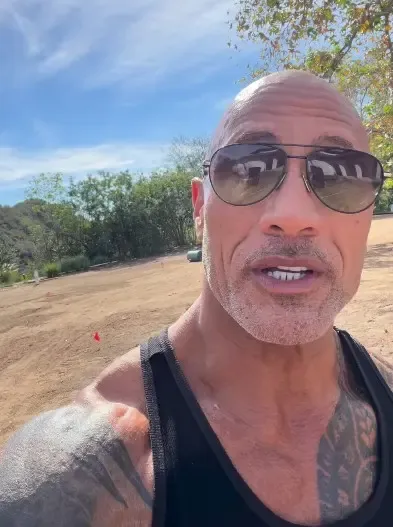
Johnson shared the reflections in a video posted to his Instagram account, responding to a fan question in the comments about whether he missed football and had any regrets about not reaching the NFL.