TMC Accuses BJP's Agnimitra Paul of Staging Own Convoy Attack in Bengal
Synopsis
Trinamool Congress has accused BJP MLA Agnimitra Paul of staging her own convoy attack during West Bengal's Phase 1 polling — a dramatic counter-narrative that flips the script on BJP's electoral violence allegations and deepens the state's toxic political standoff ahead of remaining polling phases.
Key Takeaways
Trinamool Congress has accused BJP MLA Agnimitra Paul of staging her own convoy attack during West Bengal Phase 1 polling on April 24, 2025 .
TMC leader Sohrab Ali named Asgar Ali as a key conspirator, who is currently in West Bengal Police custody.
Agnimitra Paul had claimed TMC workers pelted stones at her convoy near Rahmat Nagar High School in Asansol , breaking the car's rear glass.
Paul alleged a similar stone-pelting attack on her convoy occurred during the 2022 West Bengal by-election , suggesting a pattern of TMC violence.
Paul also alleged that TMC brought in people from other states ahead of the 2025 West Bengal elections .
Despite a record voter turnout in Phase 1 , multiple incidents of electoral violence have raised concerns about law and order in the state.
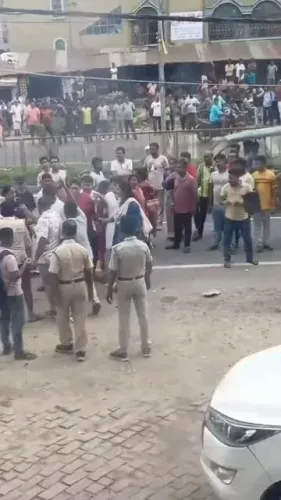
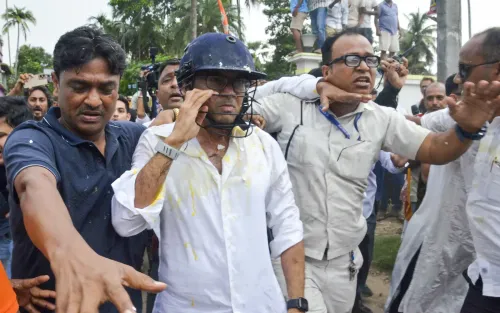
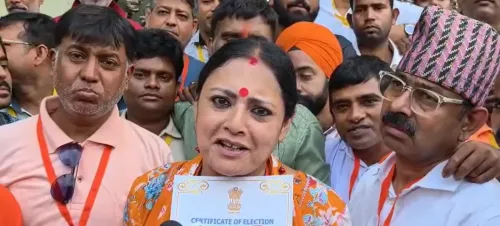
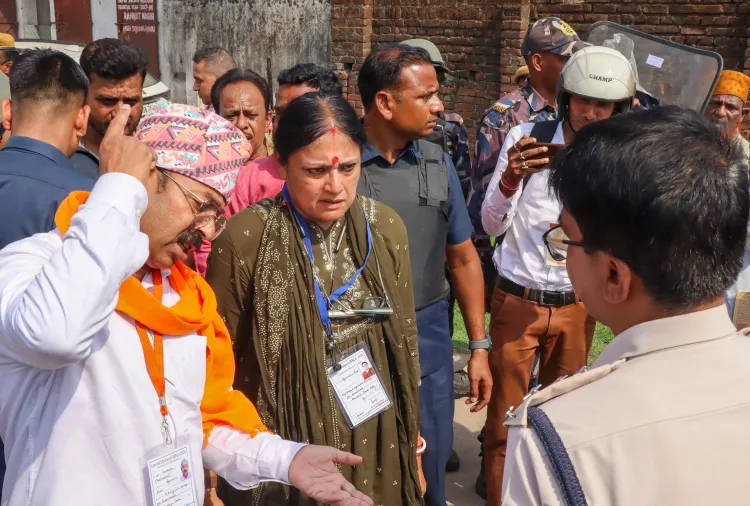
Kolkata, April 25: The Trinamool Congress (TMC) has levelled a explosive allegation against BJP MLA and Asansol (Dakshin) candidate Agnimitra Paul, claiming she masterminded a staged attack on her own convoy during the first phase of West Bengal Assembly elections on April 24. The charge directly counters Paul's earlier claim that TMC supporters had vandalized her vehicle in a minority-dominated area of Asansol. The accusation has sharpened political tensions in an already volatile electoral season in the state.
TMC's Core Allegation: A Conspiracy, Not an Attack
Trinamool Congress leader Sohrab Ali, speaking to news agency IANS, stated that one of the alleged key conspirators — identified as Asgar Ali — is already in police custody. He claimed the arrested individual would reveal the full details of the alleged plot, including who planned it and how it was executed.
"I acknowledge that the convoy was damaged. I also accept that stones were indeed hurled at it. However, how and why did this happen? I am levelling a specific allegation against Agnimitra Paul — that this entire episode is a conspiracy hatched by her," Sohrab Ali said.
He further questioned why similar incidents had not been reported for other candidates — from the BJP, CPI-M, or any other party — despite widespread reports of sporadic violence across West Bengal on polling day. "No other candidate moves around with such excessive pomp and security paraphernalia," he added, calling the event a "drama orchestrated by the BJP MLA."
What BJP's Agnimitra Paul Claimed
Agnimitra Paul had alleged that her convoy was targeted when she visited Rahmat Nagar High School in Rahmat Nagar, a minority-dominated locality, for election supervision. She claimed that as her team exited the school and entered their vehicles, Trinamool Congress workers hurled stones, shattering the rear glass of her car.
Paul drew parallels with a similar alleged incident during the 2022 by-election, claiming, "In every election, Trinamool does this. In the 2022 bye-election, they also pelted stones and broke the car." She also alleged that TMC had mobilized people from outside West Bengal ahead of the polls and described the party as "full of criminals and goons."
Paul also made a pointed communal appeal, saying, "Trinamool thinks that Muslims are their property. BJP has also spoken out for the Muslims, as they are my brothers. Such things won't work — I am going there again."
Pattern of Electoral Violence in West Bengal: A Recurring Crisis
The incident fits into a well-documented pattern of electoral violence in West Bengal, which has drawn repeated scrutiny from the Election Commission of India, the Supreme Court, and opposition parties over successive election cycles. The state recorded significant violence during the 2021 Assembly elections, prompting the EC to extend polling across eight phases.
Critics argue that both the BJP and TMC have used allegations of electoral violence as political tools — to generate sympathy, energize their voter bases, and shift media narratives. The current controversy follows this familiar template, with each side accusing the other of orchestrating incidents for political mileage.
Notably, the first phase of the 2025 West Bengal elections recorded a high voter turnout, which observers see as a positive democratic signal. However, the multiple reported incidents of stone-pelting, booth-capturing allegations, and convoy attacks have overshadowed that milestone and raised fresh questions about the state's law enforcement apparatus.
Police Investigation and What Happens Next
The West Bengal Police is currently investigating the convoy attack incident. The arrest of Asgar Ali, identified by TMC as a key conspirator, is expected to be a turning point in establishing the sequence of events. Sohrab Ali demanded a "thorough and rigorous investigation" to identify all individuals involved.
The BJP, meanwhile, is likely to escalate the matter to the Election Commission and potentially seek central intervention, a strategy the party has deployed in previous Bengal election cycles. The outcome of the police probe could either validate TMC's conspiracy claim or reinforce BJP's narrative of ruling-party intimidation.
With subsequent phases of polling still ahead, the political and law-and-order fallout from this incident will be closely watched. The credibility of both parties — and of the state's electoral machinery — hangs in the balance as West Bengal navigates one of its most contentious election seasons in recent memory.
Point of View
A shield, and a campaign prop. What's striking is not just the allegation, but the speed and precision with which both sides deployed their counter-narratives, suggesting this is a well-rehearsed political playbook. The arrest of an alleged conspirator before TMC even made its public statement raises questions about whether the police investigation is genuinely independent or politically directed. At a national level, this episode underscores why West Bengal consistently demands more EC oversight than any other state — and why that demand is routinely met with resistance from whichever party holds power.
NationPress
28 Sept 2026
Frequently Asked Questions
What is the TMC allegation against Agnimitra Paul regarding the convoy attack?
Trinamool Congress alleges that BJP MLA Agnimitra Paul orchestrated a staged attack on her own convoy during West Bengal's first phase of polling on April 24, 2025. TMC leader Sohrab Ali claimed a key conspirator, Asgar Ali, is in police custody and will reveal the full details of the plot.
What did Agnimitra Paul say about the convoy attack in Asansol?
Agnimitra Paul claimed that TMC workers pelted stones at her convoy near Rahmat Nagar High School, shattering the rear glass of her vehicle. She alleged this is a pattern of Trinamool violence during elections, citing a similar incident during the 2022 by-election.
Who is Asgar Ali in the West Bengal convoy attack case?
Asgar Ali is identified by TMC as a key conspirator in the alleged plot to stage the attack on Agnimitra Paul's convoy. He is currently in West Bengal Police custody, and authorities are investigating his role in the incident.
Has West Bengal seen electoral violence before during elections?
Yes, West Bengal has a documented history of electoral violence, most notably during the 2021 Assembly elections, which were conducted across eight phases partly due to security concerns. Multiple parties have repeatedly raised law-and-order concerns with the Election Commission of India.
What is the current status of the Agnimitra Paul convoy attack investigation?
The West Bengal Police are actively investigating the convoy attack. At least one arrest has been made — Asgar Ali — who TMC claims will reveal the conspiracy behind the staged attack. The BJP is expected to escalate the matter to the Election Commission.