Tamil Nadu underwater survey reports on Korkai, Poompuhar due by February
Synopsis
Tamil Nadu is inching closer to a potential breakthrough in ancient maritime history. Sonar surveys at the Sangam-era port of Korkai — once a Pandya trading hub linked to Rome — and a third phase of dives at Poompuhar are set to be formally reported to the government by February 2027, with diving operations to follow if clearances are granted. What lies beneath could rewrite our understanding of India's oldest ocean trade networks.
Key Takeaways
Tamil Nadu's State Archaeology Department will submit underwater survey reports on Korkai and Poompuhar to the government by February 2027 .
The Korkai survey used multi-beam echo sounders , side-scan sonar , and sub-bottom profilers in partnership with the Indian Maritime University .
Diving operations at Korkai will commence only after report review and regulatory clearances are secured.
Poompuhar was prioritised due to stronger preliminary findings; earlier dives recovered ceramics and shipwrecks.
Approximately 10 per cent of the overall underwater exploration project has been completed.
Korkai was a major Sangam-era Pandya port with documented trade links to the Roman Empire ; land excavations date to 1968–69 .
Tamil Nadu's State Archaeology Department is preparing to submit reports on underwater surveys at the ancient sites of Korkai and Poompuhar to the state government by February 2027, in what could mark a significant step in uncovering the region's millennia-old maritime heritage. The submissions will include findings from a sonar survey off the Korkai-Azhagankulam coast and results from the ongoing third phase of underwater exploration at Poompuhar in Mayiladuthurai district.
What the Surveys Cover
The geographical identification survey at Korkai was carried out approximately two years ago in partnership with the Indian Maritime University. Investigators deployed advanced equipment — including multi-beam echo sounders, side-scan sonar systems, and sub-bottom profilers — to map possible archaeological features on the seabed. A side-scan sonar survey of the area has already been completed, and technical experts are now collating and interpreting the reconnaissance data.
Officials cautioned, however, that sonar images alone are insufficient to confirm whether detected anomalies represent the remains of an ancient port. Diving operations will be required to determine whether the formations include shipwrecks, structures, or other buried archaeological material.
Poompuhar Takes Precedence
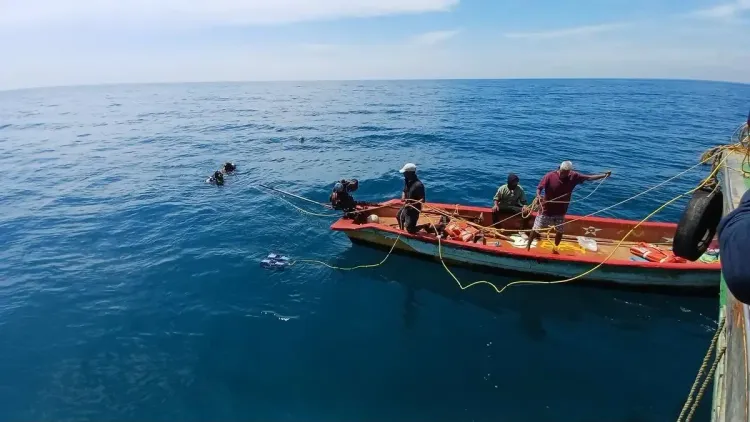
Poompuhar was prioritised for immediate exploration after preliminary surveys indicated stronger archaeological prospects there. The current phase is also aimed at improving photographic and visual documentation — an acknowledged gap from earlier dives at the site. Previous expeditions had recovered ceramics and shipwrecks, but only limited photographic records existed. The latest operation is expected to address that shortfall. According to officials, approximately 10 per cent of the overall project has been completed to date.
Korkai: A Sangam-Era Maritime Hub
Korkai ranks among the most prominent ports of the Sangam era, serving as a key maritime centre of the ancient Pandya kingdom. It sustained trade ties with the Roman Empire and other overseas regions, and was historically renowned for its pearl fishery. Land excavations conducted in 1968–69 unearthed artefacts, conch-shell cutting workshops, pearl-oyster processing facilities, terracotta lamps, and sharp bone implements associated with weaving and hunting.
Archaeologists believe underwater investigation could complement these land finds and reveal submerged material directly linked to Korkai's harbour — potentially offering fresh evidence on ancient Tamil maritime trade, navigation, and commercial networks across the Indian Ocean.
What Happens After the Reports Are Filed
Once the Korkai report is examined and the necessary regulatory clearances are obtained, archaeologists are expected to launch diving operations to verify the structures and artefacts tentatively identified beneath the seabed. The findings could shed definitive light on the precise location and nature of the ancient Pandya port — a question that has engaged scholars of Tamil history for decades. How quickly the government acts on the clearance process will determine the pace of discoveries to follow.
Point of View
But the convergence of sonar data from Korkai and a third active dive phase at Poompuhar signals genuine momentum. The critical variable now is bureaucratic speed: clearances for diving at Korkai have a history of moving slowly, and the gap between report submission and operational dive could easily stretch by months. More importantly, the 10 per cent completion figure underlines how vast and under-explored this maritime heritage remains — Poompuhar's Roman-linked ceramic finds alone warrant far greater national attention than they have received. If the Centre treats this as a heritage priority rather than a state-level exercise, the pace and funding could change materially.
NationPress
21 Sept 2026
Frequently Asked Questions
What are the Korkai and Poompuhar underwater surveys about?
They are state-led archaeological investigations aimed at locating submerged remains of ancient Tamil ports. Korkai was a major Sangam-era Pandya port with Roman trade links, while Poompuhar is believed to hold shipwrecks and other maritime artefacts beneath the sea.
When will the survey reports be submitted to the Tamil Nadu government?
The State Archaeology Department plans to submit the reports by February 2027. The submissions will cover sonar survey findings from Korkai-Azhagankulam and results from the ongoing third phase of exploration at Poompuhar.
What technology was used in the Korkai survey?
The geographical identification survey at Korkai used multi-beam echo sounders, side-scan sonar systems, and sub-bottom profilers, conducted in association with the Indian Maritime University roughly two years ago.
Why has Poompuhar been given priority over Korkai?
Preliminary surveys indicated stronger archaeological prospects at Poompuhar, leading officials to prioritise active diving there. Earlier expeditions recovered ceramics and shipwrecks, and the current phase is focused on improving documentation of those finds.
What could the Korkai findings reveal?
Archaeologists believe underwater evidence at Korkai could shed light on the ancient Pandya harbour's precise location, possible shipwrecks, and trade infrastructure — complementing land excavations from 1968–69 that uncovered pearl-processing workshops and Sangam-era artefacts.