Will the TN interim Budget session extend until February 20, with debates scheduled for Feb 18-19?
Synopsis
The Tamil Nadu Assembly's interim Budget session is continuing until February 20, with crucial debates scheduled for February 18-19. With upcoming elections, the interim Budget holds significant political weight. Expect discussions on fiscal management and welfare allocations, underlining the government's strategies as they brace for the polls.
Key Takeaways
The Tamil Nadu Assembly's interim Budget session continues until February 20 .
Debates on the interim Budget are set for February 18 and 19 .
The interim Budget is politically significant due to upcoming elections.
The Agriculture Budget emphasizes farm infrastructure and welfare.
Finance Minister Thennarasu will respond to debates on February 20 .
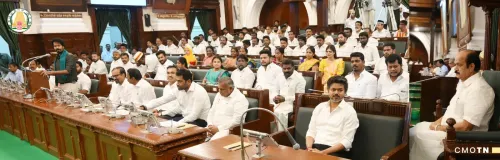
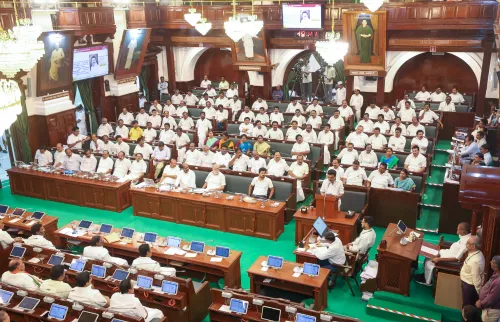
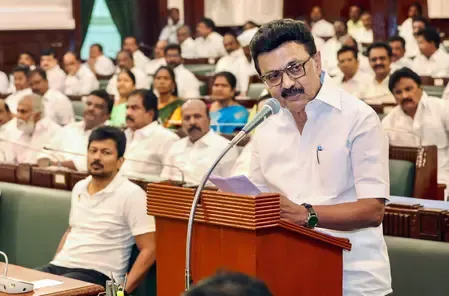
Chennai, Feb 17 (NationPress) The interim Budget session of the Tamil Nadu Assembly is set to extend until February 20, following a resolution made during the Business Advisory Committee (BAC) meeting led by Speaker M. Appavu.
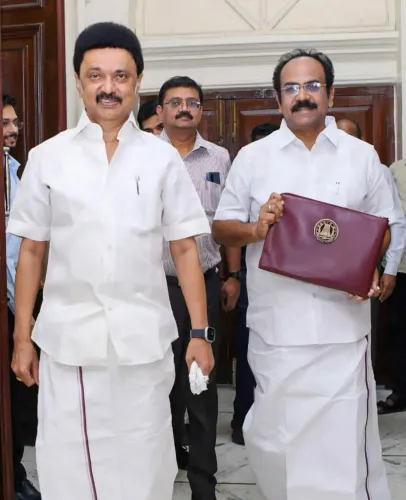
On Tuesday, Finance Minister Thangam Thennarasu unveiled the state’s Interim Budget for the fiscal year 2026–27 within the Assembly.
This presentation is particularly pivotal as Assembly elections are approaching, rendering the interim Budget politically crucial.
Immediately after the Finance Minister’s address, Agriculture Minister M.R.K. Panneerselvam presented the Interim Agriculture Budget for 2026–27, sharing insights on the government’s focus on the agricultural sector.
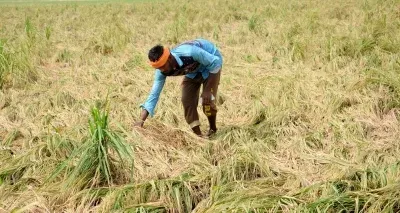
The separate agriculture Budget, a recent initiative by the DMK government, continues to emphasize the development of farm infrastructure, enhancement of irrigation support, promotion of mechanization, and improvement of farmer welfare initiatives.
After both Budget presentations concluded, the Speaker convened a BAC meeting to finalize the schedule for the upcoming proceedings. It was agreed that the interim Budget session would run until February 20.
The schedule determined in the meeting indicates that the general discussions regarding the Interim Budget will occur over two days — February 18 and 19.
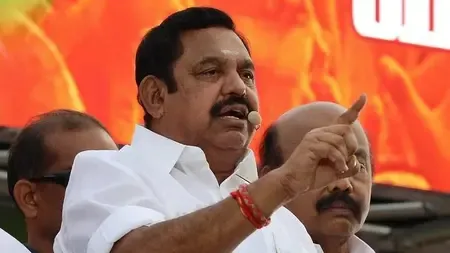
Members from both the ruling party and the Opposition are anticipated to engage in the debate, addressing matters related to fiscal management, welfare allocations, sectoral expenditures, and commitments for the election year.
Finance Minister Thennarasu is slated to respond to the debate on February 20. His concluding remarks will aim to tackle the concerns and suggestions raised by the members during the discussion.
This interim Budget, presented in light of the forthcoming Assembly elections, is expected to heavily emphasize maintaining existing flagship schemes and assuring financial stability rather than rolling out significant new policy initiatives. The forthcoming proceedings are likely to involve vigorous discussions, reflecting the charged political environment leading up to the polls. As the session approaches its conclusion on February 20, all attention will be focused on the government’s justification of its fiscal strategies and welfare commitments in an election year.
Point of View
The ongoing interim Budget session in Tamil Nadu is a crucial moment for both the ruling party and the opposition. With elections looming, it’s essential that the government demonstrates fiscal responsibility while addressing welfare concerns. This session is not just about numbers; it reflects the political dynamics that will influence the electorate's decisions in the upcoming polls.
NationPress
13 Oct 2026
Frequently Asked Questions
What is the duration of the Tamil Nadu interim Budget session?
The interim Budget session will extend until February 20.
When are the debates on the interim Budget scheduled?
The debates are scheduled for February 18 and 19.
What is significant about the interim Budget this year?
The interim Budget is particularly important due to the upcoming Assembly elections, making it politically significant.