PAP farmers panel seeks ₹10 crore annual canal desilting fund in Tamil Nadu
Synopsis
A key farmers' committee overseeing one of western Tamil Nadu's largest irrigation systems is sounding the alarm: four years without dedicated desilting funds have left canals silted and tail-end farms parched. With ₹10 crore the ask — and the monsoon approaching — the Tamil Nadu government faces a straightforward but consequential budget decision.
Key Takeaways
The Thirumoorthi Reservoir Project Committee (PAP) has urged the Tamil Nadu government to allocate ₹10 crore annually for canal desilting.
The PAP irrigation network covers nearly 4.25 lakh acres across Coimbatore and Tiruppur districts.
No desilting funds were reportedly allocated during the 2021–2025 period, causing heavy silt accumulation in canals.
The state had consistently funded desilting at ₹10 crore per year between 2016 and 2021 .
MGNREGS rules limit canal desilting work to once every three years per canal, making it inadequate for regular upkeep.
A separate representation to Chief Minister Joseph Vijay also seeks completion of the Anaimalaiyaru and Nallaru projects.
The Thirumoorthi Reservoir Project Committee of the Parambikulam Aliyar Irrigation Project (PAP) has urged the Tamil Nadu government to restore an annual allocation of ₹10 crore for canal desilting works, warning that the absence of regular maintenance is severely disrupting water supply to tail-end farming communities in Coimbatore and Tiruppur districts. The committee submitted formal representations to Water Resources Department Minister N. Anand and Finance Minister N. Marie Wilson on 26 May 2025.
Scale of the Irrigation Network
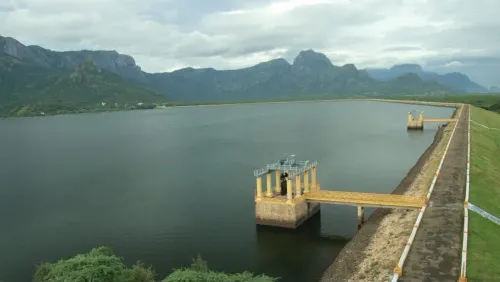
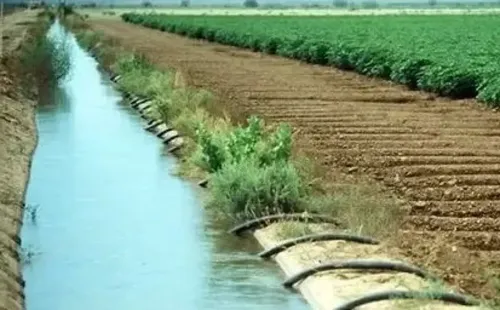
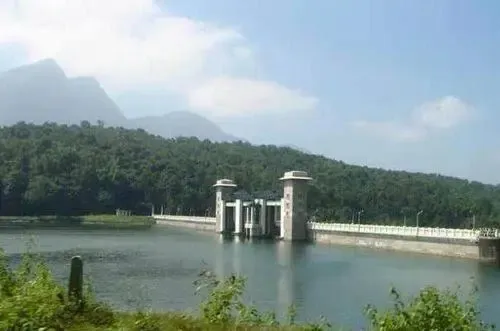
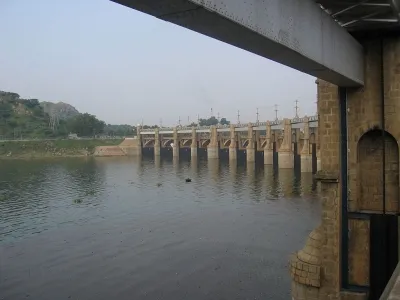
The PAP system is one of western Tamil Nadu's most critical agricultural lifelines, covering nearly 4.25 lakh acres of farmland. Of this, approximately 3.77 lakh acres are irrigated through the Thirumoorthi Dam network, while around 44,000 acres depend on the Aliyar Dam system. Canal operations across this vast network are managed by the Water Resources Department, supported by 134 farmers' associations in the Thirumoorthi basin and 16 associations in the Aliyar basin.
The Funding Gap: 2021–2025
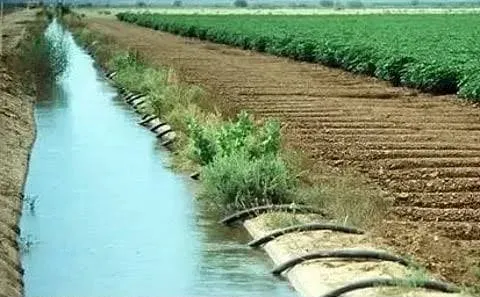
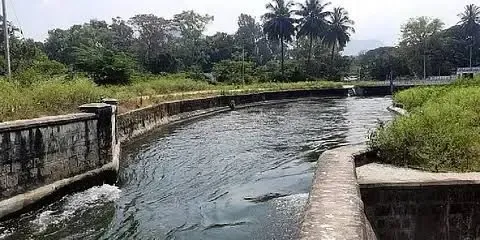
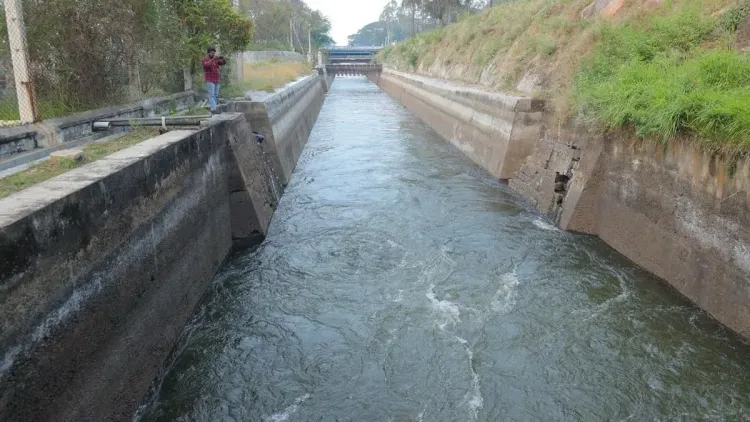
Between 2016 and 2021, the state government consistently earmarked ₹10 crore annually for desilting, maintaining water flow across the canal network. According to the committee, no allocations were made during the 2021–2025 period, allowing silt to accumulate heavily in several canals. The disruption hit tail-end agricultural zones hardest, where farmers already face structural disadvantages in receiving adequate irrigation supply.
Following representations submitted last year, the previous government sanctioned and released ₹10 crore, enabling a round of desilting work. The committee is now requesting that the same allocation be continued for the current financial year to prevent conditions from deteriorating again.
Why MGNREGS Alone Is Not Enough
The committee also flagged a key structural limitation: under the Mahatma Gandhi National Rural Employment Guarantee Scheme (MGNREGS), desilting work on any individual canal is permitted only once every three years. This cycle, the committee argued, is incompatible with the annual maintenance demands of a large-scale irrigation network, making a dedicated budget line essential rather than optional.
Pending Projects and Broader Demands
In a separate representation addressed to Chief Minister Joseph Vijay, along with the Water Resources and Finance Ministers and senior officials, the committee also called for the completion of long-pending infrastructure projects under the PAP system — specifically the Anaimalaiyaru and Nallaru projects. These projects have reportedly remained incomplete for an extended period, adding to the irrigation stress faced by farmers in the region.
With the southwest monsoon approaching, the urgency of the committee's demands is likely to intensify as water flow through the canal network increases and silt-blocked channels risk worsening distribution inequities.
Point of View
Yet it was apparently allowed to lapse entirely, with predictable consequences for tail-end farmers who have the least political leverage in any water-sharing dispute. The MGNREGS constraint the committee flags is worth wider attention: a scheme designed for rural employment is being quietly relied upon as a substitute for dedicated irrigation maintenance budgets, and its three-year cycle is structurally mismatched to annual silt cycles. If Tamil Nadu's new government under Chief Minister Joseph Vijay is serious about agricultural distress in the west, restoring this allocation is a low-cost, high-visibility signal — but the longer-pending Anaimalaiyaru and Nallaru projects will be the harder, more revealing test.
NationPress
24 Sept 2026
Frequently Asked Questions
What is the Parambikulam Aliyar Irrigation Project (PAP)?
The Parambikulam Aliyar Irrigation Project (PAP) is one of western Tamil Nadu's major irrigation systems, covering nearly 4.25 lakh acres of farmland across Coimbatore and Tiruppur districts. It operates through canal networks fed by the Thirumoorthi Dam and Aliyar Dam, managed by the Water Resources Department with support from 150 farmers' associations.
Why is the Thirumoorthi Reservoir Project Committee demanding ₹10 crore for canal desilting?
The committee says that without annual desilting, silt accumulation in canals severely disrupts water flow to tail-end agricultural areas. No funds were reportedly allocated for desilting between 2021 and 2025, and the committee is asking the Tamil Nadu government to restore the ₹10 crore annual allocation that was consistently provided from 2016 to 2021.
Why can't MGNREGS fully address the canal desilting problem?
Under MGNREGS rules, desilting work on any individual canal can be undertaken only once every three years. Given that large-scale irrigation canals require annual maintenance to prevent silt buildup, the scheme's cycle is too infrequent to serve as a reliable substitute for a dedicated state budget allocation.
Who has the committee addressed its representations to?
The committee has submitted representations to Water Resources Department Minister N. Anand and Finance Minister N. Marie Wilson. A separate representation was also sent to Chief Minister Joseph Vijay and senior officials, seeking both the desilting allocation and completion of the long-pending Anaimalaiyaru and Nallaru projects.
What happens if the desilting allocation is not restored?
Without regular desilting, silt continues to accumulate in canals, reducing water flow and disproportionately affecting tail-end farms that are furthest from the water source. With the southwest monsoon approaching, increased water flow through blocked channels risks worsening distribution inequities across the 4.25 lakh acre network.