CM Bhupendra Patel: Ahmedabad gets ISKCON-Sanand Elevated Corridor

Synopsis
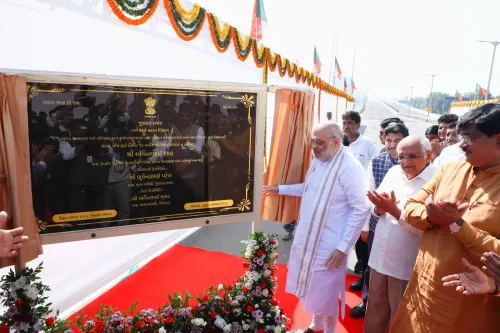
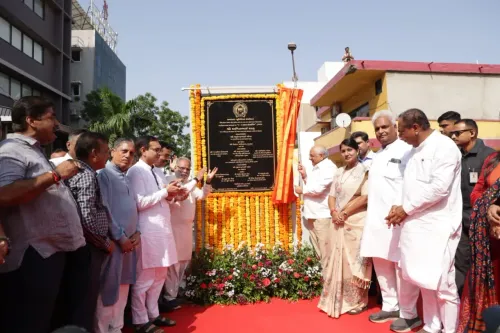
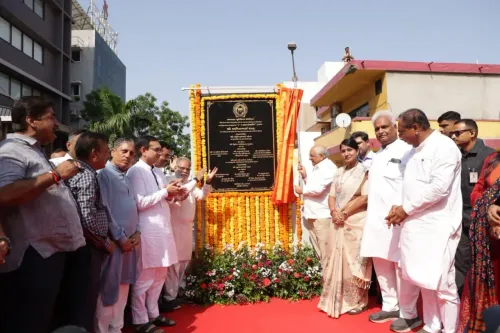
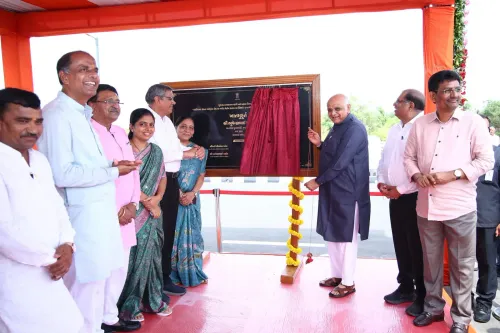
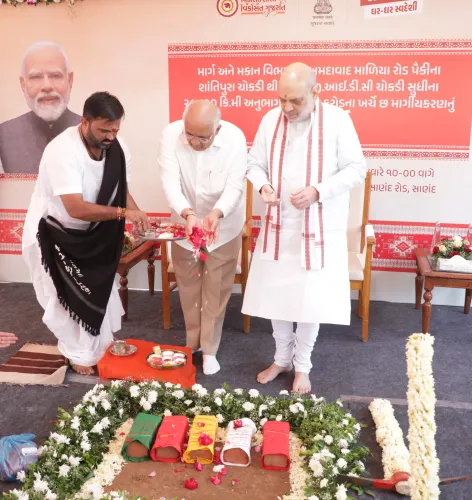
Union Home Minister Amit Shah inaugurated the ISKCON-Sanand Elevated Corridor in Ahmedabad — a 4.03-km, six-lane structure built at Rs 464 crore to ease congestion on the Sarkhej-Gandhinagar Highway. Gujarat CM Bhupendra Patel announced the opening as a pre-new year gift to city commuters.
Key Takeaways
Amit Shah inaugurated the ISKCON-Sanand Elevated Corridor in Ahmedabad on 9 November 2026 .
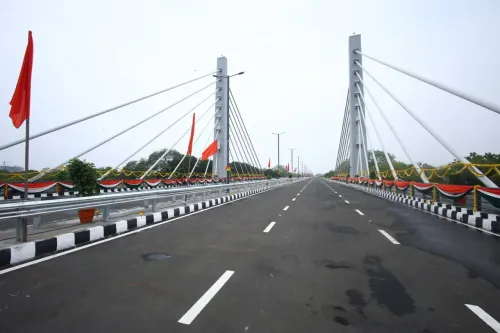
The corridor is 4.03 km long with six lanes , running from ISKCON Junction to the Sanand Flyover .
The project cost an estimated Rs 464 crore .
It is designed to ease congestion at busy junctions along the Sarkhej-Gandhinagar Highway .
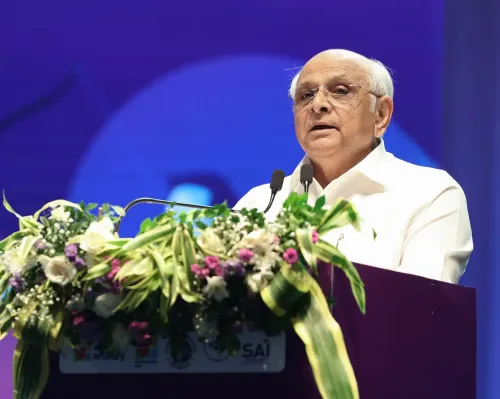
Gujarat CM Bhupendra Patel described it as a pre-new year gift to Ahmedabad residents, promising savings in travel time and fuel.
The opening continues Gujarat's sustained urban elevated-corridor programme across major arterial routes.
A 4.03-kilometre, six-lane elevated corridor now stretches across one of Ahmedabad's most congested stretches — and for the city's daily commuters, it arrives just in time for the new year. Gujarat Chief Minister Bhupendra Patel announced on Monday, 9 November 2026 that Union Home and Cooperation Minister Amit Shah inaugurated the newly built ISKCON-Sanand Elevated Corridor, linking ISKCON Junction to the Sanand Flyover along the arterial Sarkhej-Gandhinagar Highway.
The post, written in Gujarati, hails the project as 'Ahmedabadni connectivity ne navi gati' — 'new momentum for Ahmedabad's connectivity' — and describes it as a gift to residents ahead of the new year. Built at an estimated cost of Rs 464 crore, the corridor is designed to ease chronic traffic bottlenecks at key junctions on the highway, cutting travel time and fuel consumption for thousands of commuters who use this route daily.
Why the Sarkhej-Gandhinagar Highway needed this fix
The Sarkhej-Gandhinagar Highway has long been Ahmedabad's pressure point — a spine connecting the city's western suburbs to the state capital, running through some of the densest commercial and residential zones in the region. As the Ahmedabad-Gandhinagar economic corridor expanded over the past decade, traffic volumes on this route surged far beyond the capacity of its at-grade intersections.
Elevated corridors solve a problem that signal-timed junctions simply cannot: they remove the fundamental conflict between through-traffic and local movement. The ISKCON-Sanand corridor, spanning just over four kilometres with six lanes, creates an uninterrupted high-speed passage over the highway's most contested junctions — a structural answer to a problem that road-widening alone could not resolve.
Amit Shah's inauguration and its political weight
Union Home Minister Amit Shah, who represents the Gandhinagar constituency and maintains deep ties to Gujarat's political and administrative landscape, performed the formal inauguration. His presence at a state infrastructure event underscores the Centre-state coordination that the BJP government in Gujarat has consistently projected as a hallmark of its governance model.
The timing — framed explicitly as a 'nutan varsh purve' (pre-new year) gift to Ahmedabad's residents — is deliberate. Infrastructure inaugurations ahead of festive or calendar milestones are a well-established signal of delivery, connecting tangible public benefit to governance visibility.
What Rs 464 crore buys Ahmedabad's commuters
At Rs 464 crore for 4.03 km, the per-kilometre cost reflects the engineering complexity of building an elevated six-lane structure through a dense urban corridor with live traffic below. The state government's stated outcomes — reduced travel time, lower fuel burn, and safer journeys — are the standard metrics for elevated road infrastructure, and the real test will come in traffic impact assessments over the months following the opening.
Gujarat has pursued a sustained programme of urban flyovers and elevated corridors across Ahmedabad and other major cities, treating road-over-road solutions as a faster alternative to wholesale network redesign in built-up areas. The ISKCON-Sanand corridor is the latest addition to that expanding grid.
With the ribbon cut and the cameras rolling, the question now shifts to the commuter's windshield view — how many minutes off the daily grind, and how quickly the adjacent road network adapts to the new flow.
Point of View
The investment is modest by national highway standards but high-visibility in an urban constituency. Gujarat's sustained focus on elevated urban corridors reflects a broader state strategy of prioritising fast-delivery road infrastructure over longer-gestation mass transit projects, a choice that keeps commuter satisfaction metrics moving while metro and ring-road timelines extend. The real governance test, however, is post-opening: whether traffic modelling holds up and whether the project catalyses the next phase of Ahmedabad's connectivity grid.
NationPress
9 Nov 2026
Frequently Asked Questions
What is the ISKCON-Sanand Elevated Corridor in Ahmedabad?
The ISKCON-Sanand Elevated Corridor is a newly built 4.03-km, six-lane elevated road in Ahmedabad that connects ISKCON Junction to the Sanand Flyover along the Sarkhej-Gandhinagar Highway, built at an estimated cost of Rs 464 crore.
Who inaugurated the ISKCON-Sanand Elevated Corridor?
Union Home and Cooperation Minister Amit Shah inaugurated the corridor, with Gujarat Chief Minister Bhupendra Patel announcing the event on 9 November 2026.
How much did the ISKCON-Sanand Elevated Corridor cost?
The corridor was built at an estimated cost of Rs 464 crore.
How will the Ahmedabad elevated corridor help commuters?
The corridor is designed to ease congestion at busy junctions on the Sarkhej-Gandhinagar Highway, reducing travel time, cutting fuel consumption, and making journeys safer for daily commuters.
How long is the ISKCON-Sanand Elevated Corridor?
The corridor is 4.03 kilometres long and carries six lanes of traffic in an elevated configuration over some of Ahmedabad's busiest highway junctions.