Tamil Nadu clears 50,000 free farm power links; 3 lakh farmers still in queue
Synopsis
Tamil Nadu has approved 50,000 new free agricultural electricity connections — the largest single-year release under the current government — yet more than 3 lakh farmers remain in the queue. With ₹750 crore in installation costs and a ₹7,000-crore-plus annual subsidy bill, the programme tests both the state's grid capacity and its fiscal headroom.
Key Takeaways
Tamil Nadu approved 50,000 new agricultural electricity connections for the current year, allocating them across four schemes.
The largest share — 25,282 connections — goes to the Tatkal fast-track scheme ; 20,000 are under the normal (fully state-funded) category.
The government will subsidise recurring power charges at an estimated ₹127.56 crore ; TNPDCL will bear installation costs of around ₹750 crore .
More than 3 lakh farmers remain on the waiting list even after this approval.
Tamil Nadu already has about 24 lakh agricultural connections benefiting from the free-power policy, backed by more than ₹7,000 crore in state subsidies in 2025-26 .
The previous DMK government provided 1.70 lakh free agricultural connections between 2021 and 2026 , yet the backlog persisted.
The Tamil Nadu government has approved 50,000 new agricultural electricity connections for the current year, extending its free-power policy to thousands of farmers who have been waiting for irrigation supply — even as a backlog of more than 3 lakh pending applications signals the scale of unmet demand.
How the 50,000 Connections Are Allocated
The Energy Department has issued a government order directing the Tamil Nadu Power Distribution Corporation Limited (TNPDCL) to roll out the programme. The breakdown reflects multiple application tracks: 20,000 connections fall under the normal category, with the state bearing the full cost; 3,372 connections are covered by the self-financing scheme, under which farmers deposit an amount linked to their sanctioned electricity load; and the largest bloc — 25,282 connections — has been assigned to the Tatkal fast-track scheme, which offers a shorter waiting period. The remaining 1,346 connections will be released under various other government schemes.
Financial Outlay and Subsidy Commitments
The state government will subsidise recurring electricity consumption charges for the newly added connections, estimated at ₹127.56 crore. TNPDCL will shoulder the installation expenditure, pegged at around ₹750 crore. The approvals follow a proposal submitted by the utility after Electricity Minister C.T.R. Nirmal Kumar announced the initiative during the Assembly's budget session in August. Tamil Nadu's policy of providing free electricity to agricultural consumers is backed by government-paid subsidies channelled directly to the distribution company. In 2025-26, the state released more than ₹7,000 crore for this subsidy, covering roughly 24 lakh existing agricultural connections.
The Persistent Backlog
Despite the fresh approvals, the demand-supply gap in agricultural connections remains stark. More than 3 lakh farmers are still awaiting connections, underscoring the structural pressure on the state's distribution infrastructure. Notably, the previous Dravida Munnetra Kazhagam (DMK) government had already provided 1.70 lakh free agricultural connections between 2021 and 2026. Even after those additions, the waiting list remained sizeable, pointing to persistent shortfalls in network expansion relative to demand from farming communities.
What This Means for Tamil Nadu's Farm Sector
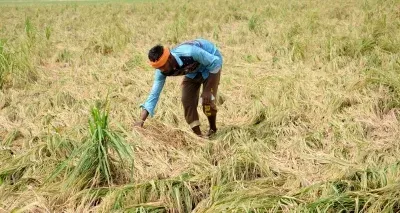
Agricultural electricity access is directly tied to groundwater irrigation, which underpins a significant portion of Tamil Nadu's cultivated area. Delays in connections translate into higher input costs for farmers who rely on diesel pump sets as a stopgap. The Tatkal scheme's dominant share of the new approvals suggests the government is prioritising speed of delivery, though critics argue that fast-track allocations must be matched by grid reinforcement to prevent localised voltage stress. This is also the first major batch release since the current term began, and its implementation will bring another 50,000 agricultural consumers into the subsidised network — though a significant portion of the waiting list will persist beyond this round.
What Happens Next
TNPDCL will now proceed with implementation under the government order, managing both installation costs and the phased release of connections across categories. The state's trajectory on clearing the remaining backlog will depend on future budget allocations and the pace of infrastructure rollout. With subsidy commitments already exceeding ₹7,000 crore annually, fiscal sustainability of the free-power policy will remain a closely watched variable.
Point of View
000 connections is politically visible, but it barely dents a backlog that has exceeded 3 lakh for years — and the DMK's own 1.70 lakh additions between 2021 and 2026 did not clear it either. The real question is whether TNPDCL's grid infrastructure can absorb accelerated load addition without degrading supply quality for existing consumers. Meanwhile, the annual subsidy bill has crossed ₹7,000 crore, raising legitimate questions about fiscal sustainability that the government order does not address. A free-power policy is sound on equity grounds, but without a credible plan to close the backlog within a defined timeline, each annual announcement risks looking incremental rather than transformative.
NationPress
25 Oct 2026
Frequently Asked Questions
How many agricultural electricity connections has Tamil Nadu approved this year?
The Tamil Nadu government has approved 50,000 new agricultural electricity connections for the current year, to be implemented by TNPDCL across four categories: normal, self-financing, Tatkal fast-track, and other government schemes.
How many farmers are still waiting for agricultural electricity connections in Tamil Nadu?
More than 3 lakh farmers are still on the waiting list for agricultural electricity connections in Tamil Nadu, even after the new approvals. The backlog has persisted despite the previous government adding 1.70 lakh connections between 2021 and 2026.
What is the cost of Tamil Nadu's free agricultural electricity programme?
The state government will pay an estimated ₹127.56 crore to subsidise recurring power charges for the newly approved connections, while TNPDCL will bear installation costs of around ₹750 crore . In 2025-26, the state released more than ₹7,000 crore overall for the free agricultural power subsidy.
What is the Tatkal scheme for agricultural electricity connections in Tamil Nadu?
The Tatkal fast-track scheme provides agricultural electricity connections with a shorter waiting period than the standard process. It accounts for the largest share of the new approvals — 25,282 out of the 50,000 connections sanctioned this year.
Who announced the 50,000 agricultural connections initiative in Tamil Nadu?
Electricity Minister C.T.R. Nirmal Kumar announced the initiative during the Tamil Nadu Assembly's budget session in August . The Energy Department subsequently issued a formal government order authorising TNPDCL to implement the programme.