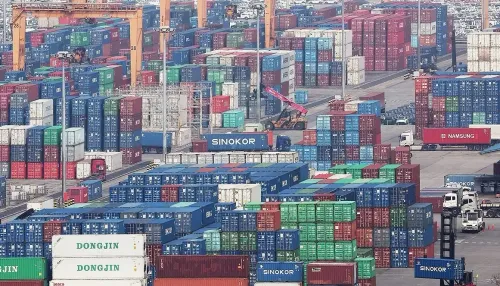
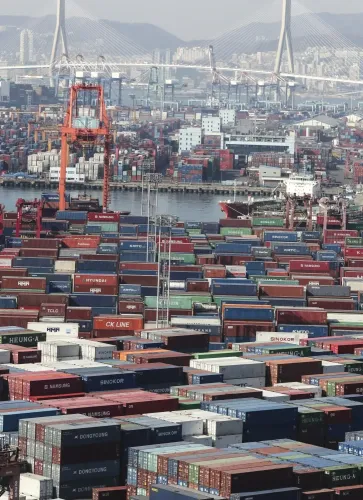
South Korea Q2 current account surplus hits $116.6bn, 2nd globally on chip boom
Synopsis
South Korea's current account surplus more than quadrupled in Q2 2026 to $116.63 billion — the first time since 1996 that it has exceeded the combined surpluses of Germany and Japan. The entire surge traces back to a single engine: semiconductor exports up 181.6% on-year. Yet the same economy is quietly shedding temporary and daily workers at a pace not seen since 1995, exposing a widening gap between export-led growth and domestic job creation.
Key Takeaways
South Korea posted a current account surplus of $116.63 billion in Q2 2026 , the second-largest globally after China's $193.72 billion .
The surplus exceeded the combined surpluses of Germany ($52.28bn) and Japan ($50.62bn) — a first since Q1 1996 .
South Korea's surplus more than quadrupled year-on-year from $28.39 billion .
Semiconductor exports drove the surge, rising 181.6% on-year to $113.89 billion in Q2, per the Ministry of Data and Statistics .
Temporary and daily workers fell to 5.73 million in Q3 2026, the lowest third-quarter level since 1995 , as construction employment slumped.
Daily construction workers dropped by 28,000 to 381,000 , accounting for 74.6% of the overall daily-worker decline.
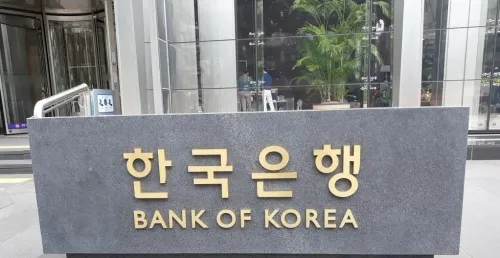
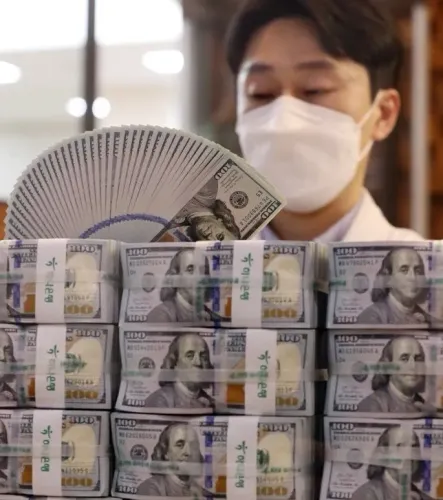
South Korea recorded the second-largest current account surplus among major economies in the second quarter of 2026, with a figure of US$116.63 billion — surpassing the combined surpluses of Germany and Japan for the first time since comparable data became available in Q1 1996. The milestone, revealed through International Monetary Fund (IMF) data available on the Bank of Korea's Economic Statistics System, reflects a dramatic acceleration in the country's external position, driven overwhelmingly by a semiconductor export boom.
How South Korea Stacks Up Globally
Only China, with a surplus of $193.72 billion, ranked higher in the April–June 2026 period. Germany came in third at $52.28 billion, followed by Japan at $50.62 billion. Their combined surplus of $102.9 billion still fell $13.73 billion short of South Korea's figure — the first time since records began that Seoul has outpaced Berlin and Tokyo together on this measure.
South Korea's surplus also more than quadrupled compared to the same period a year earlier, when it stood at $28.39 billion. By contrast, Germany's surplus grew just 11.9% year-on-year, and Japan's by a modest 5%, underscoring how sharply South Korea's external position has diverged from its peers.
Semiconductor Exports: The Engine Behind the Surge
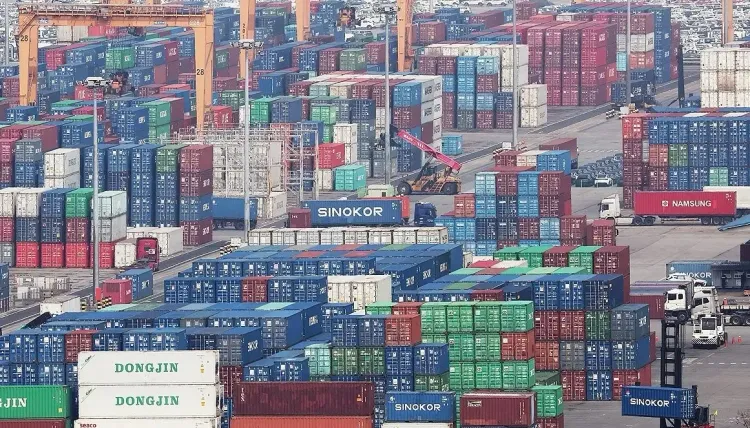
The primary driver of the surplus expansion was a sharp rise in chip exports, fuelled by rising semiconductor prices and robust global demand. According to the Ministry of Data and Statistics, South Korea's semiconductor exports soared 181.6% on-year to $113.89 billion in the second quarter — a figure that alone nearly accounts for the entire current account surplus. This is the latest indicator of how deeply South Korea's external trade balance has become tied to the global semiconductor cycle, particularly demand from data centre operators and AI hardware buildouts worldwide.
Labour Market Strain: Temporary Workers Hit 31-Year Low
Set against the trade data, South Korea's domestic labour market presents a more sobering picture. The combined number of temporary and daily workers fell by 95,000 from a year earlier to 5.73 million in the July–September 2026 period — the lowest third-quarter reading since 1995, according to an analysis of microdata from the Ministry of Data and Statistics.
Of that total, daily workers declined by 38,000 to a record third-quarter low of 833,000. The construction sector bore the heaviest toll: daily construction workers dropped by 28,000 to 381,000, accounting for 74.6% of the overall daily-worker decline. Workers in their 50s saw the steepest fall, down 21,000.
Temporary workers — those on contracts of at least one month but under a year — fell by 57,000 to 4.89 million. The accommodation and food services sector recorded the largest decline in temporary headcount, shedding 30,000, followed by construction and information and communications, which each lost 22,000 workers.
What the Divergence Signals
The juxtaposition of a record-breaking trade surplus and a deteriorating informal labour market illustrates a structural tension in South Korea's economy: export-led growth concentrated in high-tech manufacturing is not generating proportionate employment at the lower end of the labour market. The prolonged construction slump — itself linked to a cooling property market — is compounding job losses among the country's most economically vulnerable workers. This divergence is likely to feature prominently in upcoming policy debates around domestic stimulus and welfare support.
Outlook
With global AI infrastructure investment remaining strong, South Korea's semiconductor exporters are well-positioned to sustain elevated surpluses into the second half of the year. However, any softening in chip prices or a slowdown in US and Chinese tech spending could quickly reverse the current account gains. On the labour side, a sustained recovery in construction activity will be key to halting the slide in daily and temporary employment, which policymakers are reportedly monitoring closely.
Point of View
Not a broad economic renaissance. With chip exports alone at $113.89 billion — nearly matching the entire current account surplus — the economy's external strength is dangerously concentrated in one cyclical sector. Should AI-driven demand plateau or chip prices correct, the surplus could compress as rapidly as it expanded. Meanwhile, the labour data tells a quieter but more structurally worrying story: a 31-year low in temporary and daily workers signals that the construction-to-services pipeline that employs South Korea's most economically precarious households is contracting, and the chip boom offers them no direct relief. The divergence between headline trade figures and ground-level employment is precisely the kind of gap that fuels political pressure for redistribution — and policymakers in Seoul would be wise not to let the surplus numbers drown out the labour market signal.
NationPress
25 Oct 2026
Frequently Asked Questions
What drove South Korea's record current account surplus in Q2 2026?
South Korea's Q2 2026 current account surplus of $116.63 billion was driven overwhelmingly by a surge in semiconductor exports, which rose 181.6% on-year to $113.89 billion, according to the Ministry of Data and Statistics. Rising chip prices and robust global demand — particularly from AI and data centre buildouts — were the key underlying factors.
How does South Korea's Q2 surplus compare to Germany and Japan?
South Korea's $116.63 billion surplus exceeded the combined surpluses of Germany ($52.28 billion) and Japan ($50.62 billion) by $13.73 billion — the first time this has happened since comparable data became available in Q1 1996. Only China, with a surplus of $193.72 billion, ranked higher globally.
Why are South Korea's temporary and daily worker numbers falling?
The decline is largely attributed to a prolonged construction slump, which has sharply reduced employment for daily workers. Daily construction workers fell by 28,000 to 381,000 in Q3 2026, accounting for 74.6% of the overall drop in daily employment. Workers in their 50s were the hardest hit, down 21,000.
What is the significance of the Q3 2026 temporary worker data?
The combined count of temporary and daily workers fell to 5.73 million in July–September 2026 — the lowest third-quarter figure since 1995, a span of 31 years. The accommodation and food services sector recorded the largest drop in temporary workers, shedding 30,000, followed by construction and information and communications.
Is South Korea's current account surplus likely to remain elevated?
Analysts suggest the surplus could remain high as long as global AI infrastructure investment sustains semiconductor demand, but the concentration in one sector is a vulnerability. Any softening in chip prices or a slowdown in US and Chinese tech spending could reverse the gains relatively quickly.