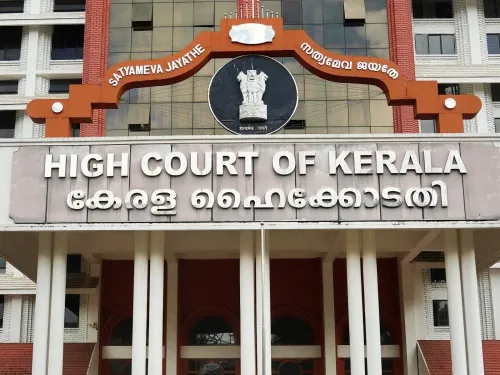
Did a Toddy Cat Disrupt Proceedings at Kerala HC?
Synopsis
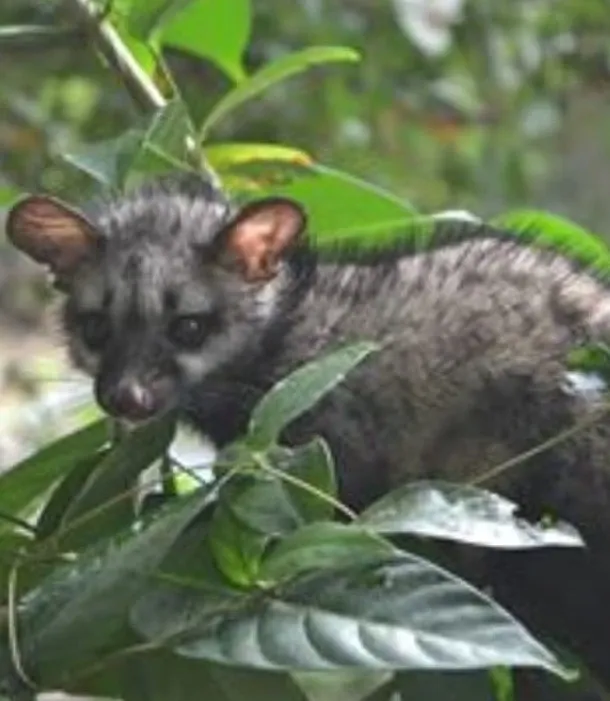
In a bizarre incident, proceedings at the Kerala High Court were disrupted by an Asian Palm Civet, leading to an unexpected adjournment. This event highlights ongoing issues with these nocturnal mammals in urban areas, as even political leaders have voiced their frustrations over disturbances caused by these creatures in their residences.
Key Takeaways
Incident at Kerala HC: A civet cat disrupted proceedings.
Source of Odour: Strong smell traced back to the civet cat.
Impact on Court Sessions: Court was forced to adjourn due to the smell.
Political Complaints: Leaders shared experiences of disturbances from civet cats.
Ecological Role: Civet cats contribute to seed dispersal despite being nuisances in urban areas.
Kochi, Aug 19 (NationPress) The proceedings in Chamber 1 of the Kerala High Court were momentarily disrupted on Tuesday when an Asian Palm Civet, commonly referred to as the toddy cat or musang, caused a foul smell to permeate the courtroom.
This incident transpired during a morning session led by Chief Justice Nitin Madhukar Jamdar.
As the session commenced, an unpleasant odour quickly filled the air-conditioned chamber. Although the Chief Justice attempted to continue with urgent matters, the worsening stench led to an adjournment.
Cleaning staff were promptly called to locate and resolve the issue.
Authorities later speculated that the source of the odour was a civet cat that had entered through the air-conditioning ducts and taken refuge between the ceiling and the roof.
This nocturnal mammal is notorious for its potent urine, often causing disturbances in confined spaces.
The Asian Palm Civet is typically found near palm groves and fruit-bearing trees. In Kerala, it is frequently seen in heritage homes and other older structures, where it seeks shelter beneath roofs.
While generally harmless and mostly frugivorous, its presence and smell can be a considerable nuisance for residents.
This disruption at the High Court mirrors complaints voiced by Kerala's top political figures.
Chief Minister Pinarayi Vijayan previously mentioned that civet cats at his official residence in Thiruvananthapuram were interrupting his sleep by scurrying across the roof at night.
He also noted that his clothing often suffers due to the animals' urination.
Leader of Opposition V.D. Satheesan has experienced similar troubles at his official residence, another historic mansion in the capital.
Wildlife advocates, however, warn that despite being a nuisance in urban settings, civet cats are facing extinction and play a vital role in seed dispersal within forest ecosystems.
Point of View
It serves as a reminder of the complex relationship between urban development and wildlife conservation. The disturbance caused by the civet cat underscores the challenges faced by both residents and local fauna. While the complaints are valid, it is crucial to consider the ecological significance of these creatures, which are facing threats in their natural habitats.
NationPress
3 Oct 2026
Frequently Asked Questions
What caused the disruption at the Kerala High Court?
The disruption was caused by an Asian Palm Civet, locally known as the toddy cat, which created a foul odour inside the courtroom.
Who was presiding over the session during the incident?
The session was presided over by Chief Justice Nitin Madhukar Jamdar.
What are the characteristics of the Asian Palm Civet?
The Asian Palm Civet is a nocturnal mammal known for its pungent urine and is typically found near palm groves and fruit-bearing trees.
Are civet cats harmful to humans?
Civet cats are generally harmless and primarily frugivorous, but their presence can be a nuisance due to their strong smell.
What measures are being taken to address wildlife issues in urban areas?
Wildlife enthusiasts and authorities are advocating for balanced coexistence strategies to protect both urban residents and wildlife.