Why Are Trinamool and CPI-M Criticizing the Centre's Directive on Vande Mataram?
Synopsis
The recently issued directive by the Union government on the rendition of 'Vande Mataram' has sparked criticism from both the Trinamool Congress and CPI-M, who claim it is a move towards divisive politics. This article explores their reactions and the historical context behind the national song.
Key Takeaways
The Union government has issued new guidelines for 'Vande Mataram'.
Trinamool Congress and CPI-M criticize the directive as politically divisive.
Historical significance of the song is highlighted by political leaders.
The directive could serve to distract from ongoing national issues.
Concerns raised about the implications for national unity.
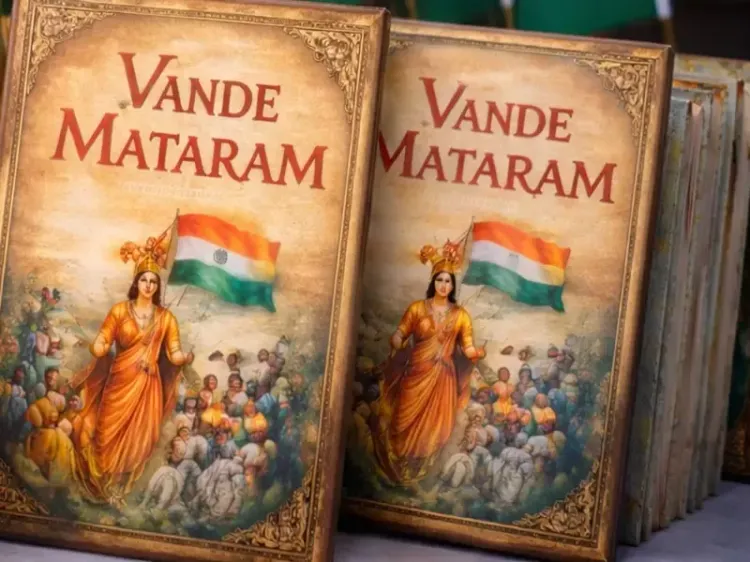
Kolkata, Feb 11 (NationPress) The Union government recently released a new set of detailed guidelines outlining the official protocol for the performance of India's national song, Vande Mataram. This initiative has drawn criticism from both the ruling Trinamool Congress and the opposition CPI-M.
Leaders from both parties have particularly taken issue with the directive mandating that the complete official version of Vande Mataram, which includes six stanzas and is approximately three minutes and ten seconds long, should be performed or played at significant state events.
Both parties have labeled this stipulation in the guidelines as another instance of divisive politics.
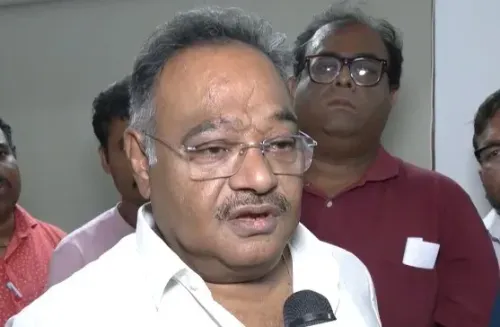
Jaiprakash Majumdar, the state vice-president of Trinamool Congress in West Bengal, expressed that such a directive is unacceptable from a government led by a political party whose leaders, he claims, did not take part in the Indian freedom struggle.
“Those who have never faced imprisonment during British rule are now lecturing us on patriotism,” Majumdar stated.
“In 1937, portions of this song were recognized as universally acceptable by India’s first Prime Minister, Jawaharlal Nehru, based on the advice of Gurudev Rabindranath Tagore. Only that segment was later designated as the national song. Now, the BJP government is attempting to distort that history. By misusing the verses of Vande Mataram, the BJP is striving to divide society along religious lines. This is a calculated conspiracy against the Constitution and the unity of India,” Majumdar added.
In agreement with Majumdar, CPI-M central committee member from West Bengal, Sujan Chakraborty, remarked that the BJP is trying to fabricate a new narrative surrounding Vande Mataram to distract from the pressing issues facing the nation.
“Gurudev Rabindranath Tagore himself acknowledged the significance and emotion tied to this song. However, the current Union government lacks the authority to reinterpret and distort that history. At a time when the country is grappling with numerous crises at the international level, the Union government is enforcing unilateral decisions that disregard the Constitution,” Chakraborty said.
Point of View
It's imperative to recognize that while the Union government's directive on 'Vande Mataram' has ignited political debate, it reflects deeper socio-political dynamics in India. The responses from Trinamool Congress and CPI-M highlight concerns over unity and historical interpretations within the nation. This dialogue is crucial, as it emphasizes the need for inclusivity in our national discourse.
NationPress
10 Oct 2026
Frequently Asked Questions
What is the recent directive regarding 'Vande Mataram'?
The Union government issued guidelines mandating the complete rendition of 'Vande Mataram' during significant state events.
Why are Trinamool Congress and CPI-M against the directive?
They believe it promotes divisive politics and distorts historical context related to the song.
Who was involved in the original acceptance of 'Vande Mataram'?
In 1937, Jawaharlal Nehru, guided by Rabindranath Tagore, recognized parts of the song as universally acceptable.
What are the implications of this directive?
The directive could lead to societal division and distract from pressing national issues.
What are the historical roots of 'Vande Mataram'?
'Vande Mataram' was adopted during the Indian independence movement and has significant emotional resonance in India's history.