Census 2027: Tripura CM Manik Saha calls it foundation of development planning
Synopsis
Tripura has become one of the first states to formally launch the self-enumeration phase of India's long-delayed Census 2027 — the country's first fully digital Census. With the data gap since 2011 now stretching over a decade, what gets recorded this time will shape fund allocations, constituency delimitation, and welfare delivery for years to come.
Key Takeaways
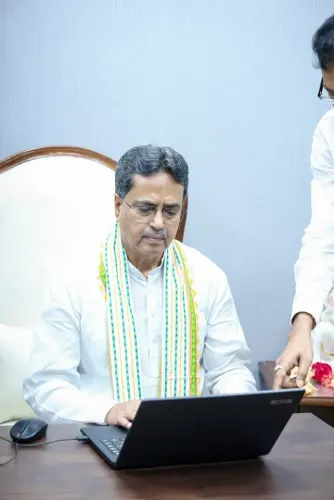
Tripura CM Manik Saha participated in the Census 2027 self-enumeration on 17 July from his official residence in Agartala .
The self-enumeration window runs from 17 July to 31 July ; House Listing and Enumeration follows from 1 August to 30 August .
Population Enumeration — the second phase — is scheduled for February 2027 .
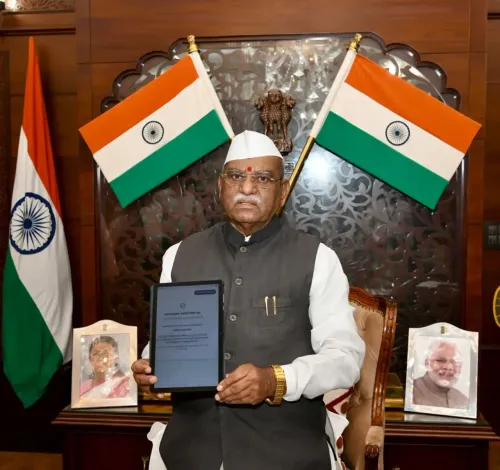
Governor Indra Sena Reddy Nallu inaugurated the drive at Lok Bhavan , warning that villages whose residents skip the Census risk being treated as uninhabited for planning purposes.
Census 2027 will be India's first fully digital Census , with self-enumeration conducted via an official online portal.
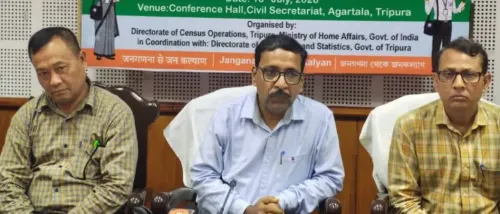
Training of thousands of census enumerators and supervisors across Tripura was completed on 16 July .
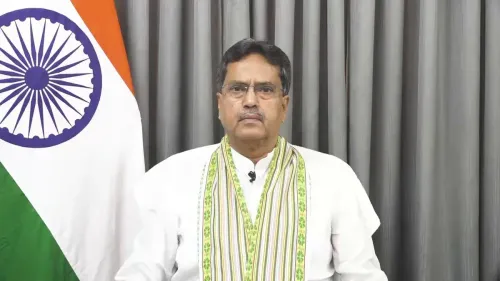
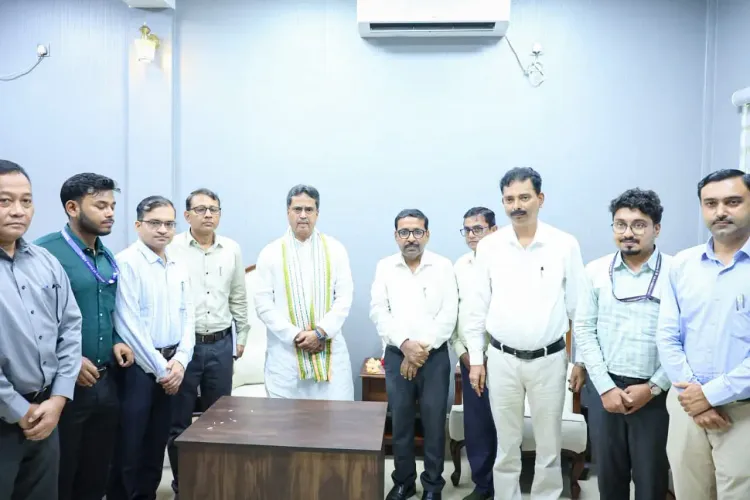
Tripura Chief Minister Manik Saha on Friday, 17 July participated in the self-enumeration process for the Census of India 2027 from his official residence in Agartala, describing the Census as far more than a statistical exercise and calling it a cornerstone of developmental planning across the country. Saha personally registered his details on the designated online portal, urging citizens across the state to follow suit before the deadline.
Tripura Formally Launches Digital Census Self-Enumeration
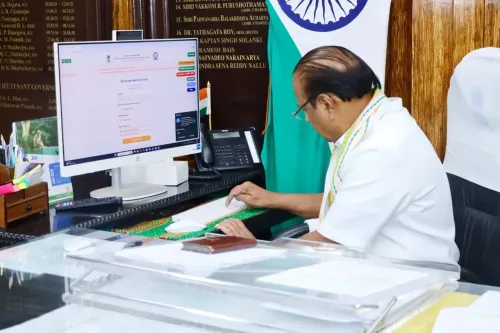
The state formally kicked off the self-enumeration drive at Lok Bhavan in Agartala on Friday, marking a milestone in India's push toward its first fully digital Census. Tripura Governor Indra Sena Reddy Nallu, as the first citizen of the state, inaugurated the initiative by completing the self-enumeration process on the official portal, setting an example for residents statewide.
Chief Minister Saha said the self-enumeration facility has been introduced to make the 2027 Census simpler, more transparent, and technology-driven — adding that this edition carries particular significance given the long gap since the last Census was conducted.
Timeline and Key Phases of Census 2027
Director of Census Operations, Tripura, Ratan Biswas, outlined the phased schedule: the self-enumeration window opened on Friday, 17 July and will remain open until 31 July. The second stage of Phase 1 — House Listing and House Enumeration — will run from 1 August to 30 August, during which enumerators and supervisors, predominantly government schoolteachers, will visit every household to collect data on families, residential buildings, and housing conditions.
The second phase, covering Population Enumeration, is scheduled for February 2027. Enumerators will then collect detailed individual-level data, including socio-economic particulars. Officials confirmed that training of thousands of census personnel — enumerators and supervisors alike — was completed on Thursday, 16 July, ahead of the statewide rollout.
Why Census Data Matters for Policy and Planning
Governor Reddy Nallu underscored the stakes of citizen participation, warning that a village whose residents fail to register in the Census could effectively be treated as uninhabited for planning purposes — meaning it could miss out on schools, hospitals, infrastructure, and constituency reorganisation. He appealed to every citizen to complete self-enumeration within the stipulated timeframe.
The Governor also assured the public that strict confidentiality would be maintained throughout the exercise. He said the information collected would be used solely for planning and developmental purposes and would not be shared with any other agency.
Broader Significance of Census 2027
India's Census, last conducted in 2011, has been delayed by over a decade — first by the COVID-19 pandemic and subsequently by logistical and administrative factors. The 2027 Census will be the first to incorporate a fully digital self-enumeration mechanism, a structural shift that officials say will improve data accuracy and reduce enumeration errors. The data will feed directly into allocation of central funds, delimitation of constituencies, and targeted welfare delivery across states. Tripura's early launch positions it among the first states to operationalise the new digital framework.
Point of View
But the real test is participation rates in remote and tribal pockets where digital access remains uneven. The Governor's pointed warning — that a village that skips the Census could be treated as uninhabited for planning purposes — is factually accurate and politically loaded, given Tripura's complex demographic history. If the 2027 Census is to restore credibility to India's planning architecture, state-level mobilisation like this needs to be matched by robust grievance redressal for citizens who cannot self-enumerate digitally.
NationPress
16 Oct 2026
Frequently Asked Questions
What is the Census 2027 self-enumeration process in Tripura?
The self-enumeration process allows citizens to register their household details directly on an official online portal, without waiting for an enumerator to visit. In Tripura, this phase runs from 17 July to 31 July 2027 and was inaugurated by Governor Indra Sena Reddy Nallu at Lok Bhavan in Agartala.
Why did Tripura CM Manik Saha call the Census a foundation of development planning?
Saha said Census data is used to plan and implement developmental programmes — including the allocation of schools, hospitals, and infrastructure — making accurate participation essential for equitable resource distribution. He made the remarks after personally completing the self-enumeration process at his official residence on 17 July.
What are the key phases and dates for Census 2027 in Tripura?
Phase 1 includes self-enumeration (17–31 July) and House Listing and Enumeration (1–30 August), conducted by government schoolteachers-turned-enumerators. Phase 2, Population Enumeration, is scheduled for February 2027 and will capture detailed socio-economic data on every individual.
Is Census 2027 India's first digital Census?
Yes, Census 2027 is set to be India's first fully digital Census, introducing a self-enumeration facility via an online portal. Officials say this will make the process simpler, more transparent, and less error-prone compared to earlier paper-based methods.
What happens if citizens do not participate in the Census?
According to Governor Reddy Nallu, a village whose residents fail to participate could effectively be treated as uninhabited for planning purposes, meaning it may be excluded from schemes for schools, hospitals, infrastructure, and constituency reorganisation. He urged every citizen to complete self-enumeration within the stipulated deadline.