Trump Declares U.S. Military Action in Iran for 'Freedom'
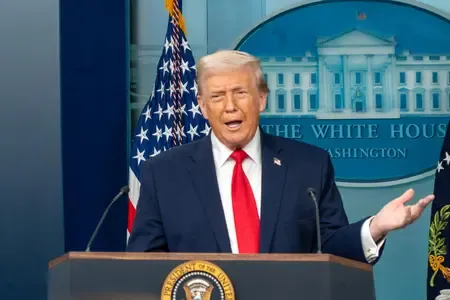
Synopsis
In a bold move, President Trump has initiated a military operation against Iran, declaring that his primary aim is to secure freedom for the Iranian people. This action has been described by major media outlets as a potential regime change effort, raising questions about the implications for U.S.-Iran relations.
Key Takeaways
Trump's military operation aims for Iranian freedom.
Operation Epic Fury launched with missile strikes.
Iran retaliated against U.S. military bases.
Media describes it as a “war of choice.” Longstanding tensions between U.S. and Iran.
Washington, Feb 28 (NationPress) On Saturday, President Donald Trump asserted that achieving “freedom” for the Iranian populace is his primary objective, as the United States initiated a military operation against Iran, described by officials as a multiday endeavor. This move has been characterized by prominent American media as a potential effort for regime change and a risky “war of choice.”
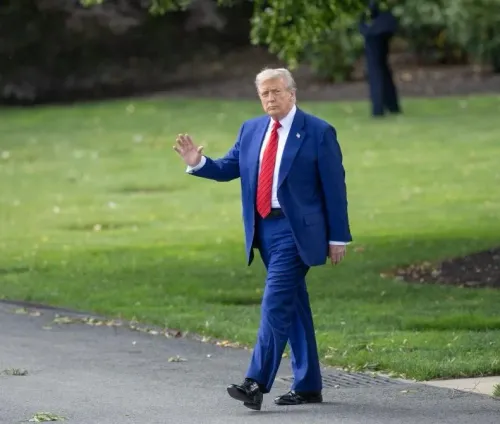
“My only desire is freedom for the people,” Trump shared with The Washington Post during a brief phone conversation shortly after 4 a.m. Eastern time on Saturday.
“I want a secure nation, and that’s precisely what we shall achieve,” he added.
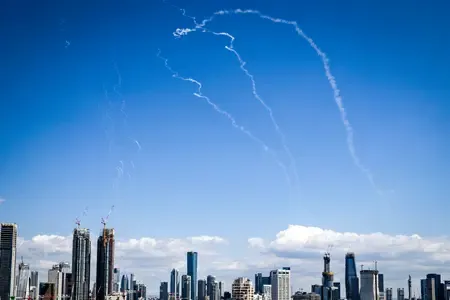
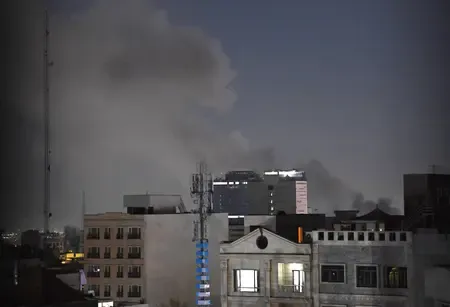
A U.S. official confirmed that the operation commenced at approximately 1 a.m. Eastern time, involving ship-launched Tomahawk cruise missiles and air-launched munitions from U.S. Air Force and Navy aircraft. The administration has dubbed this mission “Operation Epic Fury.”
Iran swiftly retaliated with counterattacks targeting several U.S. military installations, including a support facility for the 5th Fleet in Bahrain, according to the official. Despite ongoing operations, no U.S. troops have been reported injured, the official stated.
Israel also confirmed its involvement in launching strikes against Iran on the same day.
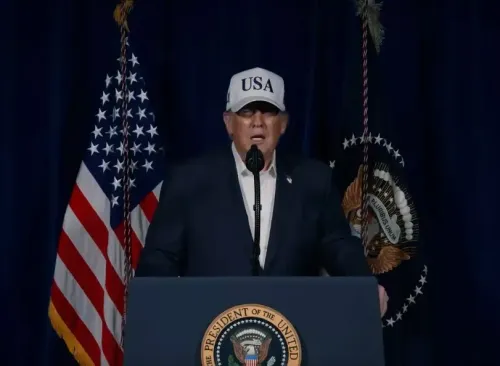
In a recorded video message made public around 2:30 a.m., Trump declared the commencement of “major combat operations.” He encouraged Iranians to “seize control of your government” once the attacks stop, stating, “this may be your only opportunity for generations.”
He acknowledged the inherent risks.
“The lives of brave American heroes may be at stake, and we could face casualties,” Trump remarked in his video statement. “Such occurrences are common in warfare. However, we are doing this not for the present, but for the future, and it is a noble mission.”
He continued, “No other president has been willing to take the actions I am prepared to take tonight.”
“Now you have a leader who is granting you what you desire, so let’s observe your response,” he stated. “America stands with you, providing overwhelming strength and devastating force.”
Trump justified the strikes as essential for “protecting the American people by neutralizing imminent threats posed by the Iranian regime,” accusing Tehran of a 47-year campaign of “mass terror” against the U.S. and of likely involvement in the al-Qaeda attack on the USS Cole in 2000.
He referenced the 1979 hostage crisis and the 1983 bombing of U.S. Marine barracks in Beirut.
“I developed and enhanced our military during my previous administration,” Trump stated, “and there is no military globally that compares to its power, strength, or sophistication.”
Before the military action began, The Wall Street Journal editorial board contended that “Iran’s regime is unwilling to negotiate on missiles or its nuclear program,” under the title “The Ayatollah Is Choosing War.”
Citing halted nuclear discussions in Geneva, the editorial noted that both parties remained significantly apart on critical issues. It added that Iran dismissed the notion of relocating uranium stockpiles abroad, opposed ceasing enrichment, dismantling its nuclear facilities, and imposing permanent restrictions on its program.
The Journal indicated that the regime “won’t even allow Mr. Trump to err,” stating that Ayatollah Ali Khamenei “seems to view conceding to U.S. demands as a greater risk to his authority than facing an attack.”
The New York Times, in a Saturday analysis, labeled the strike as “the ultimate war of choice,” asserting that “There was no immediate threat from Iran.”
The analysis further highlighted: “He was not motivated by an immediate threat. There was no race for a bomb.”
Quoting Richard N. Haass, former president of the Council on Foreign Relations, the Times remarked: “Similar to the second Iraq war, there existed no necessity to attack Iran; there was merely an opportunity.”
In his November 2024 election night speech, Trump had stated: “We defeated [Islamic State] in record time, but we had no wars. They said I would initiate a war. I’m not going to begin a war. I’m committed to ending wars.”
Vice President JD Vance remarked to The Washington Post shortly before the assault: “The notion that we will engage in a Middle Eastern war with no end in sight is simply not going to happen.”
The United States has been in opposition to Iran since the Islamic Revolution of 1979.
Relations deteriorated significantly after the 444-day hostage crisis, and tensions have periodically intensified over Iran’s nuclear ambitions, regional proxy networks, and missile advancements. Washington withdrew from the 2015 nuclear agreement during Trump’s initial term and reinstated extensive sanctions.
Point of View
The risks involved in such military actions are substantial. It is crucial to consider the implications for regional stability and global security.
NationPress
2 Oct 2026
Frequently Asked Questions
What is the reason behind the U.S. military operation against Iran?
President Trump claims the operation aims to secure freedom for the Iranian people and eliminate imminent threats posed by the Iranian regime.
What is 'Operation Epic Fury'?
'Operation Epic Fury' is the name given to the U.S. military campaign against Iran that commenced recently.
What has been Iran's response to the U.S. strikes?
Iran quickly retaliated with counterattacks targeting U.S. military bases, including those in Bahrain.
How have major media outlets reacted to the military action?
Media outlets have characterized the operation as a potential bid for regime change and a high-risk 'war of choice.'
What historical context is relevant to this conflict?
U.S.-Iran relations have been strained since the 1979 Islamic Revolution, and tensions have frequently escalated over issues such as Iran's nuclear program and regional influence.