US Military Operations Against Iran on Track as Trump Eyes Leadership Future
Synopsis
The White House reports that US military operations targeting Iran are making significant progress under President Trump. With a focus on boosting American weapon production and assessing Iran's potential leadership changes, Operation Epic Fury aims to eliminate threats posed by Iran’s military forces.
Key Takeaways
Operation Epic Fury aims to neutralize Iranian military threats.
US military operations are reportedly achieving their objectives quickly.
Significant damage has been inflicted on Iran's naval forces.
US intelligence is assessing potential future leadership in Iran.
President Trump emphasizes increasing US arms production capacity.
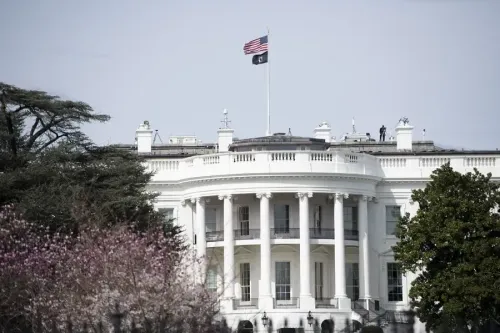
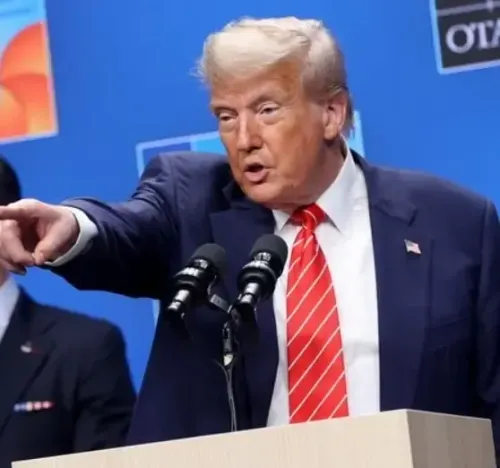
Washington, March 7 (NationPress) The White House announced that US military actions against Iran are swiftly reaching their intended goals, as President Donald Trump simultaneously advocates for an increase in American arms production and evaluates potential future leadership in Iran.
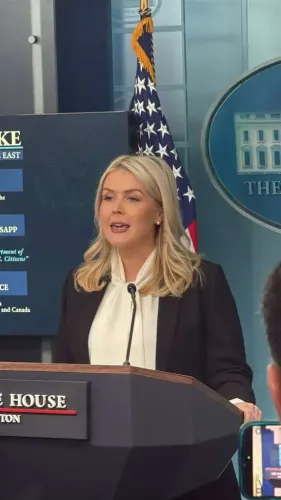
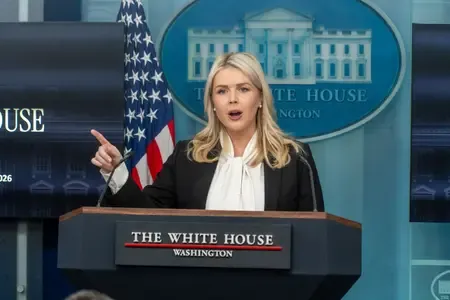
Press Secretary Karoline Leavitt informed journalists at the White House that the ongoing military initiative—termed Operation Epic Fury—is advancing rapidly and could fulfill its objectives within weeks.
“What I can share is what President Trump has already communicated, which is that the achievable goals of Operation Epic Fury are expected to span approximately four to six weeks, and we are making significant progress toward those goals,” she stated.
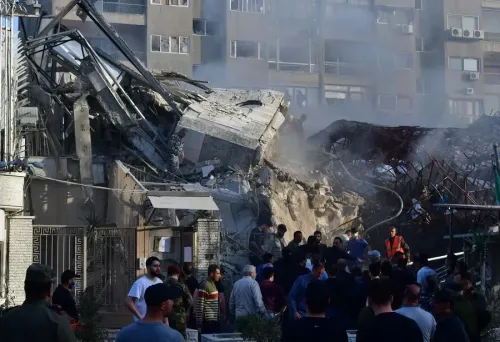
Leavitt highlighted that the United States has already dealt considerable damage to Iran’s military capabilities, with a particular focus on its naval forces.
“By decimating Iran's Navy, we can confirm that we have sunk more than 30 Iranian vessels. Their naval forces are now classified as combat ineffective,” she explained.
The White House indicated that the operation also aims to neutralize the ballistic missile threat from Iran towards US personnel and installations in the region.
“We are effectively eliminating the ballistic missile threat that Iran posed to the United States and our forces in the area. Our efforts have been remarkably successful,” Leavitt remarked.
She noted that the impacts are already apparent on the battlefield.
“Just six days in, the retaliatory ballistic missile strikes from Iran have declined by 90 percent,” she added.
The press secretary further remarked that Iranian-supported proxy factions have not mounted a significant counter-offensive.
“Hezbollah and the Houthis have barely put up any resistance in the last six days,” she noted.
Leavitt emphasized that the overarching goal of the operation is to mitigate the threat that Iran poses to the United States and its allies.
“Ultimately, the president has made it very clear; he aims to eliminate the danger from Iran to the United States, and Operation Epic Fury is well on its path to accomplish that,” she stated.
She also elaborated on Trump’s statements regarding Iran's “unconditional surrender,” explaining that this term refers to a scenario where Tehran no longer constitutes a risk to the United States.
“What the President intends is that when he, as commander-in-chief of the US Armed Forces, assesses that Iran no longer represents a threat to the United States and the objectives of Operation Epic Fury have been fully achieved, then Iran will essentially be in a state of unconditional surrender,” she clarified.
Leavitt suggested that the Iranian leadership framework has already been severely diminished.
“They lack adequate personnel to represent them because the United States and Israel have virtually eliminated over 50 leaders of the former terrorist regime,” she pointed out.
When asked about Iran’s political future, Leavitt mentioned that US intelligence agencies are analyzing various leadership scenarios within the country.
“I know that there are several individuals under consideration by intelligence agencies and the US government, but I cannot disclose further details,” she said.
She also played down reports of Russian intelligence support for Iran, asserting that the battlefield situation illustrates that the US military remains firmly in command.
“It evidently isn't influencing military operations in Iran, as we are thoroughly dismantling them,” she asserted.
The press secretary confirmed that Trump was scheduled to meet defense contractors at the White House later that day to discuss boosting US weapons production capabilities.
She stated that the meeting aims to reinforce the administration’s “aggressive and strong support for rapidly enhancing the capacity of US manufacturers to produce American-made arms.”
Point of View
The ongoing US military operations against Iran reflect a strategic approach to neutralize perceived threats while reevaluating leadership dynamics within Iran. The administration's focus on military strength and production underscores a commitment to national security.
NationPress
29 Sept 2026
Frequently Asked Questions
What is Operation Epic Fury?
Operation Epic Fury is a US military campaign aimed at neutralizing threats from Iran, particularly its naval capabilities and ballistic missile threat to US forces.
How is the US military performing in this operation?
The US military is reportedly making significant progress, having inflicted considerable damage on Iran's military capabilities and reducing retaliatory strikes by 90%.
What is the broader goal of Operation Epic Fury?
The broader objective is to eliminate the threat Iran poses to the United States and its allies, ensuring regional stability.
What does unconditional surrender mean in this context?
Unconditional surrender refers to a situation where Iran no longer poses a threat to the United States, as determined by the President.
Is there any external support for Iran?
Reports of Russian intelligence support for Iran have been downplayed, with assertions that the US military remains in control of the situation.