Could Trump's Gaza Strategy Lead to Pakistan's 'Hoodwinking' Strategy Backfiring?

Synopsis
What happens when a long-standing strategy of 'hoodwinking' meets a transactional U.S. leadership? This report delves into the precarious balance of power between Pakistan and the U.S. under the leadership of Asim Munir and Donald Trump, emphasizing the potential repercussions of their high-stakes Gaza stabilisation efforts.
Key Takeaways
Pakistan's 'hoodwinking' may be losing effectiveness.
Asim Munir's leadership is under scrutiny amid U.S. relations.
Economic and political stakes are intertwined in the Gaza strategy.
Unmet commitments could strain U.S.-Pakistan relations further.
Geopolitical dynamics are shifting in the region.
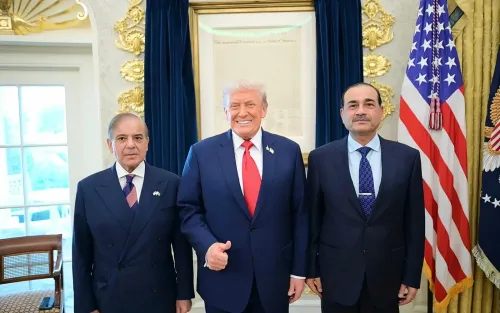
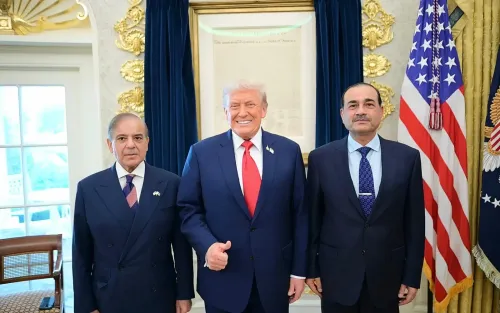
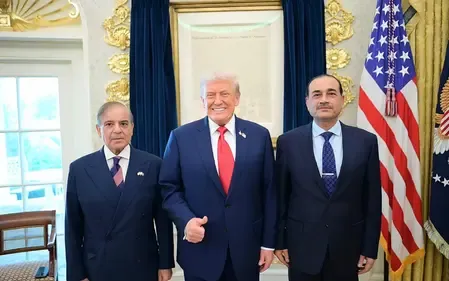
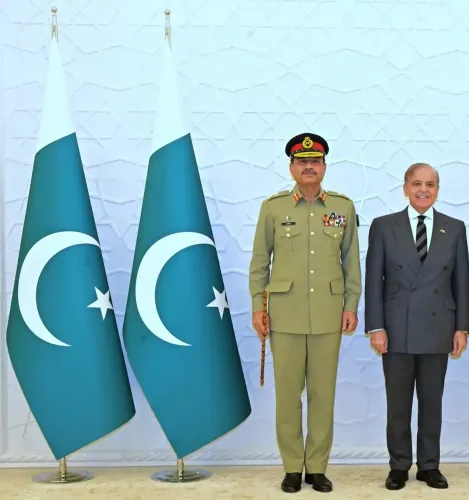
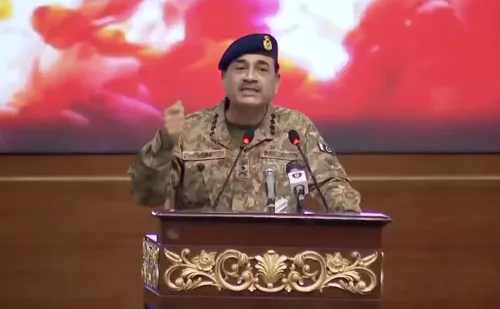
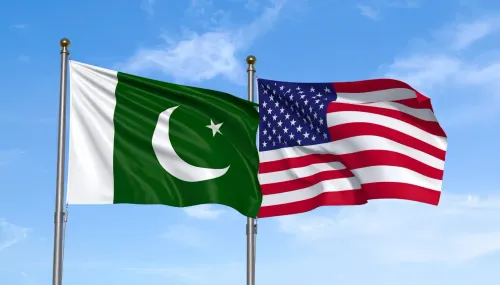
Abu Dhabi, Dec 27 (NationPress) Pakistan's longstanding tactic of 'hoodwinking' is at risk of becoming less effective in an increasingly transactional and leader-focused United States, especially after the Pakistani Army Chief, Asim Munir, has pledged troops to assist US President Donald Trump's ambitious Gaza stabilisation initiative.
If Trump perceives Munir as just another 'unreliable partner'—one who seeks concessions while failing to deliver—the assurances Munir seeks regarding his tenure, investment, and leniency towards Imran Khan could deteriorate swiftly, according to a report released on Saturday.
“Field Marshal Asim Munir's rise to power as Pakistan's most formidable military leader in decades coincides with President Donald Trump's risky Gaza stabilisation plan, creating a conducive environment for a transactional agreement between Rawalpindi and Washington. Munir commits Pakistani forces for Trump's envisioned International Stabilisation Force (ISF) in Gaza, while the US, in exchange, provides economic support, political protection, and allowances for his domestic crackdown, particularly against Imran Khan and the Pakistan Tehreek-e-Insaf (PTI),” the UAE-based Al Arabiya Post reported.
“However, as pressures mount, Pakistan's familiar pattern of over-promising and under-delivering seems to be resurfacing, with Munir hesitating on ISF commitments while maximizing geopolitical advantages,” it added.
The report indicates that Munir's authority currently rests on solid institutional control over the military and intelligence sectors, a compliant civilian facade in Islamabad, and a strategic degradation of Imran Khan's political opposition.
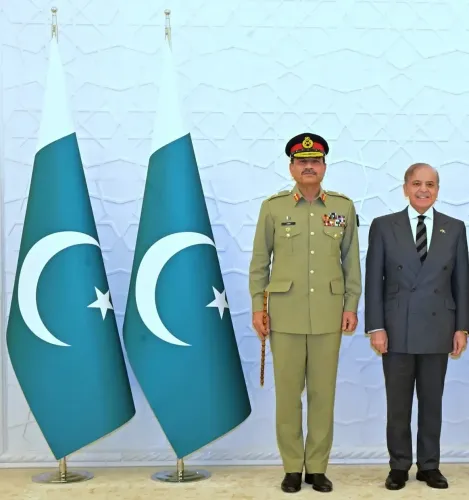
“His promotion to Field Marshal, consolidation of power across all three military branches, and relentless suppression of PTI following the unrest of May 9, 2023, have established him as Pakistan's de facto ruler, but he has also become the primary scapegoat for economic struggles, political oppression, and strategic failures, such as the embarrassment of India's Operation Sindoor,” it elaborated.
According to the report, external support has transformed into a necessity for Munir rather than a luxury, compelling him to seek three guarantees from Washington.
“First, discreet backing for extending his tenure and maintaining his exceptional powers beyond conventional institutional limits. Second, investments and economic relief to stabilize Pakistan’s faltering economy and create a narrative of 'rescue through strategic alignment', as evidenced by recent US-Pakistan Memorandums of Understanding on mineral and energy investments. Third, an overlooking of legal prosecution, media suppression, and physical isolation of Imran Khan, who is increasingly seen as the central victim of a military-engineered political purge,” it stated.
The report further noted that if Munir continues to delay, Washington may be compelled to either dilute the ISF concept by relying on a smaller, less credible coalition or confront Pakistan more directly over unmet obligations—both scenarios carrying significant repercussions.
“The Faustian bargain,” it cautioned, which promised the Pakistani Army chief 'external protection in exchange for Gaza' may ultimately collapse, leaving him vulnerable domestically and increasingly distrusted internationally.
Point of View
It's essential to approach this narrative with a balanced perspective. The evolving dynamics between Pakistan and the U.S. under the influence of military and political leaderships highlight significant geopolitical concerns. It is crucial to remain vigilant and informed about these developments that may affect regional stability.
NationPress
30 Sept 2026
Frequently Asked Questions
What is Pakistan's 'hoodwinking' tactic?
Pakistan's 'hoodwinking' tactic refers to its historical approach of misleading foreign powers about its commitments, often extracting concessions without delivering on promises.
What is the International Stabilisation Force (ISF)?
The International Stabilisation Force (ISF) is a proposed coalition aimed at stabilizing Gaza, which involves contributions from various nations, including troops from Pakistan.
Why is external support critical for Munir?
External support is vital for Munir to maintain his power and authority, particularly as he navigates complex political challenges within Pakistan.
What could happen if commitments are unmet?
If commitments are unmet, it could lead to a weakened ISF concept and a more direct confrontation between the U.S. and Pakistan, with significant geopolitical implications.