Is Trump Pushing for a New ‘Golden Fleet’ of Battleships?
Synopsis
In a bold announcement, President Donald Trump reveals plans for a new class of battleships, dubbed the 'Golden Fleet.' This initiative aims to revitalize US shipbuilding capacity and military strength. With the Navy set to construct the largest battleships ever, the move symbolizes a commitment to American maritime power.
Key Takeaways
Two new battleships will be the largest ever constructed.
They will feature cutting-edge technology, including hypersonic weapons.
The initiative aims to bolster US military strength and shipbuilding capacity.
Construction is set to begin almost immediately with a timeline of 2.5 years.
The project is expected to create thousands of jobs in the shipbuilding industry.
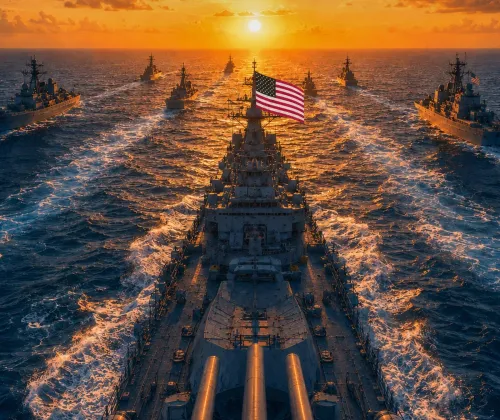
Washington, Dec 23 (NationPress) President Donald Trump has announced a significant initiative aimed at initiating the construction of a new class of enormous battleships. This move is part of a comprehensive strategy to enhance US shipbuilding capabilities, bolster deterrence, and reclaim what he termed as American military dominance.
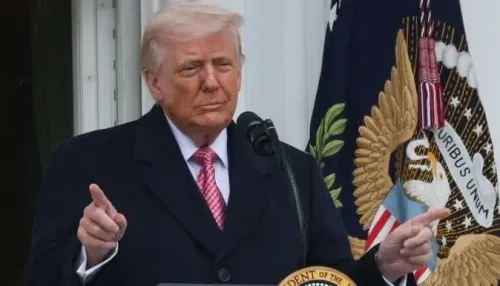
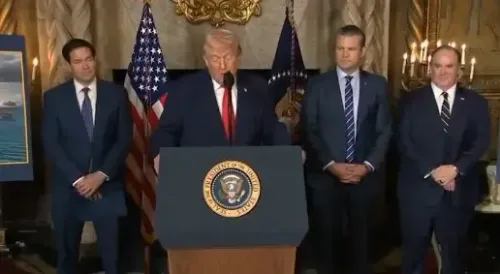
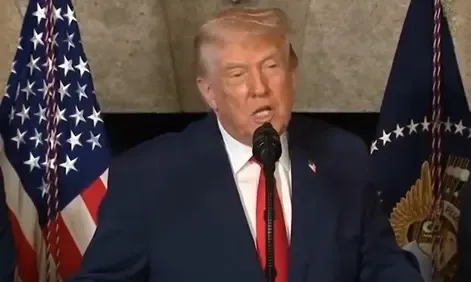
At a press conference held at Mar-a-Lago, Trump expressed, “Today, I proudly declare that I have sanctioned a plan for the Navy to commence building two of the largest battleships in history.”
Joined by Defence Secretary Pete Hegseth, Secretary of State Marco Rubio, and Navy Secretary John Phelan, Trump elaborated that he had greenlit the Navy to begin immediate construction of two new battleships, dubbing them the cornerstone of a forthcoming “Golden Fleet.”
“They will be the fastest, the largest, and unequivocally — 100 times more powerful than any battleship ever produced,” he emphasized.
According to Trump, these new vessels will surpass the historic Iowa-class ships in size, becoming “the most heavily armed ships specifically designed for naval warfare.”
He stated that the ships will be equipped with cutting-edge missile systems, hypersonic weaponry, advanced targeting technologies, lasers, and will have the capability to launch nuclear-armed cruise missiles.
“These will rank among the most lethal surface combat ships,” he stated, asserting that they would spearhead a resurgence of US maritime strength and shipbuilding.
Trump mentioned that construction would commence “almost immediately,” with an estimated timeline of about 2.5 years. The Navy envisions a fleet of 20 to 25 of these battleships over time.
“We will start with two and swiftly expand to 10,” Trump said. “Ultimately, we envision a fleet ranging from 20 to 25 of these ships.”
He characterized the initiative as both a military and industrial endeavor, indicating it would rejuvenate American shipyards, generate thousands of jobs, and restore domestic manufacturing capabilities.
Trump noted that these new vessels would displace between 30,000 to 40,000 tons and would be constructed in US shipyards, while urging defense contractors to expedite production and reinvest profits into infrastructure rather than stock buybacks or executive compensation.
“We want the profits to go into building production facilities,” Trump stated. “We don’t want them to repurchase their stock. We want them to invest in plants and equipment to accelerate the construction of these ships.”
Hegseth remarked that this announcement signifies a generational shift in America’s defense approach, correlating naval expansion with border security, counter-narcotics operations, and global deterrence.
“This new class signifies a generational commitment to American naval power,” he stated, adding that these investments would reinstate the “warrior ethos” at the Department of Defense.
Navy Secretary Phelan described the upcoming “Trump-class” battleships as “the largest, deadliest, and most versatile warships across the globe,” designed to deliver overwhelming offensive capabilities and command naval operations over extensive distances.
He mentioned that these ships would reinstate the role of battleships as fleet flagships capable of commanding operations “from warships to drones and everything in between.”
Rubio characterized the announcement as part of a broader initiative to restore US industrial might and uphold freedom of navigation. “The US Navy is the foremost source of global peace,” he asserted, calling this shipbuilding initiative a concrete symbol of American industrial prowess.
Trump dismissed claims that the battleships were targeted at any specific nation, stating, “It’s a counter to everyone. It’s not about China.” He reiterated that the objective is deterrence through strength, adding, “Hopefully, we will never need to deploy them.”
This announcement arrives amid ongoing concerns within the US defense community regarding dwindling shipyard capacities, aging fleets, and competition with China’s rapidly growing navy.
Since the mid-1990s, the US Navy has not constructed a new battleship, relying instead on aircraft carriers, submarines, and smaller surface vessels.
Historically, battleships played a crucial role during World War II and symbolized American naval might, although advancements in missile and submarine warfare gradually diminished their prominence.
Point of View
This announcement reflects a strong commitment by the US government to enhance its military capabilities and industrial base. While the initiative aims to address concerns about aging fleets and competition with global naval powers, it also raises questions about the balance of military spending and domestic priorities. The focus on revitalizing shipbuilding jobs is commendable, yet it is crucial to ensure that this military expansion aligns with broader national interests.
NationPress
27 Sept 2026
Frequently Asked Questions
What is the 'Golden Fleet' initiative?
The 'Golden Fleet' initiative refers to President Trump's announcement of constructing a new class of battleships aimed at revitalizing US naval power and shipbuilding capacity.
How many battleships are planned?
Initially, two battleships are planned, with a vision to expand the fleet to between 20 to 25 over time.
What features will these battleships have?
The new battleships will be equipped with advanced missile systems, hypersonic weapons, lasers, and the capability to launch nuclear-armed cruise missiles.
When is the construction expected to start?
Construction is expected to start almost immediately, with an initial timeline of about 2.5 years for the first two ships.
What does this mean for US shipyards?
This initiative aims to boost US shipyards, create thousands of jobs, and restore domestic manufacturing capabilities.