Is the Tulip Festival 2026 in New Delhi Starting Tomorrow?
Synopsis
Excitement builds as the Tulip Festival-2026 organized by the NDMC is set to launch tomorrow. With a special Tulip Walk and exhibition featuring stunning floral displays, this event promises to be a visual treat in the heart of New Delhi. Don't miss out on the chance to experience this vibrant celebration of nature!
Key Takeaways
Tulip Festival-2026 to commence on February 23.
Located at Shanti Path Lawn , New Delhi.
Features a special Tulip Walk and exhibition.
5.53 lakh tulip bulbs to be planted this year.
Focus on sustainability and beautification efforts.
New Delhi, Feb 22 (NationPress) The highly anticipated Tulip Festival-2026, organized by the New Delhi Municipal Council (NDMC), is set to officially commence tomorrow at the scenic Shanti Path Lawn in the heart of the capital, as confirmed by an official on Sunday.
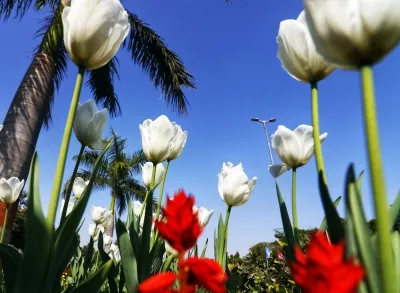
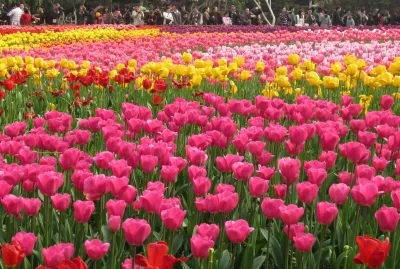
During the event, attendees can look forward to a special Tulip Walk and an exhibition showcasing an impressive collection of blooming tulips and floral arrangements, curated by the Horticulture Department. This will take place starting tomorrow morning at the lawn adjacent to the Embassy of Sudan in Chanakyapuri.
Originally scheduled to kick off on February 17, this year’s festival was delayed by a week due to heightened security measures for the India AI Impact Summit 2026 in New Delhi.
In the NDMC's budget announcement last month, Vice-Chairperson Kuljeet Singh Chahal emphasized the agency's vision for a grand-scale Tulip Festival-2026.
He revealed plans to plant a total of 5.53 lakh tulip bulbs, with many produced in-house and in Palampur, Himachal Pradesh as part of the Make in India initiative.
Last year marked a significant first for the NDMC, as they made one lakh potted tulip bulbs available for sale to the public at various locations including Shanti Path Lawn, Lodhi Garden, Nehru Park, Talkatora Garden, Central Park, and NDMC nurseries.
Chahal also highlighted other beautification efforts, stating, “The NDMC is on a mission to become the most progressive municipality in the country, focusing on sustainability and self-reliance.”
He added that the goal is to create a New Delhi that serves as a beacon of modernity, sustainability, and civic responsibility, aligning with the vision set by Prime Minister Narendra Modi.
Furthermore, a park near Nazaf Khan Road in Lodhi Colony is being transformed into a Miyawaki forest.
Under the ongoing plantation drive, a total of 3,500 trees, 29.93 lakh shrubs, and 502 bamboo plants have already been planted, with targets set for the next year to plant an additional 5,100 trees and 4,71,150 shrubs. The NDMC is also implementing irrigation through treated effluent, with 10 decentralized sewage treatment plants (STPs) already operational and plans for 12 new STPs and five Effluent Treatment Plants.
Point of View
It highlights the importance of community engagement and environmental responsibility.
NationPress
2 Oct 2026
Frequently Asked Questions
When is the Tulip Festival-2026 being held?
The Tulip Festival-2026 will officially be inaugurated tomorrow, February 23, 2026.
Where will the festival take place?
The festival will be held at Shanti Path Lawn in New Delhi.
What can visitors expect at the festival?
Visitors can enjoy a Tulip Walk and an exhibition featuring a variety of tulips and floral displays.
Why was the festival postponed?
The festival's inauguration was postponed due to security measures for the India AI Impact Summit 2026.
How many tulip bulbs will be planted this year?
This year, a total of 5.53 lakh tulip bulbs are set to be planted.