Udit Raj slams India women's trophy snub of Mohsin Naqvi as 'theatrics'
Synopsis
Congress leader Udit Raj broke from the nationalist consensus to label India's women's cricket team 'theatrical' for snubbing ACC chief Mohsin Naqvi at the trophy ceremony — even as India clinched a record eighth Women's Asia Cup title. It is the second successive Asia Cup, across men's and women's cricket, where an Indian side has made this gesture, raising questions about whether a diplomatic stance is hardening into policy.
Key Takeaways
Congress leader Udit Raj called the Indian women's team's trophy refusal 'theatrics' and 'only drama' on 14 September 2026 .
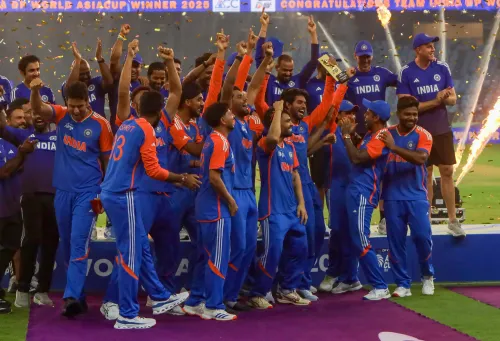
India defeated Sri Lanka by 72 runs in the Women's Asia Cup final to claim a record-extending eighth title .
Captain Harmanpreet Kaur and her teammates declined to receive the trophy from ACC Chairman Mohsin Naqvi at the post-match ceremony.
The Indian men's team had made an identical gesture at the Asia Cup trophy presentation in Dubai less than a year earlier.
Home Minister Amit Shah announced the UCC will be implemented in all 21 NDA-governed states before 2029 ; Udit Raj argued the priority should instead be caste annihilation.
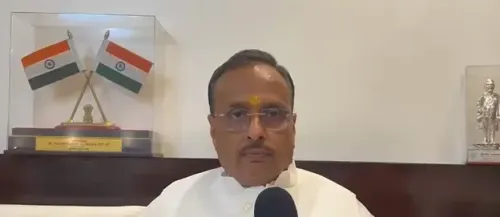
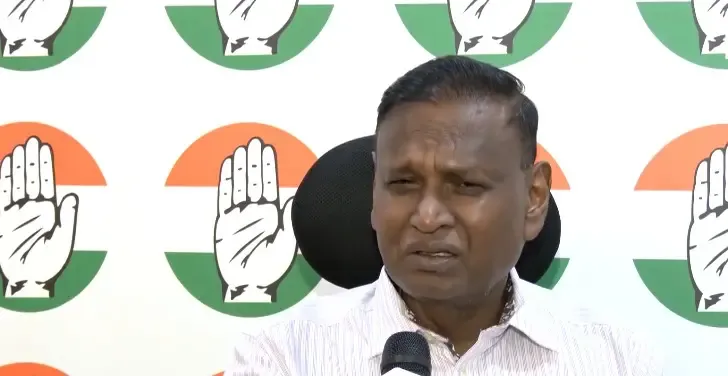
Congress leader Udit Raj on Monday, 14 September 2026, publicly criticised the Indian women's cricket team for declining to accept the Women's Asia Cup trophy from Asian Cricket Council (ACC) Chairman Mohsin Naqvi, dismissing the gesture as little more than political drama.
What Udit Raj Said
'Again, theatrics, terrible theatrics, and event theatrics,' Udit Raj said. 'When the Pakistan team has already come, the Pakistani players have come here, are staying here and are playing, then this theatrics of not taking the trophy from his hands is only drama.'
The Congress leader's remarks set him apart from the broader wave of nationalist sentiment that had largely applauded the squad's decision, reflecting an internal tension within India's opposition over how to respond to cricket diplomacy controversies.
What Happened on the Field and at the Podium
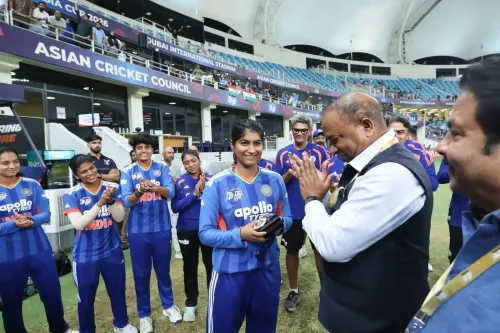
The controversy stems from the post-match presentation ceremony on Sunday, held after India secured a dominant 72-run victory over Sri Lanka in the Women's Asia Cup final. The win handed India a record-extending eighth Women's Asia Cup title — the most by any nation in the tournament's history.
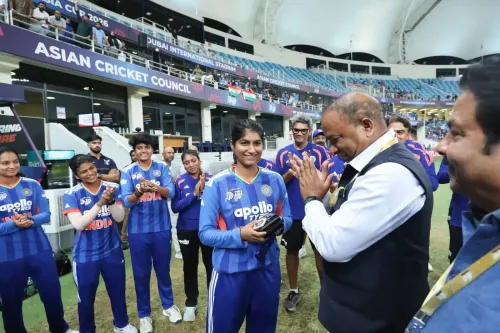
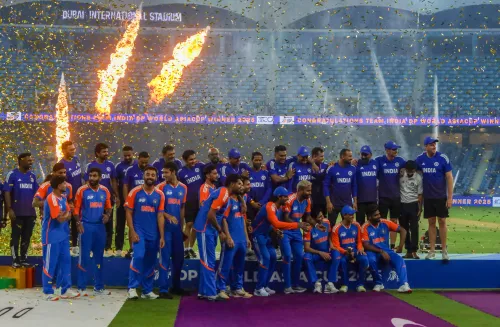
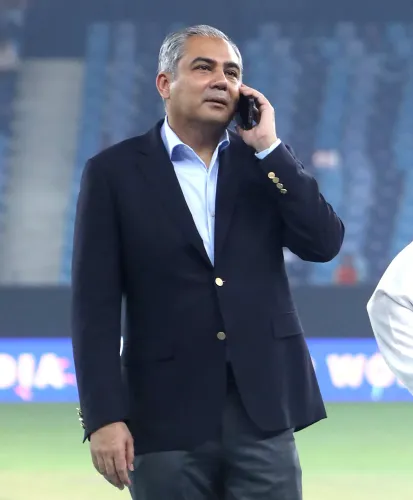
Despite the historic win, captain Harmanpreet Kaur and her teammates declined to receive the trophy from Naqvi, who also serves as Pakistan's Interior Minister. The gesture was widely seen as a continuation of a pattern set by the Indian men's team, which had similarly refused to accept the Asia Cup trophy from Naqvi in Dubai less than a year earlier.
A Pattern Beyond One Tournament
Notably, this is now the second successive Asia Cup cycle — across both the men's and women's competitions — in which an Indian team has declined to accept the trophy from the ACC chief. Critics of Udit Raj's position argue that the refusal is a principled stance rooted in India-Pakistan diplomatic tensions; supporters of his view contend that the optics are inconsistent given Pakistan's active participation in the tournament on Indian soil.
The incident feeds into a broader, recurring debate over how Indian sport navigates its political relationship with Pakistan, particularly at bilateral or pan-Asian competitions.
Udit Raj on 'Vande Mataram' Row and UCC
Separately, Udit Raj also weighed in on the controversy surrounding the singing of 'Vande Mataram' before the National Anthem during the India vs Afghanistan T20I match. He urged against amplifying what he called an unnecessary narrative. 'What is the big deal in this? The only thing that truly matters is that they played properly. They won, and we congratulate them on their victory,' he said.
The Congress leader further took aim at Union Home Minister Amit Shah's announcement that the Uniform Civil Code (UCC) would be implemented across all 21 states governed by the Bharatiya Janata Party (BJP)-led National Democratic Alliance (NDA) before 2029. Shah had made the statement at a press conference in Mumbai on Sunday.
'What purpose will implementing the UCC serve? Instead, the focus should be on eradicating caste. Without the annihilation of caste, genuine national progress cannot be achieved,' Udit Raj said. He added that caste structures had 'done a lot of harm to talent and education,' arguing that development targets were unachievable without addressing those systemic inequalities.
Shah, meanwhile, had said: 'We introduced the Uniform Civil Code (UCC) in several states. I am confident that we will implement the UCC in all 21 states governed by the BJP-led NDA before 2029.' The UCC seeks to establish a common set of personal laws — covering marriage, divorce, inheritance, and adoption — applicable across religious communities.
What to Watch
With the UCC rollout timeline now firmed up by Shah, the political debate over its scope and social consequences is set to intensify ahead of state elections in the NDA's target states. On the cricket front, the BCCI's tacit approval — or at least non-intervention — in the trophy-refusal tradition raises questions about whether this will become formalised policy at future ICC and ACC events.
Point of View
Yet accepting a trophy from their minister is treated as a red line — is a legitimate logical tension that mainstream coverage has largely glossed over. On the UCC, his pivot to caste annihilation is a long-standing Dalit-political argument, but conflating two unrelated controversies in one press interaction dilutes both critiques. The real story here may be institutional: if two successive Asia Cup-winning Indian squads have now independently made this gesture, it is no longer spontaneous — it is a pattern that the BCCI and the government must eventually own or disown.
NationPress
14 Sept 2026
Frequently Asked Questions
Why did the Indian women's cricket team refuse the Women's Asia Cup trophy from Mohsin Naqvi?
Captain Harmanpreet Kaur and her teammates declined to receive the trophy from ACC Chairman Mohsin Naqvi — who also serves as Pakistan's Interior Minister — at the post-match ceremony following India's 72-run win over Sri Lanka. The gesture mirrors a similar refusal by the Indian men's team at an earlier Asia Cup event in Dubai, and is widely seen as a reflection of India-Pakistan diplomatic tensions.
What did Udit Raj say about the trophy refusal?
Congress leader Udit Raj dismissed the refusal as 'theatrics,' arguing it was inconsistent because Pakistan's players were already present and competing on Indian soil. He called it 'only drama' and said the team's focus should have been on their historic eighth title.
How many Women's Asia Cup titles has India won?
India's victory in the 2026 Women's Asia Cup final — by 72 runs over Sri Lanka — gave them a record-extending eighth title, the most by any nation in the tournament's history.
What is Amit Shah's Uniform Civil Code announcement?
Home Minister Amit Shah announced at a press conference in Mumbai on Sunday that the UCC will be implemented in all 21 states governed by the BJP-led NDA before 2029. The UCC seeks to establish uniform personal laws on marriage, divorce, inheritance, and adoption, regardless of religious affiliation.
What is Udit Raj's position on the Uniform Civil Code?
Udit Raj opposed prioritising the UCC, arguing the government should instead focus on eradicating caste, which he said has historically damaged talent and education. He said national development cannot be achieved without addressing these systemic caste inequalities first.