UN General Assembly reforms budget rules in 4-year trial, Guterres hails decision
Synopsis
The UN General Assembly has voted to end a rule that forced the organisation to return unspent funds — even money it never actually received. The four-year trial reform, championed by Guterres since the start of his mandate, is designed to stabilise peacekeeping finances and gives his successor a more workable financial foundation.
Key Takeaways
The UN General Assembly voted on 1 July to reform financial rules governing unspent budget appropriations.
Under the new rule, unspent funds will be returned to member states only when backed by actual cash, adopted for a four-year trial period .
Secretary-General António Guterres called the change critical for the UN 's operational continuity, especially for peacekeeping operations .
The old rule required credits to be returned even to member states in arrears — including funds never actually received.
Guterres, whose term ends in 2025 , said the reform will significantly benefit his successor.
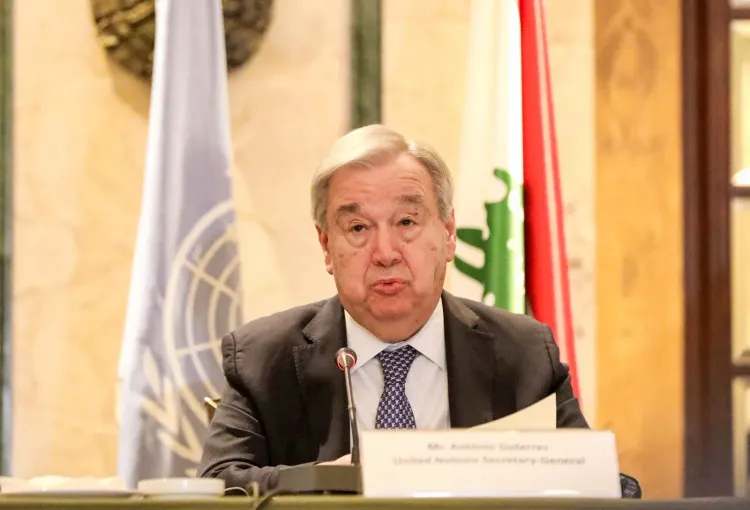
UN Secretary-General António Guterres on Tuesday, 1 July welcomed a landmark decision by the United Nations General Assembly to reform long-standing financial rules governing unspent budget funds — a change he described as critical to the organisation's operational stability.
What the Assembly Decided
The General Assembly voted to modify an existing financial rule that had required the world body to return unspent appropriations as credits to member states at the end of each budget period — including to those in arrears. Under the new methodology, adopted for a four-year trial period, unspent funds will be returned to member states only when they are backed by actual cash. The change applies primarily to the regular budget and peacekeeping budgets.
What Guterres Said
'I welcome today's decision by the General Assembly to reform financial rules that were putting the Organisation's stability at risk,' Guterres said in a statement. He added that the reform would allow the UN to 'manage resources in a more predictable and responsible way, and to better deliver on the mandates given by Member States.'
Guterres noted that he had called for this change 'since the very beginning' of his mandate, and expressed gratitude to member states for acting on it. 'I am grateful to Member States for taking this important step,' he said.
Why the Old Rule Was Problematic
The previous rule created a structural vulnerability: the UN was obligated to return funds — even those it had never actually received — whenever budget periods closed. This was particularly damaging for peacekeeping operations, which require consistent and predictable cash flows. The reform directly addresses that gap by decoupling the return of credits from the availability of cash.
Notably, the problem has been compounded by chronic arrears from certain member states, which has strained the organisation's liquidity over multiple budget cycles.
Significance for the Next Secretary-General
Guterres, whose term expires at the end of 2025, pointed out that the reform would particularly benefit his successor. 'This important change will greatly benefit my successor who will no longer be hamstrung by being forced to return funds that were, all too often, never even received in the first place,' he said.
He also renewed his call on all member states to meet their financial obligations under the UN Charter, thanking those that have consistently paid their assessed contributions.
What Comes Next
The four-year trial period will allow the General Assembly to assess the new methodology before deciding on permanent adoption. The reform is expected to immediately ease pressure on the UN's peacekeeping and regular budget operations, providing greater financial headroom for ongoing mandates worldwide.
Point of View
But its implications run deeper than accounting. The old rule effectively subsidised non-payment: member states in arrears could receive credits from funds the UN had never collected, hollowing out peacekeeping liquidity year after year. The four-year trial framing is prudent — it gives the Assembly an off-ramp if the methodology creates unintended consequences — but the real test is whether it prompts delinquent contributors to actually pay. A reformed return rule does not fix the arrears problem; it merely stops the bleeding. The incoming Secretary-General will inherit a structurally sounder system, but only if member states treat their Charter obligations as binding rather than optional.
NationPress
29 Sept 2026
Frequently Asked Questions
What did the UN General Assembly decide on 1 July?
The General Assembly voted to reform a financial rule that previously required the UN to return unspent budget funds as credits to member states — including those in arrears — at the end of each budget period. The new methodology, adopted for a four-year trial, ensures such credits are only returned when backed by actual cash.
Why did the UN need to change its budget rules?
The old rule forced the UN to return credits even for funds it had never actually received, creating cash flow problems — particularly for peacekeeping operations. Secretary-General Guterres had flagged the rule as a threat to the organisation's financial stability since the start of his mandate.
How long will the new UN budget methodology be in effect?
The new methodology has been adopted for a four-year trial period, after which the General Assembly will assess its effectiveness before deciding on permanent adoption.
Who benefits most from the UN budget reform?
Peacekeeping operations stand to benefit most immediately, as they require predictable and consistent funding. Guterres also noted that his successor — who takes over at the end of 2025 — will inherit a more financially stable organisation as a result of the change.
What did Guterres say about member states and financial obligations?
Guterres thanked member states that have consistently paid their assessed contributions and renewed his call on all states to fulfil their financial obligations under the UN Charter.