UN chief calls for political will to end HIV by 2030 at General Assembly
Synopsis
Despite a 70 per cent drop in AIDS deaths since 2004, UN Secretary-General Guterres warned the General Assembly that 9.2 million people still lack HIV treatment as of 2024 — and that without renewed political will, financing, and multilateral solidarity, the 2030 target to end AIDS as a public health threat is at risk.
Key Takeaways
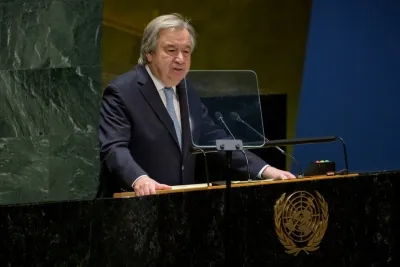
UN Secretary-General António Guterres addressed the High-Level Meeting on HIV/AIDS at the UN General Assembly on 22 June .
AIDS-related deaths have fallen by 70 per cent since their peak in 2004 and by 54 per cent since 2010 .
More than 32 million people living with HIV are currently on antiretroviral therapy.
As of end- 2024 , 9.2 million people in need still lack access to HIV treatment.
Guterres proposed five acceleration pathways: closing access gaps, community leadership, human rights, financing, and multilateralism.
The global target is to end AIDS as a public health threat by 2030 .
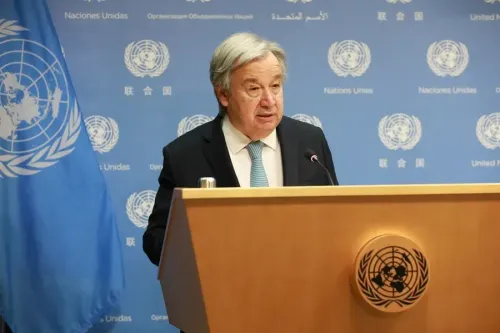
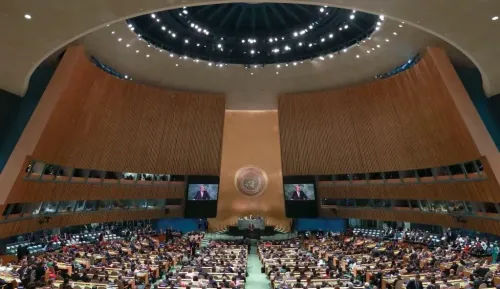
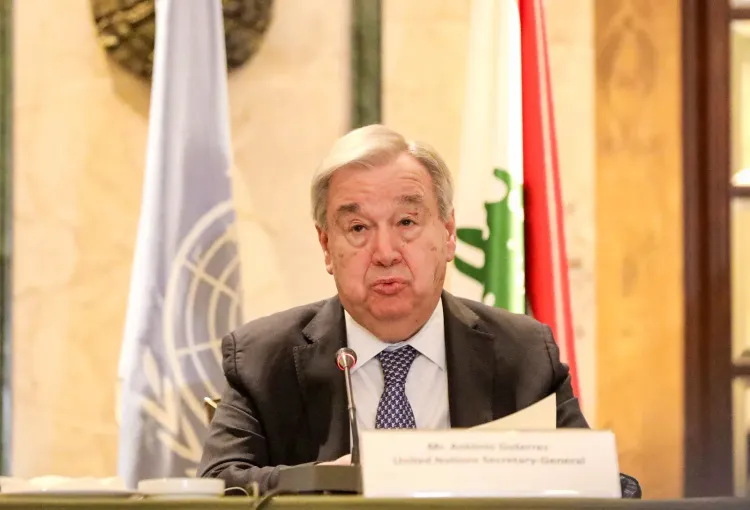
UN Secretary-General António Guterres on Monday, 22 June urged world leaders to summon the political will needed to accelerate and ultimately end the global HIV/AIDS fight, speaking at the Opening Plenary of the High-Level Meeting on HIV/AIDS at the United Nations General Assembly in New York. His remarks, delivered by UN Deputy Secretary-General Amina Mohammed, framed the gathering as a critical moment to move from resolve to results.
Four Decades of Progress — and Unfinished Business
Guterres noted that in the 45 years since the first AIDS case was reported, the world has demonstrated 'uncommon resolve and solidarity.' That commitment has yielded measurable gains: AIDS-related deaths have fallen by 70 per cent since their peak in 2004, and by 54 per cent since 2010. HIV prevention and treatment services have simultaneously cut new infections by 40 per cent since 2010.
Today, more than 32 million people living with HIV are receiving lifesaving antiretroviral therapy — a figure that would have been unimaginable at the epidemic's height. Yet Guterres was unequivocal: 'AIDS is not over.' As of the end of 2024, 9.2 million people who need HIV treatment still lack access to it.
Five Acceleration Pathways Proposed
The Secretary-General outlined five 'essential' pathways to close the remaining gap. These include closing widening disparities in access to prevention, treatment, and care; sustaining community leadership in the HIV response; protecting human rights; securing long-term financing; and reviving the multilateral spirit that has underpinned the response since its earliest days.
Notably, the emphasis on human rights and community leadership reflects a long-standing tension in the global AIDS response — that legal and social barriers in many countries continue to obstruct access for the most at-risk populations, even where medicines are available.
The Multilateral Moment
'The HIV response has shown that solidarity across borders and sectors can overcome fear, inequality and injustice,' Guterres said, adding that 'global, regional and local institutions are all essential to deliver together.' The high-level meeting, he argued, is an opportunity to demonstrate that the international community can once again rally around science, human dignity, and shared responsibility.
This comes amid growing concern over the fragility of global health financing, with major donor governments under domestic fiscal pressure and multilateral funding mechanisms facing uncertainty. The meeting's outcome is expected to shape commitments ahead of the 2030 target to end AIDS as a public health threat.
What Comes Next
The High-Level Meeting is expected to produce a political declaration that will guide national and international HIV strategies through the end of the decade. Whether governments translate the Secretary-General's five pathways into binding commitments — or repeat the pattern of aspirational pledges that outpace delivery — will determine whether the 2030 deadline remains credible.
Point of View
32 million on treatment — risk obscuring the structural stall. A gap of 9.2 million people without treatment at end-2024 is not a logistics problem; it is a political and financial one, concentrated in low-income countries where legal discrimination and donor dependency intersect. Guterres's five pathways are well-established in global health literature, but the meeting's real test is whether it produces enforceable financing commitments or another aspirational declaration. With major donor governments retreating from multilateral health spending, the multilateral spirit Guterres invokes is under more strain than at any point since the epidemic's early years.
NationPress
21 Sept 2026
Frequently Asked Questions
What was the UN High-Level Meeting on HIV/AIDS about?
The meeting, held at the UN General Assembly, brought together world leaders to assess progress in the global HIV response and renew political commitments toward ending AIDS as a public health threat by 2030. UN Secretary-General António Guterres used the occasion to call for accelerated action on treatment access, financing, and human rights.
How many people still lack HIV treatment globally?
As of the end of 2024, 9.2 million people who need HIV treatment do not have access to it, according to the UN Secretary-General. This gap persists despite more than 32 million people currently receiving antiretroviral therapy worldwide.
What progress has been made in the global HIV fight?
AIDS-related deaths have been reduced by 70 per cent since their peak in 2004 and by 54 per cent since 2010. New HIV infections have also fallen by 40 per cent since 2010, driven by expanded prevention and treatment programmes.
What are the five acceleration pathways proposed by Guterres?
Guterres proposed closing gaps in access to prevention, treatment, and care; sustaining community leadership in the HIV response; protecting human rights; securing long-term financing; and reviving multilateral solidarity. He described these as 'essential' to meeting the 2030 target.
What is the global target for ending AIDS?
The international community has committed to ending AIDS as a public health threat by 2030. The High-Level Meeting is expected to produce a political declaration that will guide national and global HIV strategies toward that deadline.