UN General Assembly adopts HIV/AIDS declaration, targets end of epidemic by 2030
Synopsis
The UN General Assembly has adopted a new HIV/AIDS political declaration — but the vote itself carried a warning. With 2025 targets already missed and 22 per cent of people living with HIV still without treatment, the 149-nation majority is as much an admission of failure as a recommitment. The 2031 review will decide whether this declaration was a turning point or another milestone on a road that keeps extending.
Key Takeaways
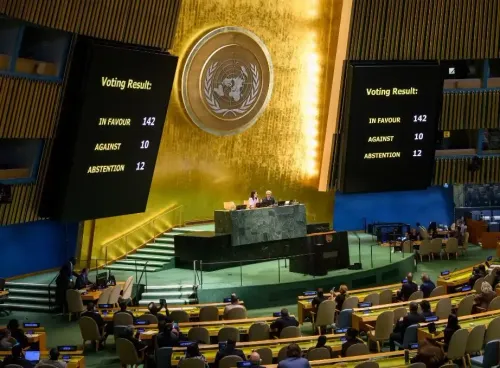
The UN General Assembly adopted a political declaration on HIV/AIDS on 24 June 2026 by a vote of 149 in favour , 8 against , and 14 abstentions .
The declaration reaffirms the global goal of ending AIDS as a public health threat by 2030 , while acknowledging the world missed its 2025 HIV targets .
Since 2010 , AIDS-related deaths have fallen by 56% and new infections by 43% , according to UNAIDS 2025 data .
32.1 million of 40.9 million people living with HIV — 78% — are currently on treatment.
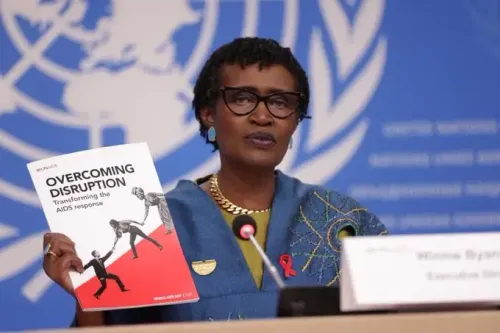
UNAIDS Executive Director Winnie Byanyima called the declaration 'our chance to build on 25 years of commitment.' A UNGA high-level review meeting is scheduled for 2031 to assess progress on the 2026 commitments.
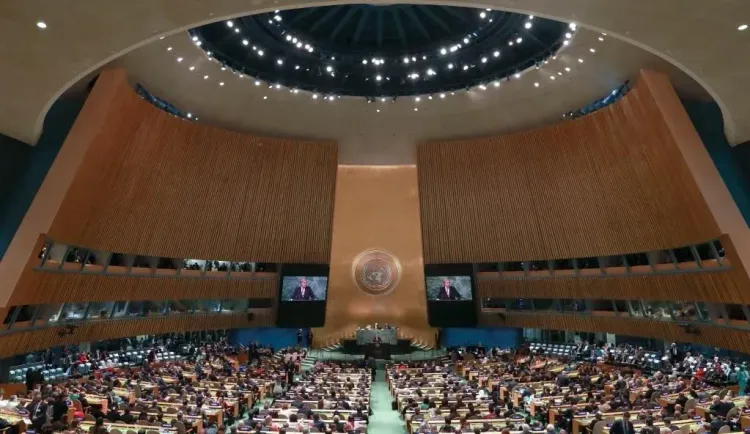
The United Nations General Assembly (UNGA) on 24 June 2026 adopted a landmark political declaration on HIV/AIDS, reaffirming the global commitment to end AIDS as a public health threat by 2030. The declaration passed by a vote of 149 in favour, eight against, and 14 abstentions, even as member states acknowledged that the world had failed to meet its 2025 HIV targets and remains off track for the decade-end goal.
What the Declaration Commits To
The resolution reaffirms a chain of earlier commitments — the 2001 Declaration of Commitment on HIV/AIDS and subsequent political declarations adopted in 2006, 2011, 2016, and 2021 — alongside targets embedded in the Sustainable Development Goals (SDGs). It calls for urgent, coordinated, evidence-based, and people-centred action over the next five years.
Critically, the declaration commits member states to strengthening country-level leadership and ownership, ensuring integrated, multisectoral national HIV responses that can deliver services and measurable impact beyond 2030. The UNGA will convene a high-level review meeting in 2031 to assess progress against the commitments made this year.
What UNAIDS Said
Winnie Byanyima, Executive Director of the Joint United Nations Programme on HIV/AIDS (UNAIDS), addressed the assembly at the opening of the meeting on Monday. 'This political declaration is our chance to build on 25 years of commitment and point the way to 2030 to show that multilateralism can deliver,' she said.
Byanyima outlined five imperatives for success: sustaining multilateralism, maintaining international financing while countries build domestic resource capacity, protecting the rights of people living with HIV, enabling community-led responses, and accelerating scientific innovation. 'If we do these things, we can end AIDS,' she said.
Progress Made — and the Gap That Remains
Data released by UNAIDS from 2025 underscore how far the global response has come — and how far it still must go. Since 2010, AIDS-related deaths have fallen by 56 per cent and new HIV infections have decreased by 43 per cent. Of the 40.9 million people currently living with HIV, 32.1 million — or 78 per cent — are now accessing treatment.
Yet those gains mask a stubborn shortfall: the remaining 22 per cent without treatment access, combined with the failure to meet 2025 targets, signal that the pace of progress is insufficient to close the epidemic by 2030 without a significant step-change in political will and financing.
Why This Matters Beyond 2030
This comes amid growing concerns about the durability of international health financing, with several donor countries reassessing overseas aid commitments. The declaration's emphasis on domestic resource mobilisation reflects a pragmatic hedge against aid volatility — but critics argue that lower-income countries cannot realistically replace global health funding at the speed required.
Notably, the 149-vote majority, while substantial, was accompanied by eight votes against — a signal that consensus on multilateral health commitments is not universal. The 2031 review mechanism will be the real test of whether the 2026 declaration translates into accountability or remains aspirational.
Point of View
But the eight votes against and 14 abstentions are the real story — multilateral consensus on global health is fracturing at precisely the moment it is most needed. The declaration's honest admission that 2025 targets were missed is welcome, but it raises an uncomfortable question: what changes structurally between now and 2030 that did not change between 2021 and 2025? The emphasis on domestic resource mobilisation is pragmatic, but it risks shifting the burden onto governments least equipped to bear it. Without binding financing commitments and independent progress verification, the 2031 review risks being another moment of reckoning rather than a celebration.
NationPress
22 Sept 2026
Frequently Asked Questions
What is the UN General Assembly's political declaration on HIV/AIDS?
It is a resolution adopted by the UNGA on 24 June 2026, reaffirming the global commitment to end AIDS as a public health threat by 2030. The declaration passed with 149 votes in favour, eight against, and 14 abstentions, and calls for coordinated, people-centred action over the next five years.
Why did the UN adopt a new HIV/AIDS declaration if 2025 targets were already missed?
The declaration explicitly acknowledges that the world did not meet its 2025 HIV targets and is not on track for 2030. Member states adopted it to recommit to urgent action, strengthen country-level ownership, and set up a 2031 review mechanism to hold governments accountable.
What progress has been made against HIV/AIDS since 2010?
According to UNAIDS 2025 data, AIDS-related deaths have fallen by 56 per cent and new HIV infections have decreased by 43 per cent since 2010. Of the 40.9 million people living with HIV globally, 32.1 million — 78 per cent — are now accessing treatment.
What did UNAIDS Executive Director Winnie Byanyima say about the declaration?
Byanyima said the declaration is 'our chance to build on 25 years of commitment and point the way to 2030 to show that multilateralism can deliver.' She called for sustained financing, protection of the rights of people living with HIV, community-led responses, and faster scientific innovation.
When will the UN review progress on the 2026 HIV/AIDS commitments?
The UNGA is scheduled to convene a high-level meeting in 2031 specifically to review progress on the commitments made in the 2026 declaration toward the goal of ending AIDS as a public health threat by 2030.