Why Are Pakistani Lawyers Facing Sentencing Under PECA?

Synopsis
In a grave development, the UN Human Rights Office has condemned the harsh sentencing of Pakistani lawyers under PECA. This case underscores the alarming trend of judicial harassment aimed at stifling dissent. Join us as we delve into the implications of this ruling on human rights and legal practices in Pakistan.
Key Takeaways
UN condemns sentencing of Pakistani lawyers Concerns over misuse of PECA Judicial harassment on the rise International obligations must be upheld Call for protection of human rights
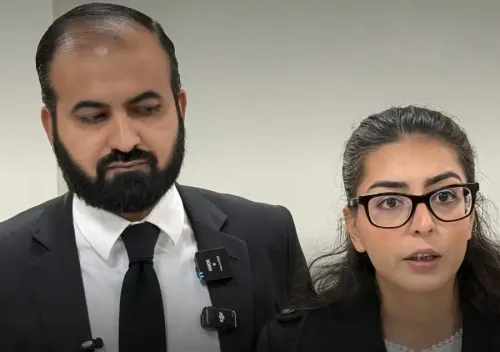
Geneva, Jan 30 (NationPress) The United Nations Human Rights Office, in collaboration with various human rights and legal entities, has emphatically condemned the recent sentencing of Pakistani human rights attorneys Imaan Zainab Mazari-Hazir and Hadi Ali Chatta. This condemnation stems from concerns regarding the potential exploitation of Pakistan’s Prevention of Electronic Crimes Act (PECA) to stifle dissent within the nation.
This outcry follows a Pakistani court's ruling last week, where Imaan and Hadi were sentenced to a total of 17 years in prison and each fined 36 million Pakistani rupees on various charges linked to their social media activity.
The United Nations High Commissioner for Human Rights characterized the legal outcomes for Imaan and Hadi under PECA, amid apprehensions regarding the fairness of their trial, as “deeply disturbing”.
“This situation exemplifies the peril of this legislation being utilized to quash dissenting voices. We urge the government to safeguard and uphold the freedom of expression and the right to peaceful assembly as per Pakistan's international human rights commitments,” stated the UN Human Rights office on X.
In denouncing the judicial persecution, numerous international legal and human rights organizations declared that the “arbitrary” arrest and conviction of Imaan and Hadi represents “the latest escalation in a pattern of continued harassment” against the couple, retaliating for their rightful exercise of human rights and professional duties.
“The unlawful arrest and sentencing of Imaan Mazari and Hadi Ali Chattha are representative of a larger trend of judicial harassment aimed at exhausting their resources, discrediting their work, and hindering their ability to defend victims of state violence. The couple has faced multiple overlapping criminal cases under anti-terrorism and blasphemy laws, repeated bail cancellations, and the persistent threat of arrest, coupled with ongoing concerns about due process violations,” read the joint statement.
“Repeated summonses based on unfounded allegations have significantly disrupted their legal practice and infringed upon their human rights, compelling them to appear in various courts nationwide, allegedly to distract them from defending vulnerable clients,” it noted.
The organizations emphasized that the application of PECA concerning social media posts illustrates how the Pakistani authorities are weaponizing the judicial system to penalize dissent and target legitimate human rights advocacy.
They called on Pakistan to honor and uphold its commitments under international law, particularly the International Covenant on Civil and Political Rights (ICCPR) and the Convention against Torture and Other Cruel, Inhuman or Degrading Treatment or Punishment (UNCAT), while adhering to the United Nations Basic Principles on the Role of Lawyers.
“Lawyers must be able to conduct their professional responsibilities free from intimidation, interference, or harassment, and should not face prosecution for actions taken in accordance with their professional duties or the legitimate exercise of free expression,” the statement concluded.
Point of View
It is crucial to approach this issue with an unbiased perspective. The sentencing of Imaan and Hadi raises significant concerns about judicial integrity and human rights in Pakistan. It is essential for the nation to uphold its international commitments and ensure that legal frameworks are not used as tools for oppression. We stand with the principles of justice and the protection of fundamental rights.
NationPress
21 Sept 2026
Frequently Asked Questions
What is the Prevention of Electronic Crimes Act?
The Prevention of Electronic Crimes Act (PECA) is a law in Pakistan aimed at regulating cybercrime, but it has faced criticism for being misused to suppress free speech and dissent.
Who are Imaan Zainab Mazari-Hazir and Hadi Ali Chatta?
Imaan Zainab Mazari-Hazir and Hadi Ali Chatta are human rights lawyers in Pakistan known for advocating for civil liberties and legal reforms.
What were the charges against them?
They were sentenced based on multiple charges linked to their social media posts, which have been deemed by many as an attempt to silence their voices.
What is the international response to their sentencing?
The international community, including the UN Human Rights Office, has condemned their sentencing, calling it a misuse of legal frameworks to stifle dissent.
What implications does this have for human rights in Pakistan?
This case highlights a troubling trend of judicial harassment and raises concerns about the protection of human rights and freedoms in Pakistan.