UN Commends India's Banking Initiative as a Global Benchmark for Women's Empowerment
Synopsis
Discover how the United Nations has recognized India's banking program, which serves over 290 million women, as a global benchmark for fostering women's empowerment. This initiative exemplifies the transformative impact of digital financial inclusion.
Key Takeaways
UN recognizes India’s banking program as a global model for women's empowerment.
Over 290 million women have benefited from the initiative.
Digital financial inclusion is crucial for transforming the lives of women and girls.
Aadhaar facilitates access to banking services.
Legislative reforms can significantly empower women.
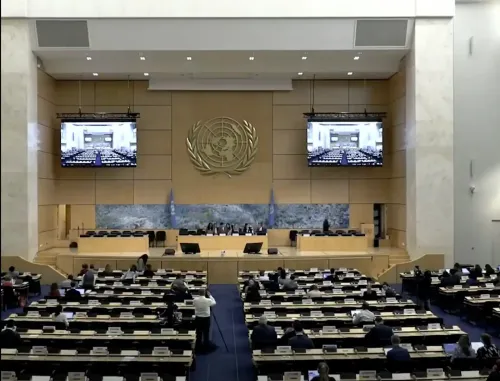
United Nations, March 5 (NationPress) A representative from the United Nations dedicated to women's empowerment has praised India's initiative, which has successfully provided banking services to more than 290 million women, branding it a global benchmark for a "transformative pathway for women and girls".
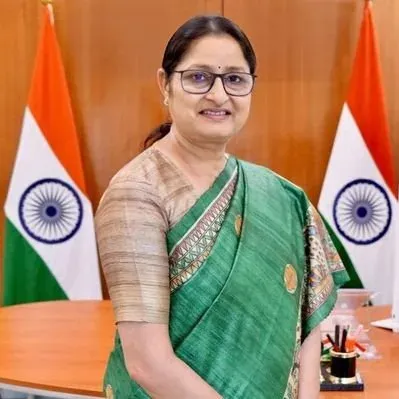
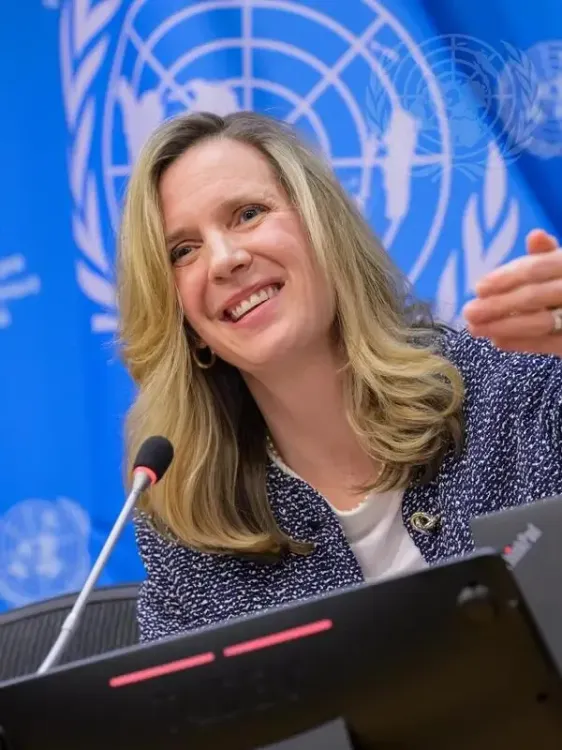
Sandra Hendriks, the policy director for UN Women, highlighted on Wednesday (local time), "The Indian government's strategy of facilitating digital identification for its entire female population, which notably represents one-fifth of the global female population, is indeed a paradigm to emulate".
She remarked, "The simplification of prerequisites for women and girls throughout India to obtain a digital bank account is also exemplary", during a press briefing preceding the forthcoming 70th annual gathering of the Commission on the Status of Women.
"Digital financial inclusion is a crucial and transformative route for women and girls," she asserted.
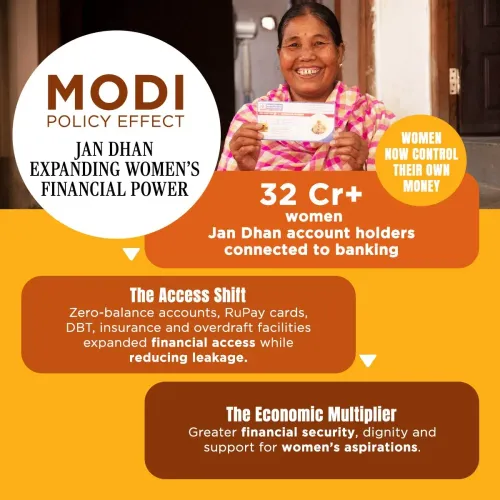
The Pradhan Mantri Jan Dhan Yojana (PMJDY), now celebrating its 12th year, has enabled women to access banking services, with women holding 56 percent of the accounts established under this initiative.
This achievement has been made possible by Aadhaar, the universal biometric digital identification system.
Hendriks identified PMJDY as a model because it illustrates the transformative potential of legislative reform for women and girls, stating that when laws empower women and girls to flourish—such as by opening a bank account or starting their own business—lives are genuinely transformed.
A report from Secretary-General Antonio Guterres on women's status, released prior to the commission meeting, emphasized the need for justice access for all women and girls.
The report revealed, "Globally, women possess only 64 percent of men's legal rights, as discriminatory legal systems remain entrenched in numerous countries".
"While progress is achievable", it added, "realizing it necessitates focusing on access to meaningful and participative justice outcomes for women and girls, grounded in fundamental human rights of non-discrimination and equality, as well as an awareness of systemic exclusion and power imbalances".
(Arul Louis can be contacted at arul.l@ians.in)
Point of View
The recognition by the United Nations of India's initiative stands as a testament to effective policy-making that empowers women and girls. This initiative not only addresses financial disparities but also highlights the importance of legislative support in transforming lives.
NationPress
15 Oct 2026
Frequently Asked Questions
What is the Pradhan Mantri Jan Dhan Yojana?
The Pradhan Mantri Jan Dhan Yojana (PMJDY) is a financial inclusion program launched by the Indian government aimed at providing banking services to all citizens, particularly focusing on women.
How many women have benefited from this banking scheme?
Over 290 million women have gained access to banking services through the PMJDY initiative.
What role does Aadhaar play in this program?
Aadhaar, a biometric digital identification system, facilitates the opening of bank accounts and ensures that financial services reach women effectively.
Why is digital financial inclusion important for women?
Digital financial inclusion empowers women by providing them with financial independence, enabling them to start businesses and manage their finances, ultimately transforming their lives.
What does the UN report say about women's legal rights?
The UN report indicates that women globally have only 64 percent of the legal rights that men possess, highlighting ongoing discrimination in many legal frameworks.