How Does the Union Budget Reinforce India's Security System According to Rajnath Singh?
Synopsis
In a significant move, Defence Minister Rajnath Singh praised the Union Budget 2026, highlighting the substantial allocation of Rs 7.8 lakh crore for defence. This budget, following the success of Operation Sindoor, emphasizes the government's commitment to enhancing national security. Explore how these allocations aim to modernize India’s armed forces and prioritize the welfare of veterans.
Key Takeaways
Rs 7.8 lakh crore allocated for defence.
15 percent increase from last year's budget.
Rs 2.19 lakh crore designated for military hardware.
24 percent increase for tri-services modernization.
Rs 12,100 crore for veterans' health schemes.
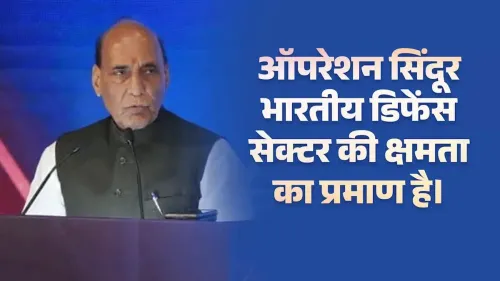
In New Delhi, on February 1, Defence Minister Rajnath Singh expressed his appreciation for the Union Budget 2026, particularly thanking Prime Minister Narendra Modi and Finance Minister Nirmala Sitharaman for assigning Rs 7.8 lakh crore to the defence sector.
He stated that following India's notable achievement in Operation Sindoor, this budget has reinforced the Central government's commitment to enhance the nation's defence capabilities.
Finance Minister Nirmala Sitharaman revealed a 15 percent increase from the previous year's allocation of Rs 6.81 lakh crore in the defence budget for 2026-27.
A total of Rs 2.19 lakh crore has been designated for military hardware purchases, which is a substantial 21.8 percent increase compared to Rs 1.80 lakh crore from FY 2025-26.
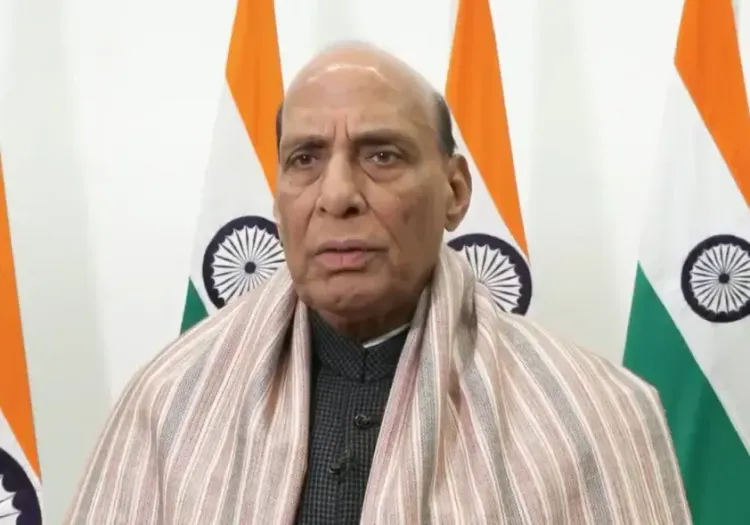
In a video message, Singh remarked, "This budget aligns with the hopes and aspirations of the populace. Additionally, it solidifies the Prime Minister's vision for an Aatmanirbhar and Viksit Bharat 2047, with comprehensive plans for societal development across all sectors."
Expressing his deep appreciation for the Rs 7.85 lakh crore allocation, Singh stated, "In light of the recent success of Operation Sindoor, this budget further strengthens our determination to enhance the country's security framework. This increment surpasses 15 percent compared to last year, ensuring that the Ministry of Defence receives the largest share of the Union Budget once again."
Singh pointed out that this year, Rs 2.19 lakh crore is allocated for the overall capital expenditure of the Indian Armed Forces, emphasizing that the budget's primary focus is on the modernization of the tri-services, with Rs 1.85 lakh crore set aside for this purpose, reflecting a 24 percent increase from the previous year.
He asserted that these advancements would make India's military capabilities "even more robust."
Furthermore, Singh highlighted that the welfare of retired soldiers and their families is also prioritized in this budget.
"An allocation of Rs 12,100 crore under the Ex-servicemen Contributory Health Scheme marks a significant 45 percent increase from the current year," he mentioned.
"Overall, this budget enhances the equilibrium between security, development, and self-reliance. I extend my congratulations to the citizens of India regarding this budget," added the Defence Minister.
This increased allocation occurs in the context of Operation Sindoor and the evolving geopolitical dynamics.
Finance Minister Sitharaman also proposed eliminating basic customs duties on raw materials imported for aircraft parts used in maintenance, repair, or overhaul, benefiting the defence sector.
The budget continues a strategic trend towards prioritizing investments in force modernization, air defence systems, and next-generation platforms.
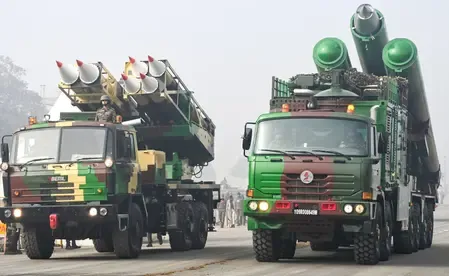
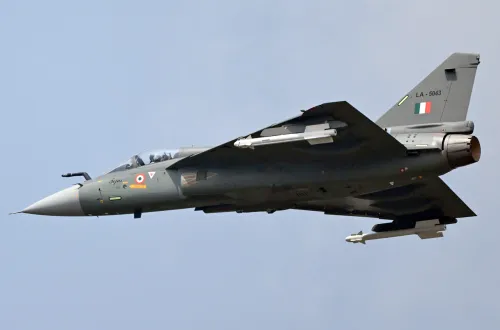
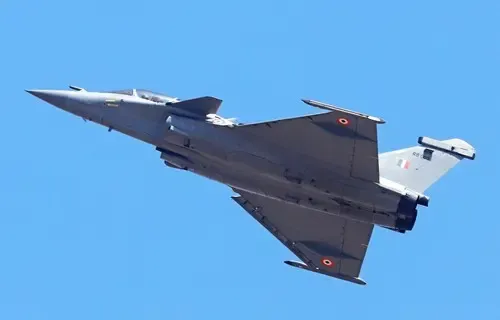
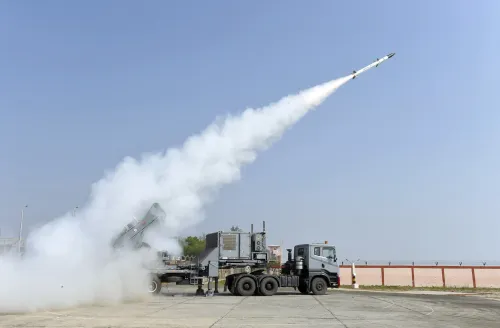
The increased capital expenditure is driven by enhanced allocations for fighter jets, warships, missiles, artillery systems, and other advanced defence technologies.
This larger allocation for defence procurement is anticipated to benefit both public sector undertakings and private-sector suppliers, particularly as order volumes in the sector have risen sharply.
Point of View
It is evident that the Union Budget 2026 places a strong emphasis on national security and modernization of the armed forces, aligning with India's strategic objectives. The increased allocation not only reflects the government's commitment to defence but also addresses the welfare of veterans, ensuring a balanced approach towards security and societal development.
NationPress
2 Oct 2026
Frequently Asked Questions
What is the total allocation for the defence sector in the Union Budget 2026?
The total allocation for the defence sector in the Union Budget 2026 is Rs 7.8 lakh crore.
How much has the allocation increased compared to last year?
The allocation has increased by 15 percent compared to the previous year's figure of Rs 6.81 lakh crore.
What is the capital outlay for military hardware purchases?
The capital outlay for military hardware purchases is Rs 2.19 lakh crore, reflecting a 21.8 percent increase from the previous year.
What initiatives have been taken for the welfare of retired soldiers?
The budget includes an allocation of Rs 12,100 crore under the Ex-servicemen Contributory Health Scheme, marking a 45 percent increase from the current year.
What is the significance of Operation Sindoor in the budget?
Operation Sindoor's success has underscored the need for enhanced security measures, reinforcing the government's commitment as reflected in the budget.