UP Assembly election 2026: Minority vote consolidation drives Opposition alliances
Synopsis
With roughly 165 of UP's 403 Assembly seats influenced by minority demographics, the Opposition's 2026 strategy hinges on a single bet: keep the minority vote unified. But a history of alliance collapses — from the 2017 'UP ke ladke' disaster to the SP-BSP combine's 15-seat haul — shows that arithmetic on paper rarely survives contact with the ballot box.
Key Takeaways
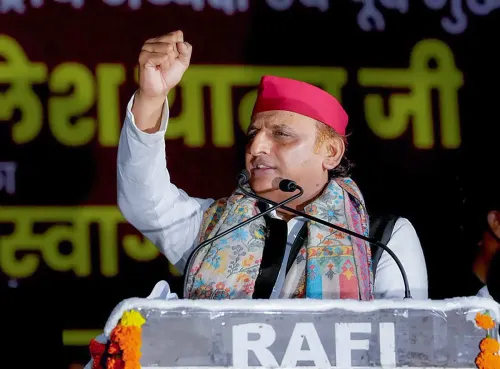
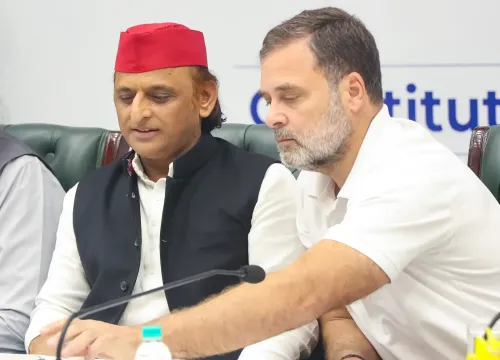
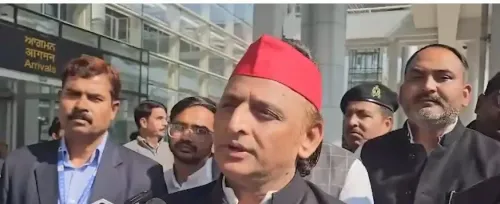
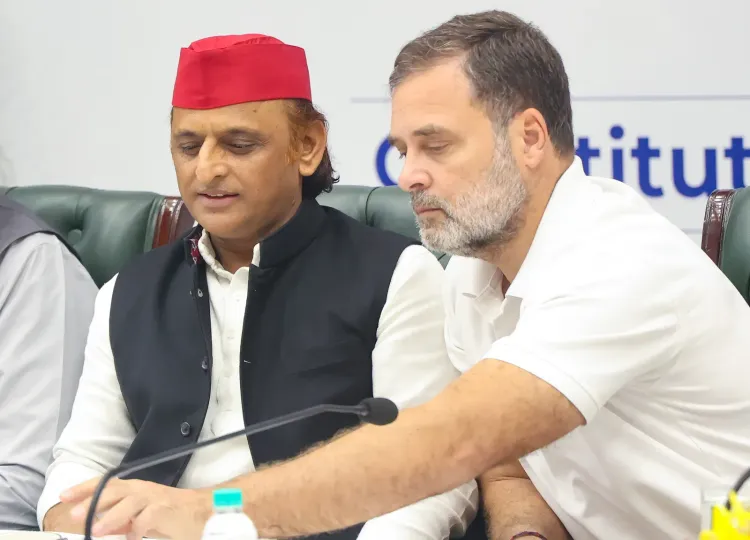
Akhilesh Yadav (SP) is reportedly rebuilding ties with Rahul Gandhi (Congress) ahead of the UP Assembly election .
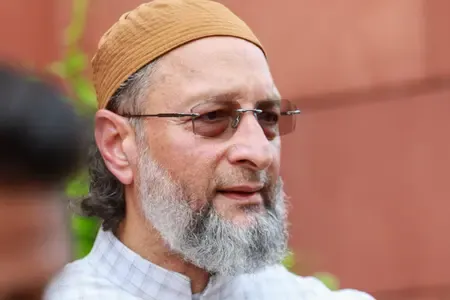
AIMIM chief Asaduddin Owaisi has signalled willingness to join the INDIA Bloc , according to reports.
Muslims comprise approximately 20 per cent of UP's population; around 165 of 403 constituencies are directly or indirectly influenced by minority demographics.
The 2017 SP–Congress alliance collapsed, handing BJP a three-fourths majority ; the 2019 SP–BSP combine won only 15 seats combined.
The 2024 Lok Sabha SP–Congress alliance succeeded, with SP winning 37 seats — but analysts warn Assembly elections carry different dynamics.
As Uttar Pradesh prepares for its next Assembly election, poll arithmetic is pushing ideologically divergent Opposition parties into tactical alliances, with minority vote consolidation emerging as the central pillar of their electoral strategy. Analysts argue that without a unified minority bloc, the Opposition's broader social coalition risks fracturing — handing the Bharatiya Janata Party (BJP) an outright advantage.
Key Developments
Samajwadi Party (SP) chief Akhilesh Yadav, buoyed by the alliance's strong showing in the 2024 Lok Sabha elections, is reportedly renewing ties with Congress leader Rahul Gandhi. Separately, All India Majlis-e-Ittehadul Muslimeen (AIMIM) supremo Asaduddin Owaisi has signalled a willingness to align with the INDIA Bloc, according to recent reports. The overarching objective, analysts note, is to prevent the state's substantial minority electorate from splitting across multiple candidates.
The Minority Vote Geography
The stakes are significant. Muslims account for approximately 20 per cent of Uttar Pradesh's population. Of the state's 403 Assembly constituencies, around 110 are reported to have between 30–39 per cent minority constituents. A further 44 seats are estimated to have between 40–49 per cent minority population, while close to a dozen constituencies have over half their population from this community. With roughly 165 seats directly or indirectly influenced by minority demographics, any fragmentation in this bloc can decisively undercut Opposition prospects, according to analysts.
Owaisi's Role: Spoiler or Stakeholder
Owaisi has long faced accusations from secular allies of acting as a 'spoiler' — or, as critics put it, the 'BJP's B-team' — by splitting minority votes in multi-cornered contests. Yet the AIMIM chief has repeatedly sought alliance with mainstream Opposition parties. He made similar outreaches during recent elections in Bihar and West Bengal, both of which the Opposition declined. Minority voters, analysts observe, have increasingly gravitated toward the strongest viable candidate capable of defeating the BJP, rather than identity-based parties like the AIMIM.
A History of Alliance Failures and Breakthroughs
The Opposition's alliance track record in Uttar Pradesh is uneven. Ahead of the 2017 Assembly election, the Akhilesh–Rahul combine — marketed as the coming together of 'UP ke ladke' — collapsed under internal strain. The BJP swept the state with a three-fourths majority, as the alliance failed to transfer caste votes smoothly between the two parties. The SP subsequently pivoted to a grand alliance with Bahujan Samaj Party (BSP) chief Mayawati for the 2019 Lok Sabha elections, sidelining the Congress. Even that arithmetic-heavy combination managed only 15 seats combined.
The 2024 Lok Sabha elections rewrote the narrative. The SP–Congress alliance, operating under the broader INDIA Bloc umbrella, synchronised campaigns, avoided candidate overlaps, and drew in non-Yadav OBC and Dalit segments alongside a consolidated minority vote. The SP emerged as the third-largest party in Parliament with 37 seats, while Congress recorded a significant revival. However, analysts caution that Parliamentary and Assembly elections operate on distinct dynamics — voter expectations and dominant narratives tend to differ sharply between the two.
What to Watch
As the election approaches, Uttar Pradesh is set to witness what analysts describe as a clinical exercise in identity-based election management, articulated in the language of secular unity. Whether the Opposition can replicate its 2024 coordination — and whether Owaisi's potential inclusion strengthens or complicates that coalition — will be among the defining questions of the campaign ahead.
Point of View
Layer in Yadav and Dalit support, and hope the arithmetic holds. The 2024 Lok Sabha result has given this formula renewed credibility — but it also masks a structural fragility. Assembly elections in UP are won and lost at the booth level on local caste dynamics, not on the national narrative that powered the 2024 swing. Owaisi's potential inclusion is a double-edged variable: it could tighten minority consolidation or hand the BJP a ready-made 'appeasement' counter-narrative. The Opposition has yet to demonstrate it can win UP at the Assembly level without the BJP making its own mistakes.
NationPress
27 Oct 2026
Frequently Asked Questions
Why is minority vote consolidation central to the UP Assembly election 2026?
Approximately 165 of Uttar Pradesh's 403 Assembly constituencies are directly or indirectly influenced by minority demographics, with Muslims comprising around 20 per cent of the state's population. Any split in this vote across multiple candidates has historically benefited the BJP by fragmenting the anti-incumbency bloc, analysts argue.
What is the status of the SP–Congress alliance ahead of the UP election?
SP chief Akhilesh Yadav is reportedly renewing ties with Congress leader Rahul Gandhi, building on their 2024 Lok Sabha alliance. No formal seat-sharing agreement has been announced yet.
Why is Owaisi seen as a 'spoiler' in UP elections?
Critics and secular allies accuse AIMIM chief Asaduddin Owaisi of splitting minority votes in multi-cornered contests, inadvertently helping the BJP. Owaisi has disputed this, and has sought alliance with Opposition parties in Bihar and West Bengal — overtures that were declined both times.
How did previous SP-led alliances perform in Uttar Pradesh?
The 2017 SP–Congress alliance collapsed ahead of polling and the BJP won a three-fourths majority. The subsequent SP–BSP grand alliance in 2019 secured only 15 seats combined. The 2024 SP–Congress Lok Sabha alliance reversed the trend, with SP winning 37 seats and Congress making a notable comeback.
Do Lok Sabha results predict UP Assembly election outcomes?
Not reliably, according to analysts. Parliamentary and Assembly elections operate on distinct dynamics — voter expectations, dominant narratives, and local caste equations differ significantly between the two. The 2024 Lok Sabha success does not automatically translate into Assembly-level gains for the Opposition.