UP bars violent regime-change advocates from govt jobs in new rules
Synopsis
Uttar Pradesh has redefined who can hold a government job — anyone linked to an organisation that advocates violent overthrow of the existing social order is now explicitly ineligible. The move follows recent 'regime change' calls at a protest and has drawn opposition fire, even as the government insists political ideology alone will never be a bar.
Key Takeaways
The Uttar Pradesh government issued revised character verification rules on 29 October 2026 for direct government recruits.
Candidates who are members of organisations with a stated objective of violent social change will be ineligible for government appointments.
The order explicitly states that political ideology alone will not disqualify any candidate.
Participation in such activities after age 21 and within the three years preceding verification is treated as evidence of active involvement.
An FIR or pending investigation will not automatically disqualify candidates; acquittals, compromises, and juvenile justice matters are also exempted.
Police must submit character verification reports within 30 days ; provisional appointment letters may be issued pending full verification.
The Uttar Pradesh government has overhauled its character verification framework for direct government recruits, ruling that candidates linked to organisations that advocate changing the existing social order through violence will be deemed ineligible for public employment. The revised directive, issued on 29 October 2026, applies across government departments, corporations, councils, and local bodies in the state.
What the New Rules Say
The order, signed by M. Devraj, Principal Secretary of the Appointments Department, lays out a clear disqualification trigger: membership in any organisation whose stated objective is to overturn the existing social system through violent means. The directive quotes its own language directly — 'individuals who are members of an organisation whose stated objective is to change the existing system of society through violence will be considered ineligible for appointment under the government.'
At the same time, the government has drawn an explicit carve-out: no candidate will be disqualified solely on the basis of political ideology. The rules are framed as targeting organisational affiliation linked to violence, not dissent or opposition politics as such.
The Three-Year Activity Window
Under the revised guidelines, participation in activities aimed at violent systemic change after attaining the age of 21 and within three years preceding character verification will be treated as evidence of active involvement — unless concrete evidence demonstrates a genuine change in the candidate's orientation during that period. This introduces a defined lookback period that adds specificity to earlier, more open-ended verification norms.
Safeguards Built Into the Order
The policy also incorporates a range of candidate protections. Registration of a First Information Report (FIR) or a pending investigation will not automatically disqualify a recruit. Candidates who have been acquitted, cases resolved through compromise, and matters covered under juvenile justice laws are also exempted from automatic disqualification.
Notably, the government has clarified that delays in receiving character verification reports need not hold up appointment letters. Authorities may issue provisional appointment letters after obtaining prescribed documents and a self-declaration from candidates. However, if a candidate is subsequently found ineligible or is found to have furnished false information, the appointment will be cancelled immediately and legal action may follow.
Existing government employees are also exempted from fresh character verification under the new order, though appointing authorities retain the discretion to seek relevant information from previous departments.
Police Directed to Act Within 30 Days
To prevent procedural delays from stalling recruitments, police have been directed to submit character verification reports within 30 days. The government stated that the revised guidelines seek to streamline the verification process while ensuring that pending investigations do not automatically block eligible candidates from joining public service.
Political Backdrop and Opposition Response
The move comes amid controversy over calls for 'regime change' heard during a recent protest in the state, which had drawn sharp political responses. The Samajwadi Party and the Indian National Congress have both criticised the revised framework, raising concerns about its potential for misuse against political opponents or protesters. The government's clarification on political ideology — explicitly stating it is not a disqualification criterion — appears, in part, to address these objections, though critics argue the line between ideological affiliation and organisational membership can be difficult to draw in practice.
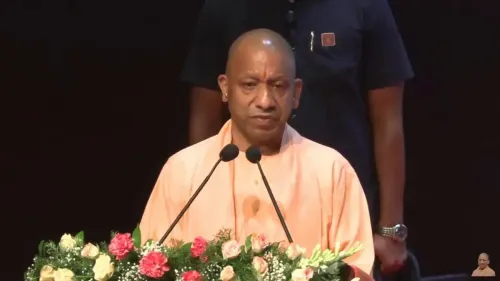
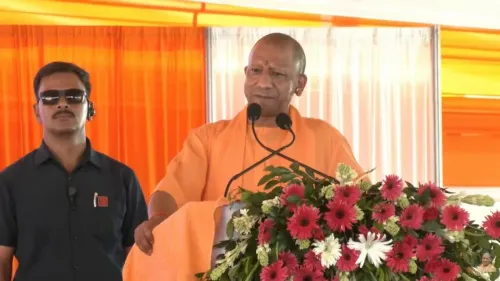
This is the latest in a series of administrative tightening measures by the Yogi Adityanath-led government in Uttar Pradesh, which has previously also moved on matters of public order and employment eligibility. How verification authorities interpret the 'violent objectives' standard in practice will likely determine whether the rules serve as a targeted safeguard or a broader administrative gate.
Point of View
Which gives it a defensible constitutional footing. But the three-year lookback and the discretion vested in verification authorities create real room for selective application, particularly against protesters whose slogans can be framed as 'violent' by hostile officials. The political context — 'regime change' chants at a recent demonstration — makes the timing impossible to read as purely administrative. What will define this policy is not the text but the enforcement: whether the standard is applied consistently across the political spectrum or becomes a tool to thin the civil-service applicant pool of critics. The Opposition's alarm is not unfounded, though the built-in safeguards on FIRs and political ideology suggest the government was at least conscious of the optics.
NationPress
29 Oct 2026
Frequently Asked Questions
What do UP's new character verification rules say about violent regime change?
The revised rules state that any candidate who is a member of an organisation whose stated objective is to change the existing social system through violence will be considered ineligible for government appointment. The order was issued by Principal Secretary M. Devraj of the Appointments Department on 29 October 2026 and applies to all direct recruitment across government departments, corporations, councils, and local bodies in Uttar Pradesh.
Will political views disqualify a candidate from UP government jobs?
No. The order explicitly states that no person will be considered unsuitable solely because of their political ideology. The disqualification applies only to membership in organisations that officially advocate violent social change, not to holding dissenting or opposition political views.
What is the three-year lookback rule in the new UP recruitment guidelines?
Participation in activities aimed at violent systemic change after the age of 21 and within three years before character verification will be treated as evidence of ongoing active involvement. A candidate can rebut this presumption if concrete evidence demonstrates a genuine change in their behaviour or associations during that period.
Will an FIR or pending case bar a candidate from UP government employment?
No. The order explicitly says that registration of an FIR or a pending investigation will not automatically disqualify a candidate. Candidates who have been acquitted, cases resolved through compromise, and matters under juvenile justice laws are also exempted from automatic disqualification.
Why has the Opposition criticised the new UP government job rules?
The Samajwadi Party and Indian National Congress have criticised the guidelines, raising concerns that they could be misused to target protesters or political opponents. The move comes after calls for 'regime change' were heard at a recent protest, giving the policy a pointed political backdrop despite the government's insistence that ideology alone will not be a disqualification.