CM Yogi calls UP 'Utsav Pradesh', cites law-and-order shift
Synopsis
Uttar Pradesh Chief Minister Yogi Adityanath on 26 July 2026 declared the state an 'Utsav Pradesh' or festival province, contrasting the current era of large-scale cultural events with the pre-2017 period of communal unrest. The remark reinforces a BJP governance narrative ahead of the 2027 assembly elections.
Key Takeaways
CM Yogi Adityanath posted on 26 July 2026 that Uttar Pradesh is now an 'Utsav Pradesh' (festival state), not a 'trouble-ridden state.' The phrase directly contrasts the post- 2017 BJP era with the pre-2017 record of communal violence and organised crime in the state.
The 'Utsav Pradesh' branding was formally seeded after the 2019 Kumbh Mela in Prayagraj and reinforced during the 2025 Kumbh Mela .
The state's zero-tolerance policing policy, launched in 2017 , is the governance foundation the government credits for enabling a stable festival calendar.
UP Police annual crime data expected later in 2026 will be a key factual test of the 'Utsav Pradesh' claim.
The statement comes with the 2027 Uttar Pradesh assembly elections approaching, making governance-record messaging politically significant.
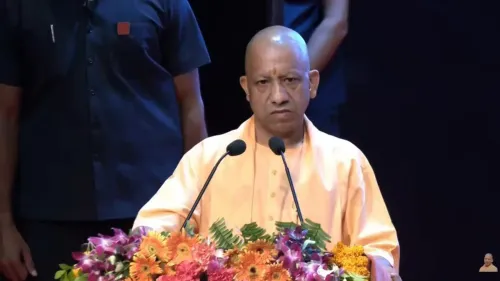
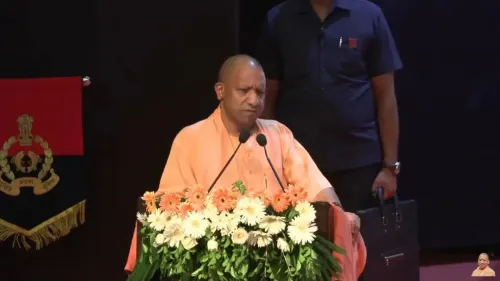
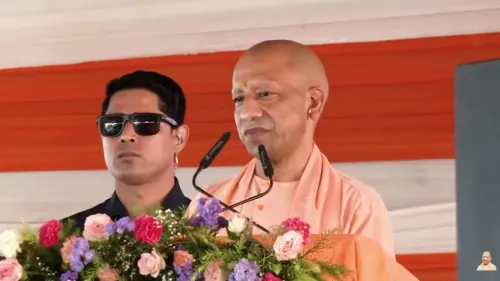
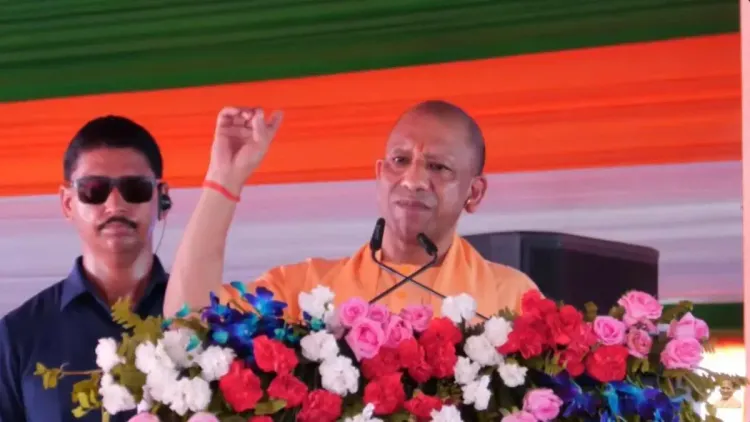
Uttar Pradesh Chief Minister Yogi Adityanath on Sunday, 26 July 2026, declared that the state has transformed from a conflict-ridden region into a 'festival state,' using the phrase 'Utsav Pradesh' (festival province) to capture what his government describes as a fundamental shift in law and order and public life.
Context
In the post, Adityanath stated: 'Aaj hamara Pradesh upadravgrast Pradesh nahin, balki Utsav Pradesh ban gaya hai' — 'Today our state has become not a trouble-ridden state, but a festival state.' The remark is a direct rhetorical contrast with the pre-2017 era, when Uttar Pradesh was frequently cited in public discourse for communal violence, organised crime networks, and disrupted public gatherings.
The Chief Minister has consistently anchored his governance narrative around this before-and-after framing since the BJP came to power in the state in March 2017. Sunday's statement extends that argument into the cultural and festive domain, suggesting that durable peace is now a precondition — and a product — of improved administration.
Policy Backdrop
The 'Utsav Pradesh' branding has a formal policy lineage in Uttar Pradesh. Following the 2019 Kumbh Mela in Prayagraj — the world's largest religious gathering, organised under state oversight — the government began positioning large-scale festivals as engines of tourism revenue and investment attraction.
The administration subsequently expanded tourism circuits linking religious events with infrastructure upgrades under programmes including Namami Gange, and repeated the festival-as-governance-proof messaging during the 2025 Kumbh Mela. A zero-tolerance policy against riots and mafia networks, announced in 2017, including special task forces and district-level monitoring, forms the law-and-order foundation the government credits for enabling this festival calendar.
Stakeholders and Impact
The primary beneficiaries of the 'Utsav Pradesh' frame are the state's tourism industry, religious and cultural organisers, and the law enforcement agencies whose performance record the narrative validates. For the tourism sector, the branding translates into visitor-confidence messaging and potential private investment in event infrastructure.
For communities that experienced communal violence in earlier years, the claim carries political weight: it implies that festival participation is now safe and accessible across the state. Critics have historically questioned whether official crime data fully captures ground-level realities, but no specific counter-data is available for this reporting period.
What's Next
The statement arrives with the 2027 Uttar Pradesh assembly elections on the horizon, making governance-record messaging increasingly central to the BJP's state campaign. UP Police is expected to release annual crime and communal incident data later in 2026, which will either reinforce or complicate the 'Utsav Pradesh' claim with hard numbers.
Any new state tourism policy or festival calendar announcement before the election cycle will likely be read as an extension of the same branding strategy — turning cultural programming into a political asset ahead of what is expected to be a closely watched electoral contest in India's most populous state.
Point of View
He conflates cultural vibrancy with political legitimacy in a way that is difficult for opponents to contest without appearing to oppose festivals themselves. The move mirrors the BJP's national playbook of tying cultural nationalism to tangible governance deliverables, particularly in states where the 2027 contest is expected to be competitive. The real test will come when verifiable crime and communal incident data is published, either validating or complicating the claim.
NationPress
25 Oct 2026
Frequently Asked Questions
What did Yogi Adityanath mean by 'Utsav Pradesh'?
'Utsav Pradesh' translates to 'festival state' or 'festival province.' CM Yogi Adityanath used the phrase to argue that Uttar Pradesh, once associated with communal violence and organised crime, has become a state capable of hosting large-scale cultural and religious events safely under his administration since 2017.
When did Yogi Adityanath make the 'Utsav Pradesh' statement?
The statement was posted on X on Sunday, 26 July 2026 , by Uttar Pradesh Chief Minister Yogi Adityanath.
What is the history behind the 'Utsav Pradesh' branding in Uttar Pradesh?
The branding was first developed after the 2019 Kumbh Mela in Prayagraj, when the state government began positioning large festivals as drivers of tourism and investment. It was reinforced during the 2025 Kumbh Mela and is now a recurring theme in official communications.
How does the 'Utsav Pradesh' claim connect to the 2027 UP elections?
With the 2027 Uttar Pradesh assembly elections approaching, the BJP is expected to campaign heavily on its governance record. The 'Utsav Pradesh' narrative packages law-and-order improvement and cultural programming as electoral assets, making it a central plank of the party's state-level messaging.
What data will test the 'Utsav Pradesh' governance claim?
The UP Police is expected to release annual crime and communal incident statistics later in 2026 . These figures will provide the most concrete factual basis for assessing whether the state's law-and-order situation has improved as significantly as the government's narrative suggests.