How Are the US and Japan Strengthening Their Alliance?
Synopsis
In a week filled with high-level discussions, the US and Japan have reaffirmed their alliance's importance in maintaining stability in the Indo-Pacific. With key meetings and commitments made, both nations are dedicated to enhancing security cooperation and defense strategies in the region.
Key Takeaways
The US and Japan reaffirm their alliance's importance in the Indo-Pacific.
High-level meetings aimed at enhancing bilateral cooperation.
Japan's increased defense spending praised by US officials.
Commitment to peace through strength highlighted by both nations.
Continued discussions on regional security challenges.
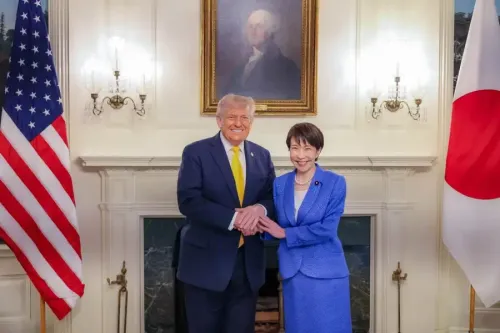
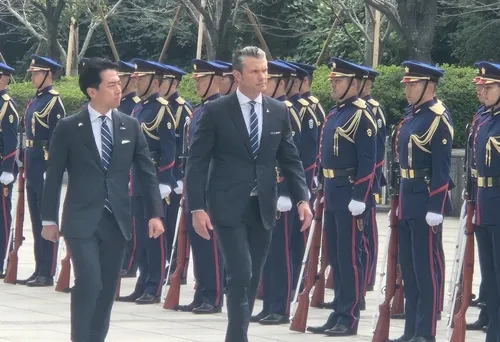
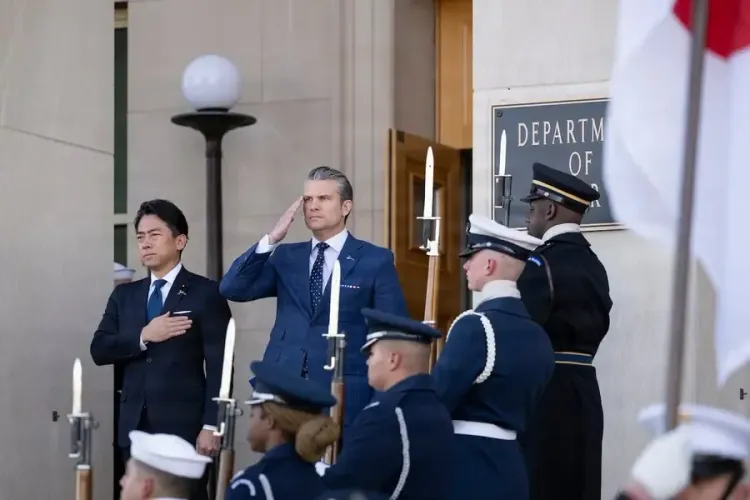
Washington, Jan 17 (NationPress) The United States and Japan have reiterated the vital importance of their alliance in ensuring peace and stability within the Indo-Pacific region this week, as Secretary of War Pete Hegseth welcomed Japanese Defence Minister Shinjiro Koizumi.
High-ranking officials from both nations engaged in a series of significant discussions covering areas such as defence, diplomacy, and economic collaboration this week.
On January 15, Oue Sadamasa, Special Advisor to the Prime Minister of Japan, visited US Marine Corps Camp Blaz in Guam, where he received technical briefings from US forces regarding the ongoing construction initiatives. This visit underscored Japan's keen interest in the US military's strategic positioning and infrastructure advancement in the Western Pacific.
During his visit, Oue exchanged insights with Rear Adm. Brett Mietus, commander of Joint Region Marianas, and Brig. Gen. Charles D. Cooley, commander of the 36th Wing at Andersen Air Force Base, concerning Japan-US security strategies and regional matters. He also paid homage at the South Pacific Memorial Park, laying a wreath and offering a moment of silence, as reported in a media release.
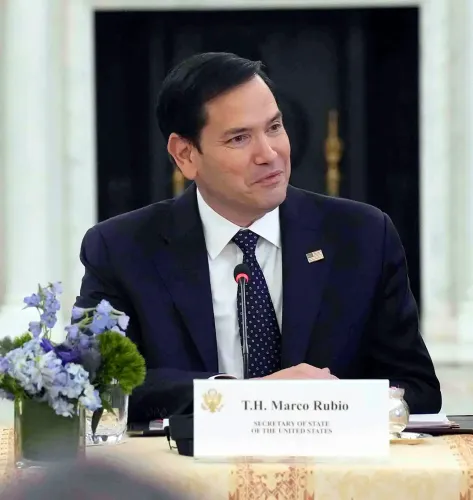
In Washington, Christopher Landau, Deputy Secretary of State, met with Funakoshi Takehiro, Japanese Vice Minister for Foreign Affairs, on January 16 to discuss bilateral cooperation. According to a State Department release, both officials talked about “opportunities to enhance economic and security collaboration” and reaffirmed “a mutual commitment to the US-Japan Alliance as the bedrock of peace and security in the Indo-Pacific.”
The release noted that Landau and Funakoshi also sought ways to bolster deterrence and expand security coordination in the region.
The week commenced with a meeting between Secretary of War Pete Hegseth and Shinjirō Koizumi, with Hegseth stating that the visit illustrated “the tangible strength of the US-Japanese alliance” and characterized the relationship as “one of the most extraordinary partnerships globally.”
Hegseth praised Japan’s decision last year to increase its defence budget, calling it “a significant step” that is appreciated by the United States.
“We will adopt a realistic, pragmatic approach that aligns our vital national interests and sustains peace,” Hegseth emphasized, highlighting the significance of practical training and exercises to ensure “peace through strength.”
Koizumi remarked that the meeting showcased the depth and pace of bilateral cooperation since he took office as defence minister in October. He stated that he engaged in comprehensive discussions with US military leaders about responses to “an increasingly challenging security landscape” and underlined the need to connect a free and open Indo-Pacific with the Japan-US alliance and peace through strength.
The two officials confirmed “the essential role of the US-Japan alliance in deterring aggression in the Indo-Pacific” and agreed to continue enhancing command-and-control structures, make bilateral training and exercises more realistic, improve the alliance's military posture, particularly in Japan’s southwestern islands, and maintain close cooperation on defense industrial matters, as noted in a release.
Additionally, Treasury Secretary Scott Bessent met with Satsuki Katayama, Japan's Finance Minister, on January 12. Bessent expressed gratitude to Katayama for participating in the US critical minerals summit and emphasized the significance of critical minerals sovereignty among democratic nations.
A Treasury release indicated that Bessent reiterated his confidence in the US-Japan alliance, appreciated Japan’s involvement in global minimum tax discussions, and addressed concerns regarding excessive exchange rate volatility as well as the need for clear formulation and communication of monetary policy.
Point of View
The US-Japan alliance remains a cornerstone of stability in the Indo-Pacific. Both nations are committed to effective collaboration in defense and economics, reflecting their shared interests and strategic goals. This partnership is essential for navigating the challenges posed by regional threats and ensuring a secure and prosperous future.
NationPress
17 Sept 2026
Frequently Asked Questions
What is the significance of the US-Japan alliance?
The US-Japan alliance plays a crucial role in maintaining peace and stability in the Indo-Pacific region, serving as a deterrent against aggression.
Who are the key figures involved in the recent discussions?
Key figures include US Secretary of War Pete Hegseth and Japanese Defence Minister Shinjiro Koizumi, who have engaged in high-level dialogues to strengthen cooperation.
What topics were discussed during the meetings?
Discussions focused on defence strategies, economic collaboration, and enhancing security coordination in response to regional challenges.
How does Japan's increased defense spending impact the alliance?
Japan's decision to increase defense spending is seen as a significant step towards strengthening the US-Japan alliance and ensuring mutual security.
What future actions are planned for the US-Japan alliance?
Future actions include enhancing command structures, improving military presence, and maintaining close cooperation on defense industrial matters.