US Government Prolongs Waiver on Russian Oil Shipments Until May 16 Amid Global Energy Challenges
Synopsis
The US Treasury has extended a waiver allowing the transport of sanctioned Russian oil until May 16, reflecting efforts to stabilize global energy markets amid rising tensions with Iran and the impact of the ongoing conflict in the region.
Key Takeaways
US Treasury extends waiver for Russian oil shipments until May 16.
Waiver aims to stabilize global energy prices amid geopolitical tensions.
Strict restrictions remain on transactions with certain countries.
Global oil prices have seen significant fluctuations recently.
Ongoing conflict in West Asia continues to disrupt energy supplies.
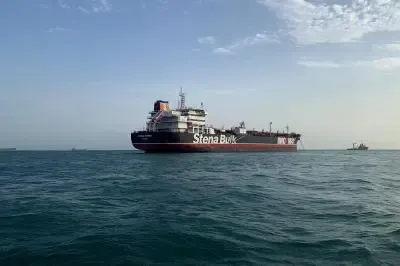
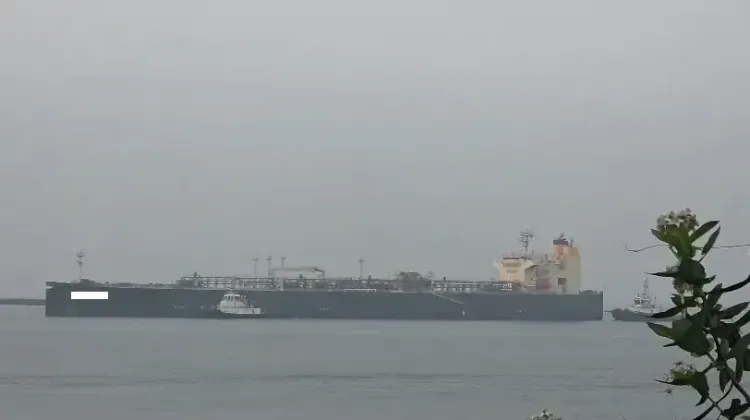
Washington, April 18 (NationPress) The United States Treasury Department has announced an extension for the waiver allowing the transport and sale of sanctioned Russian oil that has already been loaded onto vessels, now valid until May 16, as per a notice published on its official site.
The previous 30-day waiver lapsed on April 11.
This renewed authorization, issued on Friday (local time), reflects the administration's ongoing strategy to stabilize global energy prices, which have seen a sharp increase due to the ongoing US-Israel tensions with Iran.
This decision arrives as multiple nations grapple with the repercussions of escalating energy prices and interruptions in supply.
The official announcement states, "(a) Except as provided in paragraph (b) of this general license, all transactions prohibited by the above-listed authorities that are ordinarily incident and necessary to the sale, delivery, or offloading of crude oil or petroleum products of Russian Federation origin loaded on any vessel, including vessels blocked under the above-listed authorities, on or before 12:01 a.m. eastern daylight time, April 17, 2026, are authorized through 12:01 a.m. eastern daylight time, May 16, 2026."
However, the waiver maintains stringent restrictions on transactions with specific countries.
"(b) This general license does not authorize: (1) Any transaction involving a person located in or organized under the laws of the Islamic Republic of Iran, the Democratic People's Republic of Korea, the Republic of Cuba, the Covered Regions of Ukraine, as defined by E.O. 14065, the Crimea Region of Ukraine, as defined by E.O. 13685, or any entity that is owned or controlled by or in a joint venture with such persons," the document added.
This extension follows comments from US Treasury Secretary Scott Bessent, who indicated that the US does not plan to maintain such waivers indefinitely amidst rising geopolitical tensions.
"We will not be renewing the general license on Russian oil and Iranian oil. That was oil that was on the water before March 11. All that has been used," Bessent stated during a media briefing on Wednesday.
In the meantime, global oil prices fell sharply by approximately 9 percent on Friday, settling around $90 per barrel, following Iran's temporary reopening of the Strait of Hormuz, a vital global energy route.
Nevertheless, the ongoing conflict has already led to what the International Energy Agency has described as the worst disruption to global energy supplies ever.
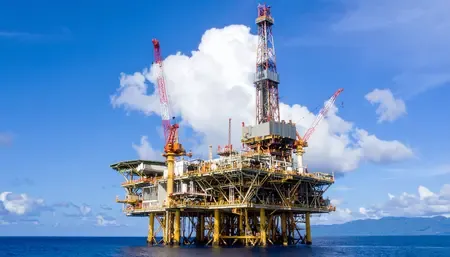
The war, now in its eighth week, has reportedly caused damage to over 80 oil and gas facilities across West Asia.
Tehran has also warned that it may close the Strait of Hormuz again if the US Navy continues its blockade of Iranian ports.
Commenting on the waiver's extension, Kirill Dmitriev, a Russian presidential envoy, expressed on social media, "US-Russian economic and energy cooperation will continue."
He had previously noted that the initial waiver on Russian oil could potentially release up to 100 million barrels of crude, roughly equivalent to almost a day’s worth of global oil production.
Point of View
It is crucial to highlight the implications of the US government’s decision to extend the waiver on Russian oil shipments. This reflects the complexities of geopolitical dynamics and their direct impact on global energy markets. A careful balance between economic stability and political accountability must be maintained.
NationPress
6 Oct 2026
Frequently Asked Questions
Why has the US extended the waiver on Russian oil shipments?
The extension aims to stabilize global energy prices that have surged due to geopolitical tensions, particularly the conflict involving Iran.
What are the restrictions associated with the waiver?
The waiver imposes strict conditions on transactions with particular countries, including Iran and North Korea.
How does this decision affect global oil prices?
The extension of the waiver is intended to mitigate rising energy costs and supply disruptions, which have led to fluctuations in global oil prices.
What is the significance of the Strait of Hormuz in this context?
The Strait of Hormuz is a pivotal global energy transit route, and its status can significantly influence oil supply and pricing.
What did US Treasury Secretary Scott Bessent say about future waivers?
He indicated that the US does not plan to renew such waivers indefinitely, highlighting the rising geopolitical tensions.