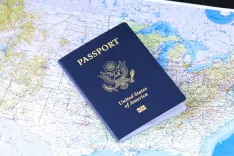
US first-time passport applications to go fully online in 2026, Rubio announces
Synopsis
The US is set to let first-time passport applicants skip the post office entirely — no forms, no appointment, no in-person visit. Secretary of State Rubio's announcement, made at the launch of Trump's America.gov portal, ends a decades-old requirement and has direct relevance for millions of Indian Americans and naturalised citizens seeking US travel documents for the first time.
Key Takeaways
US Secretary of State Marco Rubio announced on 30 September 2026 that first-time passport applications will be fully online starting next year.
The change eliminates the current requirement to appear in person at a passport acceptance facility such as a post office or library.
President Donald Trump signed an executive order launching America.gov as a unified digital portal for federal services.
Passport renewals and Medicare enrolment will become available on America.gov later this year; first-time applications will follow in 2026.
The order covers services used by more than 100,000 people annually; IRS tax filing and national-security services are excluded.
In-person, telephone, and postal service options will be retained alongside the new digital pathway.
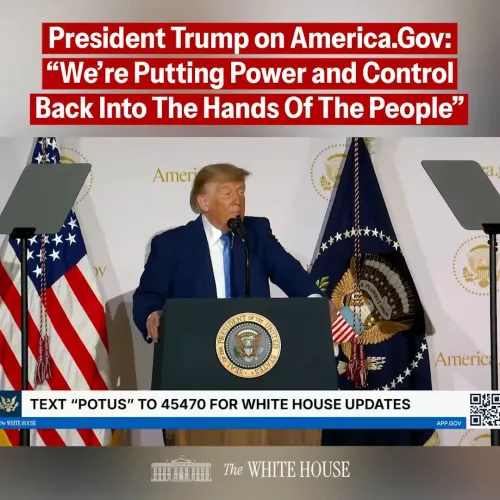
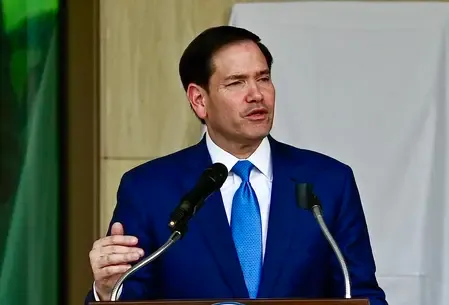
US Secretary of State Marco Rubio on 30 September 2026 announced that Americans applying for a passport for the first time will be able to complete the entire process online beginning next year, eliminating the longstanding requirement to appear in person at a passport acceptance facility. The announcement came as President Donald Trump signed an executive order launching America.gov, a unified federal digital services portal, in Washington.
End of the In-Person Requirement
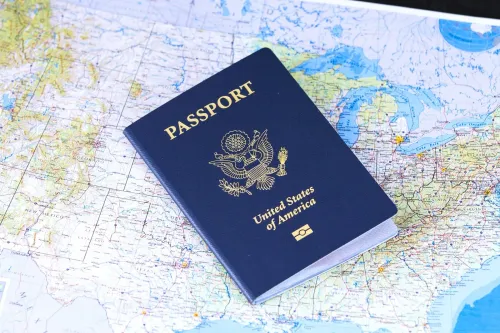
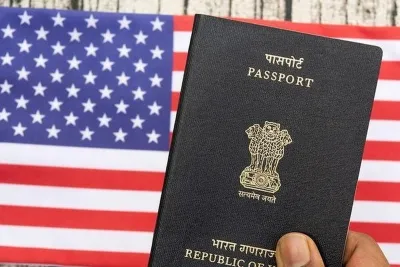
Under the current system, first-time adult applicants must physically visit a passport acceptance facility — such as a post office, library, or local government office — to submit proof of US citizenship, provide identification, submit a photograph, and pay the required fees. The proposed change would remove that obligation entirely.
Eligible adults renewing an existing passport have already been able to do so online; the new measure extends that digital convenience to first-time applicants, a significantly larger and more complex category.
What Rubio Said
Describing the existing process as a bureaucratic maze, Rubio said at the America.gov launch event: 'Today, if you need your first passport, you start at the State Department's website. There's a lot of information up there, but if you actually want to apply, that is where the maze starts.'
He outlined the new system's promise in pointed terms: 'No printing forms, no drugstore hostage photo, no appointment, no line, no middleman that you're paying to do something that should be available to you. You tell America.gov what you're trying to do and it walks you through every single step.'
The administration did not provide a precise launch date beyond confirming the service would become available next year.
What America.gov Is and How It Works
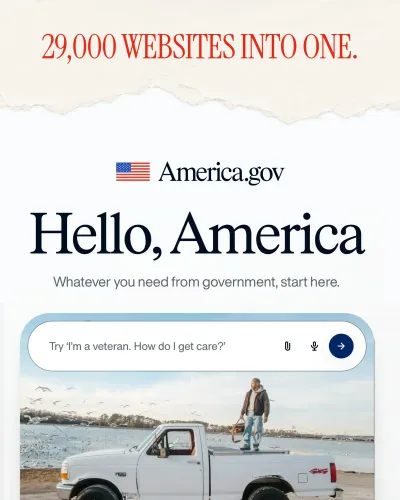
Trump's executive order describes America.gov as a 'unified digital front door' to the federal government — one that goes beyond a search engine or directory. The order states that users will be able to sign in, ask questions in plain language, receive answers, and complete transactions where legally authorised and technically available.
The General Services Administration, the National Design Studio, and the Office of Management and Budget (OMB) have been directed to operate the platform and link it with Login.gov, the federal government's existing authentication service. The OMB has been given 90 days to issue implementation guidance, after which agencies must identify eligible services and integrate their digital forms and application systems with America.gov.
The order covers online federal services used by more than 100,000 people during a 12-month period. Internal Revenue Service tax filing and national-security-sensitive services provided by defence and intelligence agencies are excluded.
Relevance for Indian Americans and Immigrant Communities
The announcement carries particular significance for naturalised citizens and US-born members of immigrant communities, including millions of Indian Americans who rely on American passports for international travel. For communities where taking time off work to visit a government facility can be a practical barrier, a fully online pathway could meaningfully lower the cost of first-time passport access.
What Else Is Coming to America.gov
The White House said passport renewals and Medicare enrolment will become available on America.gov later this year, with first-time passport applications following as a separate State Department expansion. The order requires the platform to minimise data collection, use secure authentication, and preserve agency control over government records. Critically, it also mandates that people retain access to existing in-person, telephone, postal, and agency-specific services — ensuring the digital shift remains optional rather than compulsory.
With implementation guidance pending and a 2026 rollout target confirmed, the scope and pace of America.gov's expansion will be closely watched by federal agencies, digital governance advocates, and millions of Americans navigating government services for the first time.
Point of View
Since the government is establishing a new identity record rather than updating one. America.gov's ambition to be a 'unified digital front door' is also not new in concept; past federal digital consolidation efforts have stumbled on inter-agency data-sharing and legacy system integration. The 90-day window for OMB guidance, followed by an open-ended agency compliance timeline, leaves room for the 2026 target to slip. For Indian Americans and naturalised citizens specifically, the policy direction is welcome — but the details of how citizenship proof will be verified digitally will determine whether the promise translates into practice.
NationPress
30 Sept 2026
Frequently Asked Questions
When will first-time US passport applications go fully online?
According to Secretary of State Marco Rubio's announcement on 30 September 2026, the fully online first-time passport application service will launch sometime next year, 2026. The administration has not provided a more precise date.
What is America.gov and how does it work?
America.gov is a unified federal digital services portal launched by President Trump via executive order on 30 September 2026. It allows users to sign in, ask questions in plain language, and complete government transactions — including passport renewals and Medicare enrolment — without navigating multiple agency websites. It is connected to Login.gov, the government's existing authentication system.
Who is affected by the first-time online passport announcement?
Any American who has never held a US passport and needs to apply for the first time stands to benefit. The change is noted as particularly relevant for naturalised citizens and US-born members of immigrant communities, including millions of Indian Americans who need US passports for international travel.
Will in-person passport services be discontinued?
No. The executive order explicitly requires that people retain access to existing in-person, telephone, postal, and agency-specific services. The online pathway is an addition, not a replacement of the current system.
What federal services are excluded from America.gov?
Internal Revenue Service tax filing and national-security-sensitive services provided by defence and intelligence agencies are excluded from the America.gov framework. The portal covers online federal services used by more than 100,000 people in a 12-month period.