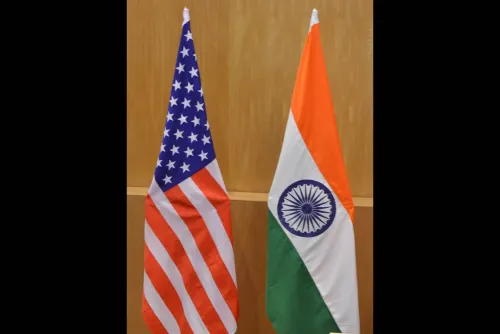
Ongoing US-India Trade Talks Spotlight Tariff Barriers

Synopsis
The U.S. is intensifying its focus on India's tariff barriers during trade negotiations, aiming to secure better market access for American exports. Key issues, especially in agriculture, are at the forefront of discussions, highlighting the competitive landscape between U.S. and Indian products.
Key Takeaways
U.S. focuses on tariff barriers in India .
Negotiations highlight agriculture as a key issue .
India’s 50% tariff on apples impacts U.S. exports .
Ongoing discussions aim for reciprocal trade agreements .
Lawmakers emphasize need for fair market access .
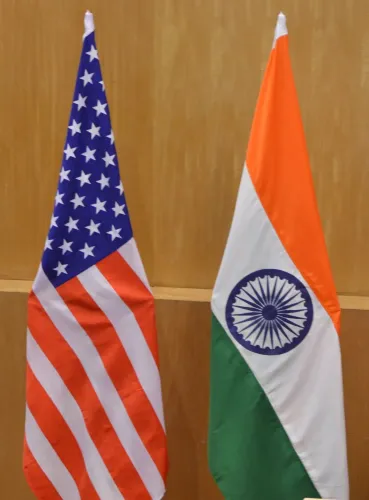
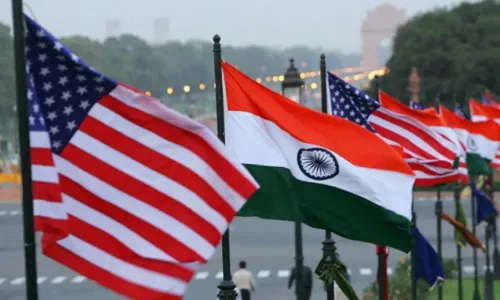
Washington, April 17 (NationPress) The United States has pinpointed tariff barriers in India as a significant focus in ongoing trade discussions. US Trade Representative Jamieson Greer informed lawmakers that the U.S. is advocating for enhanced market access for American exports.
During a congressional hearing concerning the fiscal 2027 budget for his office, Greer revealed that the U.S. has been in dialogue with India for more than a year to finalize a reciprocal trade framework, with agriculture proving to be a major area of contention.
“We’ve been collaborating with Indian officials for over a year… I met with their ambassador this week as well to expedite that agreement,” Greer stated. An Indian delegation is expected to visit the U.S. next week.
He noted that tariff barriers continue to be a significant hurdle, especially in sectors where U.S. exporters have experienced a decline. “We have discussed apples repeatedly… I’ve personally addressed it with my counterpart,” he mentioned, indicating that the matter has been escalated to higher echelons.
American lawmakers highlighted India’s 50 percent tariff on apples as a prime example, pointing out that it has drastically diminished U.S. market share. In 2018, U.S. apples constituted 53 percent of India’s imports, but that figure has plummeted to around 8.5 percent, with competitors like Iran, Turkey, and Afghanistan making inroads.
Greer emphasized that Washington is seeking a more equitable arrangement where U.S. exporters can have a fair chance in markets where India still depends on imports.
“To the extent that India will be importing apples, we want them to also consider sourcing from America,” he stated, while underscoring that the U.S. does not aim to undermine India’s local producers.
The remarks come as the Trump administration pursues its broader strategy of leveraging tariffs to gain market access and redefine trade relationships.
Greer conveyed to lawmakers that the U.S. has established several agreements with trading partners and is striving to broaden export possibilities for American farmers and manufacturers.
Lawmakers pointed out that tariffs have escalated costs for U.S. businesses and consumers, while also triggering retaliatory actions abroad that complicate export growth.
For American agricultural producers, India represents both a considerable opportunity and a continual challenge.
Lawmakers cautioned that without reductions in tariffs, U.S. exporters could further cede ground to competitors who benefit from preferential trade agreements with New Delhi.
Greer reiterated that negotiations are still in progress and that no final agreement has been achieved.
“Nothing is finalized until everything is finalized in these negotiations,” he remarked.
Point of View
It's clear that the ongoing trade negotiations with India are vital for U.S. exporters, especially in agriculture. The focus on tariff barriers underscores the complexities of international trade and the need for balanced agreements that benefit both nations while fostering domestic industries.
NationPress
19 Sept 2026
Frequently Asked Questions
What are tariff barriers?
Tariff barriers are taxes imposed on imported goods, which can affect market access and competitiveness for exporters.
Why are U.S. apples facing high tariffs in India?
India imposes a 50 percent tariff on U.S. apples, significantly limiting American market share and allowing competitors to gain ground.
What is the significance of the U.S.-India trade negotiations?
These negotiations are crucial for improving market access for U.S. exports, particularly in agriculture, and addressing competitive disparities.
How long has the U.S. been negotiating with India?
The U.S. has been engaged in trade discussions with India for over a year, focusing on finalizing a reciprocal trade framework.
What are the potential outcomes of the negotiations?
The goal is to reach a balanced agreement that allows U.S. exporters to compete fairly in Indian markets without undermining local producers.