U.S. Investigates Shootouts Off the Coast of Cuba
Synopsis
Secretary of State Marco Rubio confirms the U.S. is probing a rare incident involving shootouts at sea near Cuba, seeking independent verification and access to potentially involved U.S. citizens. The situation raises questions about Cuba's maritime security and the implications for U.S.-Cuba relations.
Key Takeaways
U.S. investigating shootouts reported near Cuba.
Seeking independent verification and access to involved parties.
Rubio calls the incident highly unusual.
U.S. decisions not based solely on Cuban government accounts.
Potential implications for U.S.-Cuba relations and humanitarian concerns.
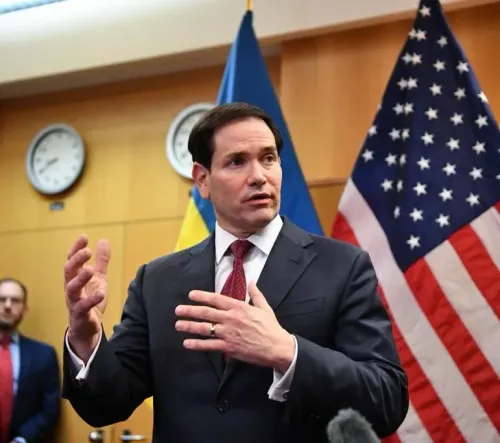
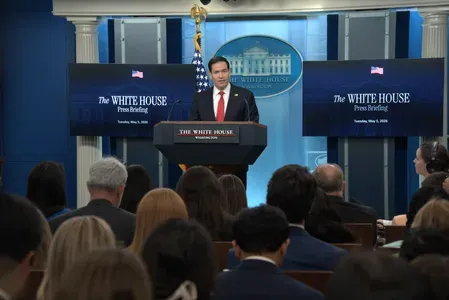
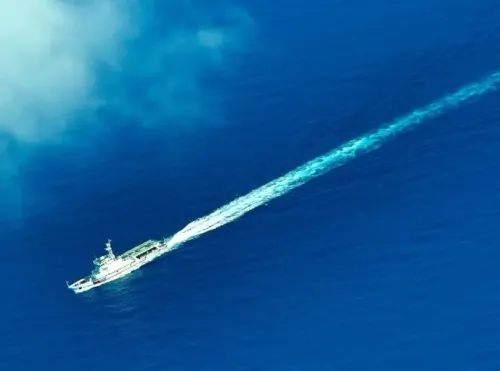
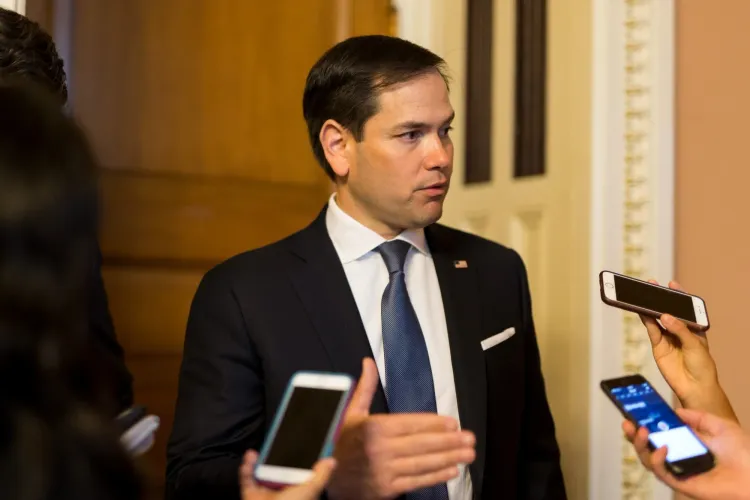
Washington, Feb 26 (NationPress) U.S. Secretary of State Marco Rubio confirmed that the United States is examining an incident near Cuba's coastline following reports from Cuban authorities about a rare occurrence of shootouts at sea. Washington is actively seeking to verify these claims and gain access to any individuals involved who may hold U.S. citizenship or residency.
“This morning, we learned of an incident off the coast of Cuba from Cuban officials,” Rubio told the press on Wednesday (local time) in Saint Kitts and Nevis. “We have swiftly initiated our investigation.”
He noted that various U.S. agencies, including the Department of Homeland Security and the Coast Guard, are engaged in the inquiry. “Most of the information we currently have originates from Cuban authorities, both for public consumption and for the U.S. Government,” he stated.
Rubio added, “Our embassy in Havana is actively working on the situation, seeking access to the individuals aboard those vessels, should they be American citizens or permanent residents.” He also remarked, “According to the Cuban government, the boat was registered in Florida. We are in the process of verifying that.”
Rubio refrained from making any assumptions prior to the confirmation of the details by U.S. agencies. “I won't speculate,” he asserted. “Our goal is to ascertain precisely what transpired here and respond appropriately.”
When questioned about the involvement of any U.S. governmental operations, he replied, “No, absolutely not.” He mentioned that Cuba’s border patrol and the U.S. Coast Guard maintain regular communication, and noted that the Cubans had informed the Coast Guard earlier that day. “We will ensure that information is independently verified to draw our own conclusions,” he added.
Rubio characterized the circumstances as highly unusual. “It is quite rare to witness shootouts in open waters like this,” he remarked. “This has not occurred with Cuba for quite some time.”
He cautioned against relying exclusively on Havana's narrative. “We typically do not base decisions in the United States solely on the statements of Cuban authorities,” Rubio emphasized.
In conjunction with these statements, Rubio discussed a U.S. initiative involving Venezuelan oil sales to Cuba’s private sector for humanitarian purposes. “It has always been permissible to sell to the private sector in Cuba,” he clarified, stressing that it would not include sales to the government or the military-controlled GAESA.
Rubio described Cuba’s private sector as “quite limited” and suggested that the island's deeper issues are structural. “The Cuban population is currently facing significant hardships,” he stated. “They are suffering now, possibly more than at any time in recent history, since 1959.”
He warned that permissions would be revoked if fuel is misallocated. “If we discover that the private sector is diverting fuel to the regime or the military entity... those licenses will be annulled,” Rubio stated.
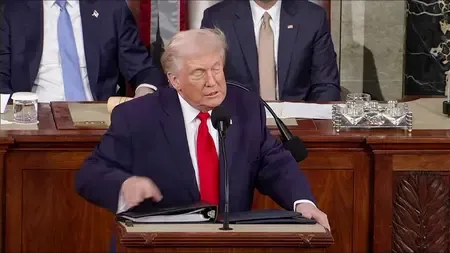
Rubio also previewed discussions regarding Iran, mentioning, “The President was very clear last night that he always favors diplomacy,” but cautioned that “Iran poses a very serious threat,” particularly regarding its ballistic missiles.
The relationship between Cuba and the United States has long been fraught, shaped by the U.S. trade embargo and recurring migration cycles, including boat journeys towards Florida.
U.S. agencies and regional partners have historically viewed maritime incidents in the Florida Straits as high-risk due to their potential to rapidly escalate humanitarian and border security issues.
Iran’s nuclear ambitions have been a focal point of extensive international diplomatic efforts and sanctions, with U.S. officials persistently advocating for limitations on enrichment and addressing delivery systems.
Previous negotiations have often stalled over verification, the extent of limitations, and whether missile programs should be included.
Point of View
The investigation into the incident off Cuba's coast highlights the ongoing complexities of U.S.-Cuba relations. It underscores the need for independent verification and cautions against relying solely on Cuban government accounts, reflecting the delicate balance of diplomacy in the region.
NationPress
3 Oct 2026
Frequently Asked Questions
What incident is the U.S. investigating off Cuba?
The U.S. is probing reports of shootouts at sea near Cuba, as reported by Cuban authorities.
Why is the U.S. seeking independent verification?
The U.S. wants to confirm the facts and ensure access to any involved U.S. citizens or residents.
What did Rubio say about the rarity of such incidents?
Rubio described the shootouts as highly unusual, noting that such occurrences have not happened with Cuba for a long time.
What is the U.S. stance on relying on Cuban authorities' accounts?
Rubio emphasized that decisions in the U.S. are not typically based solely on statements from Cuban authorities.
What implications does this incident have for U.S.-Cuba relations?
The incident may affect diplomatic ties and raise questions about maritime security and humanitarian issues.