Severe 'Bomb Cyclone' Hits US Northeast, Brings Record Snowfall

Synopsis
A fierce 'bomb cyclone' has unleashed over 90 centimeters of snow across the US Northeast, with winds reaching 135 kilometers per hour. The storm has caused widespread power outages, stranded vehicles, and significant travel disruptions.
Key Takeaways
Over 90 centimeters of snow reported across the Northeast.
Winds reached up to 135 kilometers per hour .
Nearly 500,000 people lost power.
Approximately 11,000 flights were canceled.
States of emergency have been declared in several areas.
New York, Feb 24 (NationPress) A powerful "bomb cyclone" has struck the Northeast region of the United States, dumping over 90 centimeters of snow and generating winds that reached 135 kilometers per hour in certain areas. This severe weather event has left nearly half a million people without power and resulted in the cancellation of approximately 11,000 flights.
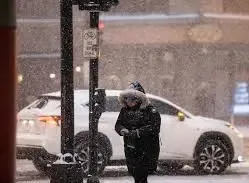
The storm, which intensified from Sunday night into Monday, impacted a vast 600-kilometer stretch of coastal states, from Pennsylvania to Massachusetts. In response, governors and local officials declared states of emergency, prohibiting all but critical travel on roadways. Emergency teams faced significant challenges as they managed the relentless snow accumulation.
This blizzard is referred to as a "bomb cyclone" due to the occurrence of bombogenesis, a phenomenon characterized by a minimum 24-millibar drop in pressure at the storm's center within a 24-hour period, amplifying the storm's strength.
Warwick, Rhode Island, recorded the highest snowfall at 91 centimeters, while winds in Nantucket, Massachusetts, reached a staggering 134 kilometers per hour.
So far, only two fatalities linked to the blizzard have been reported, both from Rhode Island.
While snowfall reduced across New York and most other areas by Monday evening, the National Weather Service cautioned that heavy snow and strong winds would persist into Tuesday morning across Maine as the storm moves away from the coast.
Massachusetts Governor Maura Healey described the blizzard as "the worst I've ever witnessed." Local media characterized the storm as "historic." More than 300,000 homes in Massachusetts were left without electricity, alongside 100,000 in New Jersey, primarily due to fallen trees snapping power lines.
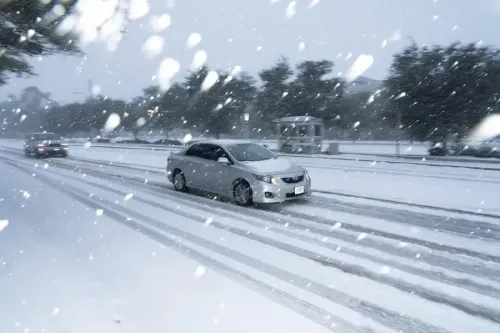
Reports indicated hundreds of vehicles, including those with occupants, were stranded on snow-covered roads.
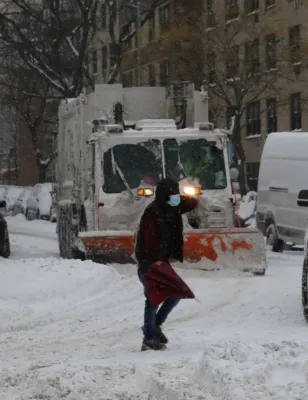
In New York City, this blizzard marked the most severe snowfall in a decade, following another snowstorm just a month prior. Central Park recorded 45 centimeters of snow, ranking it as the ninth-highest snowfall on record.
Governor Kathy Hochul declared a state of emergency, effectively imposing a curfew on non-essential vehicles in coastal areas on Sunday.
Last month, a severe cold wave led to at least 18 fatalities, mostly among the homeless, due to Mayor Zohran Mamdani's previous pledge to avoid displacing homeless individuals from their encampments. However, this time he adjusted his approach, urging social, medical, and law enforcement personnel to assist vulnerable populations, declaring at a news briefing that there were no reported deaths.
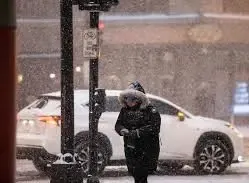
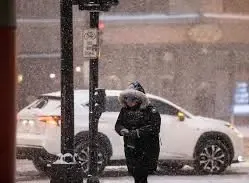
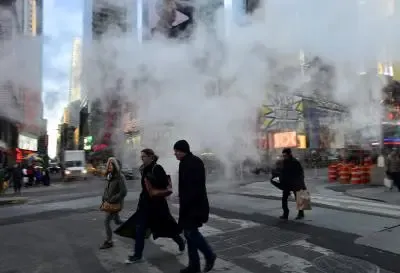
The usually bustling city streets were eerily quiet on Monday, with city buses cautiously resuming service by evening. Tourists flocked to Times Square, where emergency crews had cleared snow into towering piles.
While stock trading on Wall Street and other markets continued with traders working remotely, the majority of offices, including the United Nations, and schools were closed due to travel limitations. Some areas, like Rhode Island, will also see schools and offices closed on Tuesday.
As the Federal Emergency Management Agency (FEMA) prepares to assist in disaster responses, the agency operates under the Homeland Security Department, which is currently facing budget constraints due to demands from Democrats regarding immigration officer conduct related to civilian encounters. The Trump administration assured that the agency would be capable of providing immediate disaster support.
Point of View
It is imperative to prioritize public safety and emergency response efforts. The declaration of states of emergency by various governors underscores the seriousness of the situation as communities navigate the challenges posed by this extreme winter event.
NationPress
29 Sept 2026
Frequently Asked Questions
What is a bomb cyclone?
A bomb cyclone is a rapidly intensifying storm characterized by a drop of at least 24 millibars in atmospheric pressure within 24 hours, often resulting in severe weather conditions like heavy snowfall and strong winds.
How has the bomb cyclone impacted travel?
The bomb cyclone has led to the cancellation of approximately 11,000 flights and caused significant travel disruptions due to heavy snowfall and state of emergency declarations.
What areas were most affected by the storm?
The storm affected a 600-kilometer stretch of coastal states, with Massachusetts and Rhode Island recording the highest snowfall and power outages.
What emergency measures were taken?
Governors and local authorities declared states of emergency, banning non-essential travel and mobilizing emergency crews to manage the snow and power outages.
What is the current situation regarding power outages?
As of now, over 300,000 homes in Massachusetts and 100,000 in New Jersey are without power due to fallen trees and downed power lines.