How is a massive winter storm affecting the US travel and power?
Synopsis
A massive winter storm is wreaking havoc across the United States, causing widespread travel disruptions and power outages. Over 190 million people are under weather alerts, and emergency declarations have flooded in from numerous states. As conditions worsen, residents are urged to stay home and prepare for extended disruptions.
Key Takeaways
A significant winter storm is affecting over 190 million people across the US.
Power outages have affected more than 132,000 homes, especially in the South and Southwest.
Travel disruptions are severe, with over 9,000 flight cancellations reported.
Emergency declarations have been made in at least 20 states.
Residents are urged to stay home and prepare for prolonged disruptions.
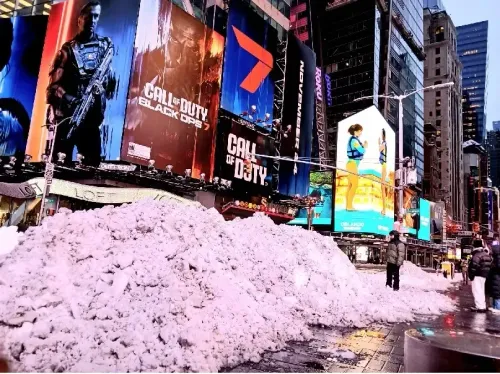
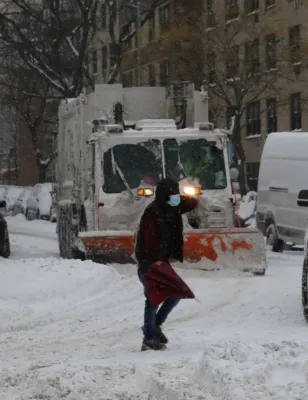
Washington, Jan 25 (NationPress) A significant winter storm has engulfed a vast area of the United States, unleashing snow and ice, and driving temperatures down to alarming lows. This weather event has led to power outages affecting tens of thousands of homes and prompted emergency declarations in over 20 states, as reported by various media outlets and government authorities.
Close to 190 million individuals — representing more than half the population of the US — are currently under winter weather advisories across 37 states, stretching from the Rocky Mountains to New England. Snow, sleet, and freezing rain have spread from New Mexico to the Tennessee Valley, while heavier snowfall has moved into regions of the Midwest and mid-Atlantic, according to official reports.
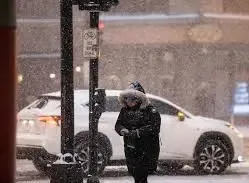
This storm has brought perilous cold conditions to much of the central and eastern US. Wind chills have plummeted to the minus 20s and minus 30s in certain areas, with temperatures recorded 10 to 40 degrees below seasonal norms, as per meteorological officials.
Power outages have surged as ice and heavy snow have brought down power lines and damaged infrastructure. By Saturday, more than 132,000 homes nationwide were without electricity, according to outage tracking data referenced by US media. The most severely affected regions include the South and Southwest, notably Texas, Louisiana, and New Mexico.
In Texas, reports indicated over 57,000 customers were without power by Saturday afternoon, while Louisiana faced outages impacting over 45,000 customers, approximately 2% of the state's total. Officials noted that the outages in Louisiana were primarily concentrated in the northern regions, where freezing rain and ice accumulation were most intense.
The storm has also created significant disruptions to travel, particularly in air traffic. More than 9,000 flights were canceled across the country over the weekend, with further cancellations anticipated as the storm progresses eastward, according to flight tracking services mentioned by US media.
Authorities cautioned that Sunday could potentially be one of the most disruptive days for weather-related flight cancellations in the history of US aviation. American Airlines canceled over a third of its planned flights, and around 85% of departures from New York's LaGuardia Airport were axed, based on data from airlines and airports.
Airports in Dallas-Fort Worth, Charlotte, and Nashville were among the hardest hit, officials reported.
As conditions deteriorated, emergency declarations proliferated swiftly. At least 20 states, including Texas, New York, New Jersey, Pennsylvania, Georgia, the Carolinas, Virginia, and several Midwestern and Southern states, declared states of emergency. Washington, D.C. also declared a state of emergency, according to officials.
President Donald Trump greenlighted federal emergency declarations for several states, enabling the Federal Emergency Management Agency (FEMA) to assist with urgent tasks like debris removal and protective measures.
Homeland Security Secretary Kristi Noem urged citizens to follow local directives and avoid unnecessary travel.
“We want to remind everybody that during these emergency disaster situations, it’s your local officials and local emergency managers that carry out the response to these disasters,” Noem stated. “Your states manage it, and the federal government is here to support.”
Units of the National Guard were mobilized across extensive parts of the nation. Guardsmen from at least 12 states were dispatched to assist in clearing roads, aiding stranded motorists, and supporting local communities, officials indicated.
In South Carolina, officials warned residents to brace for extended power outages. Governor Henry McMaster indicated that some areas might be electricity-free for several days due to heavy ice build-up.
“You may be without electricity for maybe four days or possibly longer,” McMaster stated, urging residents to check on their neighbors and vulnerable individuals.
Meteorologists in the state classified the storm as the most severe ice event in nearly two decades, cautioning about widespread tree damage, downed power lines, and impassable roads.
Governor Abigail Spanberger of Virginia described the impending system as potentially “catastrophic,” referencing the threat of heavy snow, significant ice accumulation, and prolonged power outages, even after the precipitation ceases.
Federal offices in the Washington, D.C. area were instructed to remain closed on Monday, with maximum telework protocols in effect. Emergency personnel were advised to report unless otherwise informed, officials noted.
Public transportation systems also suspended operations in anticipation of hazardous conditions. New Jersey Transit announced the halt of most bus, light rail, and commuter rail services, emphasizing that service would not resume until it was deemed safe.
The storm has reignited concerns regarding the resilience of the US power grid, particularly in Texas. The US Department of Energy issued an emergency order permitting the Texas grid operator to deploy backup generation resources to avert widespread blackouts, officials reported.
Energy Secretary Chris Wright indicated that the administration was taking steps to ensure that all available power generation resources could be utilized during the storm. Federal officials cited warnings from reliability monitors stating that extreme weather combined with rising winter demand continues to exert pressure on parts of the national grid.
Utilities nationwide have mobilized tens of thousands of workers from various states to expedite power restoration as swiftly as possible under the prevailing conditions, industry representatives mentioned.
Forecasters predicted that conditions should gradually improve next week; however, snow and extreme cold may persist in certain areas of New England and around the Great Lakes. Until then, authorities advised residents to remain at home when feasible, minimize travel, and prepare for prolonged disruptions as the storm continues its eastward trajectory.
Point of View
We recognize the far-reaching impacts of this winter storm across the United States. The situation is serious, with emergency declarations and widespread disruptions affecting everyday life. Our focus remains on providing accurate information and support to those affected while underscoring the importance of heeding local guidance during these challenging times.
NationPress
20 Oct 2026
Frequently Asked Questions
What states are most affected by the winter storm?
The winter storm has severely impacted states including Texas, Louisiana, New Mexico, and many parts of the Midwest and Eastern US.
How many flights have been canceled due to the storm?
Over 9,000 flights were canceled nationwide over the weekend, with more cancellations expected as the storm progresses.
What should residents do during power outages?
Residents are advised to check on neighbors, especially vulnerable individuals, and prepare for potentially prolonged outages.
What measures are officials taking to address the storm's impact?
Emergency declarations have been issued in multiple states, and the National Guard has been activated to assist in local efforts.
When will conditions improve?
Forecasters suggest that conditions should gradually improve next week, although snow and extreme cold may linger in some areas.