US unipolarity under threat as countries eye multipolar order: Report

Synopsis
A foreign policy researcher writing in India Narrative argues that America's relentless pursuit of unipolarity — most recently through what he calls an unprovoked attack on Iran — has backfired spectacularly, with Iran reclaiming the Strait of Hormuz in 32 days and countries worldwide now actively exploring a multipolar alternative to US dominance.
Key Takeaways
Foreign policy researcher Prateek Kapil warns in India Narrative that US pursuit of primacy risks triggering a broad international coalition against Washington .
Kapil argues the US "unprovoked" attack on Iran backfired, with Iran reportedly reclaiming the Strait of Hormuz within 32 days .
Countries are reportedly "mulling ways and means" to reject American unipolarity and leverage the emergence of a multipolar order .
Nations increasingly view the US as a "predatory hegemon" rather than a guardian of global values and security, according to the analysis.
The report cites Vietnam , Iraq , and Afghanistan as examples of US military overreach that ultimately undermined American credibility.
A foreign policy analysis published on Tuesday, 28 April warns that the United States must recalibrate its global posture, as its insistence on maintaining primacy risks triggering a broad international coalition against it, amid mounting frustration over what the report describes as America's "rogue behaviour". The assessment, carried by India Narrative, offers a sharp critique of Washington's strategic calculus at a moment of heightened geopolitical flux.
The Core Argument: Primacy at Any Cost
Writing for India Narrative, foreign policy researcher Prateek Kapil argues that the US has never accepted a "first-among-equals" status and pursues primacy through military force. He notes that America's geographic insulation — sitting between two great oceans — has historically allowed it to project violence without facing violent reprisals at home.
"The US has never been satisfied with a first-among-equals status. It wants primacy at all costs. Since its own population is insulated from violent reprisals, the US employs violence without consequence to achieve its strategic goals. Most countries have not been able to cope with the overwhelming force that the US military brings down to bear. Vietnam, Iraq, and Afghanistan fought back and won, but at the cost of ruin," Kapil wrote.
He further noted that Iraq and Afghanistan stand as cautionary tales where American military retreats left failed states behind, while Vietnam eventually achieved reunification after years of conflict. "The deal is simple — either comply with Uncle Sam or face ruin. This is the stark reality of the American unipolar order and the American empire," he added.
Iran and the Strait of Hormuz: A Turning Point
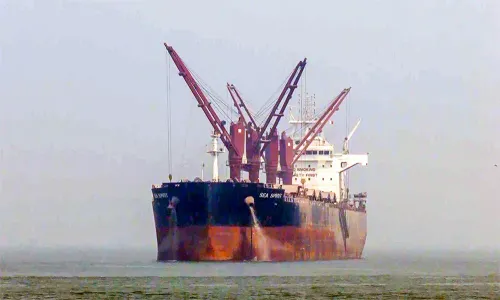
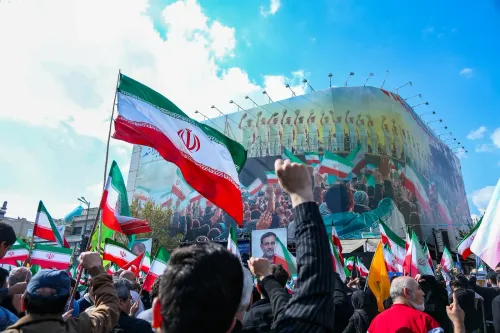
Kapil argues that the US decision to launch what he describes as an "unprovoked" military attack on Iran produced a strategically significant outcome. According to his analysis, Iran not only withstood the offensive but also, reportedly, reclaimed control of the Strait of Hormuz within 32 days, reshaping global economic dynamics in the process.
By challenging what Kapil calls the "so-called freedom of navigation" — a cornerstone of US-led unipolarity — Iran has, in his assessment, dealt a considerable blow to American primacy. He argues that US power is fundamentally weakened when it cannot be leveraged to secure economic dominance and sustain global influence.
The Multipolar Shift: Countries Reassessing Allegiances
The analysis highlights a broader global realignment away from US-centric order. "Iran's legitimate control of the Strait of Hormuz has led to massive shortages across the globe and ushered in calls for a multipolar order. Countries are mulling ways and means to reject American unipolarity and use the emergence of multipolarity to their advantage," Kapil wrote in India Narrative.
He contends that nations no longer regard the United States as a credible guardian of values or security interests, instead characterising Washington as a "predatory hegemon." According to Kapil, this perception has "completely obliterated American credibility and legitimacy as the global superpower."
Context and Significance
The report arrives at a time when multilateral institutions and emerging economies have been increasingly vocal about reforming global governance structures. Analysts across geopolitical spectrums have noted rising interest among the Global South in diversifying strategic partnerships beyond the traditional US-led framework. This commentary, while representing one researcher's perspective, reflects a strand of thinking that has gained traction in foreign policy circles in Asia, Africa, and Latin America.
Whether the multipolar momentum translates into a durable structural shift — or remains a collection of rhetorical positions — will depend significantly on how Washington responds to the erosion of its soft power alongside its hard power limitations.
Point of View
While authored from a clearly critical standpoint, taps into a real and growing anxiety in global capitals about the predictability of US foreign policy. The framing of Iran's Strait of Hormuz move as a strategic victory deserves scrutiny — the humanitarian and economic costs of supply disruptions fall hardest on developing nations, not Washington. More broadly, the multipolar narrative is easier to articulate than to operationalise: the countries most vocal about rejecting US primacy have yet to demonstrate the institutional cohesion needed to sustain an alternative order. The credibility deficit Kapil identifies is real; the multipolar solution he gestures toward remains largely aspirational.
NationPress
19 Sept 2026
Frequently Asked Questions
What is the report about US unipolarity and multipolarity?
The report, published in India Narrative on 28 April, argues that the United States' insistence on maintaining global primacy — including through military force — is alienating nations and accelerating a shift toward a multipolar world order. Foreign policy researcher Prateek Kapil contends that countries are actively exploring ways to reject American dominance.
What role does Iran's control of the Strait of Hormuz play in this analysis?
Kapil argues that Iran's reported reclamation of the Strait of Hormuz within 32 days of a US military attack represents a direct challenge to the core logic of American unipolarity — specifically the principle of freedom of navigation that underpins US economic and strategic dominance. He says this has caused global supply shortages and amplified calls for a multipolar order.
Why are countries losing trust in the United States as a global leader?
According to Kapil's analysis, nations increasingly view the US as a 'predatory hegemon' rather than a guardian of values and security, citing repeated military interventions in Vietnam, Iraq, Afghanistan, and Iran. This perception has, in his assessment, eroded American credibility and legitimacy on the world stage.
What is multipolarity and why does it matter now?
Multipolarity refers to a global order in which power is distributed among multiple major states rather than concentrated in one dominant nation. The concept is gaining traction as countries in the Global South and elsewhere seek to diversify strategic partnerships and reduce dependence on US-led institutions and security guarantees.
Who is Prateek Kapil and where was this analysis published?
Prateek Kapil is described as a foreign policy researcher who authored this commentary for India Narrative, a foreign affairs and geopolitics publication. The piece was published on Tuesday, 28 April 2025.