US tariff waiver on Russia-linked oil to accelerate India-US trade: Report
Synopsis
A Trump executive order waiving tariffs tied to Russian energy purchases has handed Indian exporters a reprieve — and potentially a pathway to accelerating the $500 billion India-US trade ambition by 2030. With September 2026 exports already up 48% year-on-year, the waiver could be the confidence boost both sides needed.
Key Takeaways
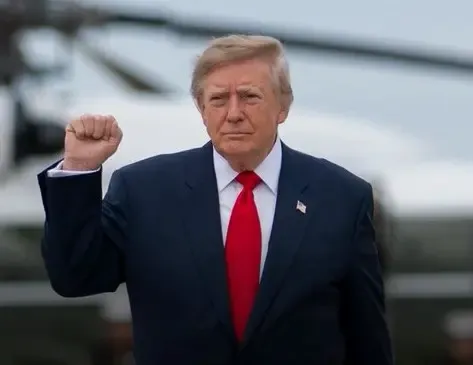
President Donald Trump signed an Executive Order waiving tariff and sanctions measures linked to Russian-origin oil and gas purchases by major buyers, including India.
The order removes the immediate threat of additional tariffs of up to 100% on Indian exports tied to Russian energy purchases.
India's merchandise exports to the US rose from $86.5 billion in FY25 to $87.3 billion in FY26 , up approximately 0.9% despite tariff headwinds.
September 2026 exports jumped 48% to $8.02 billion from $5.42 billion in September 2025.
The waiver is seen as a step toward the $500 billion India–US bilateral trade target by 2030 , though structural tariff issues remain unresolved.
The United States' decision to waive tariff and sanctions measures tied to Russian-origin oil and gas purchases could offer significant relief to Indian exporters, restore business confidence, and help push bilateral trade toward the $500 billion India–US trade target by 2030, according to a new report. The development follows an Executive Order signed by President Donald Trump that eased the immediate threat of additional tariffs of up to 100% on Indian exports linked to Russian energy purchases.
What the Waiver Changes for Indian Exporters
The waiver reduces uncertainty that had been weighing on Indian businesses dependent on the US market. Sectors including engineering goods, industrial machinery, pharmaceuticals, and electronics — which rely on long-term procurement relationships, competitive pricing, and reliable delivery schedules — stand to benefit most directly.
According to the report, US importers can now assess Indian sourcing options without the same immediate concern over punitive tariffs. Businesses on both sides, it noted, can redirect their attention from managing successive policy uncertainties toward expanding commercial opportunities.
India-US Trade in Numbers
The United States remains India's largest merchandise export destination, accounting for a broad cross-section of manufactured, pharmaceutical, engineering, and labour-intensive goods. India's merchandise exports to the US climbed from approximately $86.5 billion in FY25 to $87.3 billion in FY26 — a gain of roughly 0.9% — even as tariff measures weighed on trade during the year.
Notably, September 2026 exports surged to $8.02 billion, up 48% from $5.42 billion in September 2025, signalling a sharp acceleration in the most recent month on record.
Limits of the Relief
'Although the waiver does not eliminate every tariff-related challenge, it reduces the risk of further escalation in trade tensions and provides an opportunity to rebuild momentum in one of India's most important export markets,' the report stated.
The measure is therefore better characterised as a floor against further deterioration than a wholesale resolution. Structural tariff friction between the two economies remains unresolved, and the waiver's scope is specific to Russian energy-linked measures.
Broader Strategic Context
India's purchases of discounted Russian crude oil since the 2022 Ukraine conflict had become a recurring point of friction in New Delhi–Washington trade talks. The Trump administration's waiver, according to the report, effectively decouples India's energy sourcing decisions from its broader export relationship with the US — at least for now.
'Greater coordination on energy, manufacturing, technology, investment and supply chains can help both countries identify shared interests and reduce the risk of future disruptions,' the report observed.
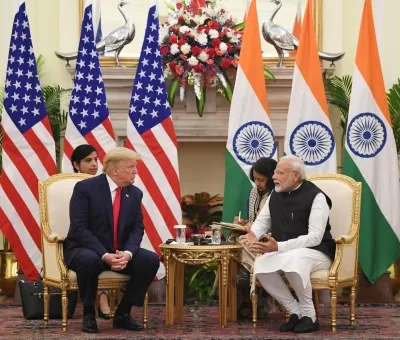
This comes amid a broader push by both governments to deepen economic ties, with the $500 billion bilateral trade ambition by 2030 serving as the headline target. Whether the waiver translates into sustained export momentum will depend on follow-through on pending trade framework negotiations and investment facilitation measures.
Point of View
Not a strategic reset — and Indian exporters should read it carefully. New Delhi's Russian crude purchases were always more a leverage point than a genuine US trade grievance; Trump's order essentially trades that pressure away, likely in exchange for goodwill on other bilateral fronts. The 48% year-on-year surge in September 2026 exports is striking, but a single month's data driven partly by front-loading ahead of tariff deadlines is not a trend. The real question is whether this waiver accelerates a broader trade framework deal — without one, the $500 billion target by 2030 remains aspirational arithmetic rather than a credible roadmap.
NationPress
2 Nov 2026
Frequently Asked Questions
What did the US tariff waiver on Russia-linked oil purchases involve?
President Donald Trump signed an Executive Order waiving tariff and sanctions measures tied to Russian-origin oil and gas purchases by major buyers, including India. The order removed the immediate threat of additional tariffs of up to 100% on Indian exports linked to Russian energy sourcing.
How does the waiver affect India-US bilateral trade?
The waiver is expected to restore business confidence, reduce policy uncertainty for Indian exporters, and support momentum toward the $500 billion India-US bilateral trade target by 2030. Sectors such as engineering goods, pharmaceuticals, and industrial machinery are among the primary beneficiaries.
What are the latest figures for India's merchandise exports to the US?
India's merchandise exports to the US rose from approximately $86.5 billion in FY25 to $87.3 billion in FY26, a gain of about 0.9%. Exports in September 2026 surged 48% to $8.02 billion compared with $5.42 billion in September 2025.
Does the waiver fully resolve tariff tensions between India and the US?
No. The waiver specifically addresses tariff measures linked to Russian energy purchases and does not eliminate all tariff-related challenges. Structural tariff friction between the two economies remains, and further negotiations are needed to address broader trade framework issues.
Why had India's Russian oil purchases created friction with the US?
Following Russia's 2022 invasion of Ukraine, India significantly increased purchases of discounted Russian crude oil, which drew concern from Washington. The Trump administration's waiver effectively separates India's energy sourcing choices from its export relationship with the US, at least under current policy.