H-1B green card pathway: US senator pushes tougher PERM rules

Synopsis
A Republican senator's letter to the Acting Labor Secretary proposes the most significant overhaul of PERM green card recruitment rules in over 20 years — demanding online job postings, documented rejections, and proof that roles weren't pre-reserved for foreign workers. With Indians holding 70% of H-1B approvals in FY2025, the proposal, if adopted, would hit the Indian tech professional pipeline hardest.
Key Takeaways
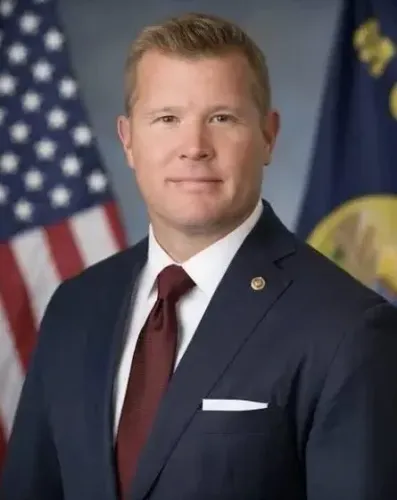
Senator Eric Schmitt of Missouri wrote to Acting Labor Secretary Keith Sonderling on 8 August urging a PERM recruitment overhaul.
Indians accounted for 70 per cent of all approved H-1B petitions in fiscal year 2025 , per USCIS data.
Current PERM rules require ads in two print newspapers and have not been substantially updated in more than 20 years .
Schmitt proposes mandatory online job postings, documented rejection rationales, and certification that roles were not pre-reserved for foreign workers.
The letter does not itself change any rules; implementation depends on whether the Department of Labor acts on the proposals.
No existing visas, applications, or immigration statuses would be immediately affected under the proposal.
Republican US Senator Eric Schmitt of Missouri has written to Acting Labor Secretary Keith Sonderling urging a comprehensive overhaul of the Program Electronic Review Management (PERM) process — the standard first step employers use to sponsor foreign workers for employment-based permanent residency. The proposal, dated 8 August, could significantly complicate the green card pathway for Indian technology professionals, who accounted for 70 per cent of all approved H-1B petitions in fiscal year 2025, according to the latest US Citizenship and Immigration Services (USCIS) report.
What Schmitt Is Proposing
Schmitt's letter calls on the Department of Labor to rewrite PERM recruitment regulations, which he argues have not been substantially updated in more than 20 years. Under current rules, recruitment for non-professional positions generally requires advertisements in two print newspapers and placement with a state workforce agency — with no mandatory online posting even for professional roles.
'Given dramatically reduced newspaper circulation and the prevalence of online job applications, these outdated rules let employers conceal jobs from American workers while claiming they tried to recruit domestically,' Schmitt wrote.
His proposals would require every PERM position to be posted on the employer's standard careers page and on at least one widely used online employment platform. Crucially, companies would have to follow the same application process used for comparable roles not connected to PERM.
Stricter Scrutiny of American Applicants
The senator is also pushing for far more rigorous documentation of domestic hiring efforts. Employers would be required to record every American applicant, provide written explanations for each rejection, and certify that the position was not formally or informally reserved for a foreign worker in advance.
Companies would additionally have to notify recently laid-off American workers who might qualify, interview all candidates meeting the stated requirements, and furnish written rejection rationales. 'The current requirement permits cursory, pro forma consideration of American applicants,' Schmitt wrote. 'The Department should replace it with a process that gives displaced American workers a genuine opportunity to compete for the job.'
What It Means for Indian Professionals
Indians dominate the H-1B pipeline and, by extension, employer-sponsored green card applications. Many follow a well-worn route: student visa, Optional Practical Training (OPT), H-1B employment, and eventually PERM-based permanent residency. Tighter recruitment documentation would raise compliance costs for sponsoring employers and could lengthen an already protracted sponsorship process.
Notably, Schmitt's letter does not mention India by name, proposes no immediate cancellation of existing visas or immigration status, and does not itself alter any H-1B or PERM rules. The precise impact would depend entirely on whether the Department of Labor adopts his proposals and how any eventual regulation is drafted.
Background: How PERM Works
A permanent labour certification under PERM allows an employer to hire a foreign worker on a permanent basis in the United States. Before granting certification, the Department of Labor must determine that no qualified, available US worker can fill the role and that hiring the foreign worker would not adversely affect similarly employed Americans. PERM is legally distinct from the H-1B programme: H-1B authorises temporary employment in specialised occupations, while PERM is the gateway to an employment-based green card.
What Happens Next
The letter also asks the Department of Labor to publicly disclose data on PERM audits, suspected fraud cases, and PERM applicants' prior use of OPT and H-1B visas. The department has not yet responded publicly. Whether the proposals advance will depend on the administration's regulatory priorities — and any rule change would likely face a notice-and-comment period before taking effect.
Point of View
A framing with bipartisan appeal heading into an election cycle. The 20-year gap in PERM regulation is a genuine vulnerability; the rules are visibly anachronistic. But the proposal's real bite lies in the documentation requirements: mandatory written rejection rationales and pre-reservation certifications would expose employers to far greater litigation risk, potentially chilling sponsorship well before any regulation is finalised. For Indian professionals, the danger is not this letter — it is the regulatory direction it signals, particularly if the Department of Labor moves toward notice-and-comment rulemaking. The USCIS data point — 70 per cent of H-1B approvals going to Indians — will continue to make this community the focal point of any restrictionist immigration push, regardless of whether India is named explicitly.
NationPress
22 Sept 2026
Frequently Asked Questions
What is the PERM process and why does it matter for Indian H-1B workers?
PERM, or Program Electronic Review Management, is the standard first step US employers use to sponsor a foreign worker for an employment-based green card. It matters enormously for Indian professionals because Indians held 70 per cent of approved H-1B petitions in fiscal year 2025, and most follow the H-1B-to-PERM pathway to permanent residency.
What changes is Senator Schmitt proposing to PERM?
Schmitt is asking the Department of Labor to require employers to post every PERM position online, document every American applicant and rejection reason, notify recently laid-off US workers, and certify that a role was not pre-reserved for a foreign worker. He also wants the department to disclose data on PERM audits and suspected fraud.
Does Schmitt's letter immediately change H-1B or green card rules?
No. The letter is a proposal addressed to the Acting Labor Secretary and does not itself alter any existing rules. Any regulatory change would require the Department of Labor to initiate a formal rulemaking process, including a public notice-and-comment period.
Why does Schmitt say current PERM rules are outdated?
Schmitt argues that rules requiring newspaper advertisements — which have not been substantially updated in over 20 years — are ineffective given the collapse of print circulation and the shift to online job applications. He contends this allows employers to technically comply while effectively hiding positions from American workers.
Who would be most affected if these proposals become regulation?
Indian technology professionals would be most directly affected, given their dominant share of H-1B approvals. Sponsoring employers would face higher compliance costs and greater legal exposure, which could slow or reduce the number of green card sponsorships offered, lengthening an already complex and backlogged process.