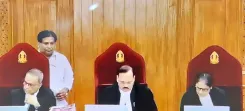
Uttarakhand Madrasa Board dissolved; minority education authority takes over July 1
Synopsis
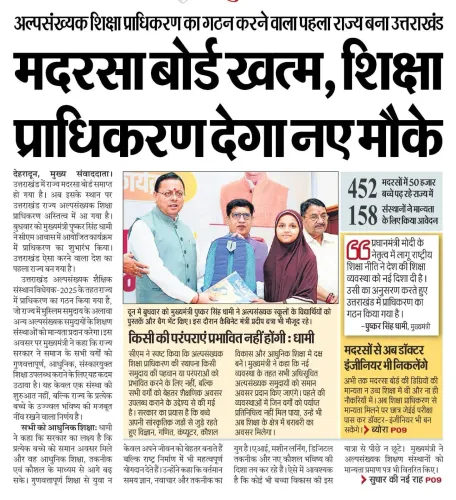
Uttarakhand has formally shut down its Madrasa Board — effective midnight 30 June — replacing it with a State Minority Education Authority that mandates Science, Maths, and Computer Science in minority schools by July 2026. It is one of the first such dissolutions by any Indian state, and a template other BJP governments may replicate.
Key Takeaways
The Uttarakhand Madrasa Board was dissolved at midnight on 30 June 2025 .
The Uttarakhand State Minority Education Authority took over all responsibilities from 1 July 2025 .
Madrasas must adopt the Uttarakhand Board curriculum — including Science, Maths, Social Science, and Computer Science — by July 2026 .
Uttarakhand Waqf Board Chairman Shadab Shams backed the reform, calling the old board 'ineffective and detrimental.' Institutions found in violation of the new guidelines face the possibility of closure .
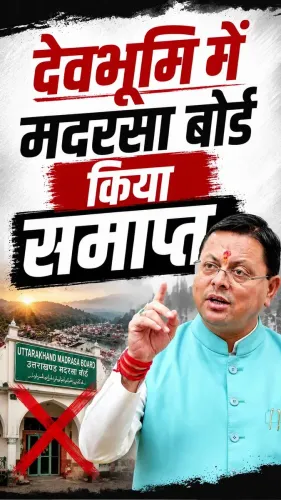
The Uttarakhand Madrasa Board ceased to exist at midnight on Tuesday, 30 June, as the state government formally abolished it and transferred its responsibilities to the newly constituted Uttarakhand State Minority Education Authority. The new body began functioning from Wednesday, 1 July, marking one of the most significant shifts in minority education governance in the state's history.
Key Developments
Uttarakhand Special Secretary Parag Madhukar Dhakate confirmed that the new regulations came into effect from 1 July, bringing all minority institutions under the umbrella of the State Minority Education Authority. He stated that all such institutions would operate under the new framework from Wednesday, exposing students from minority communities to what officials described as a 'new realm of modern education.'
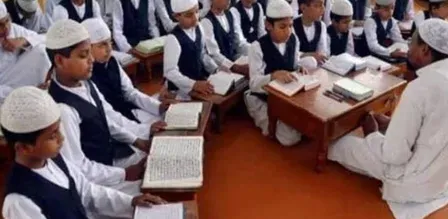
Under the revised regulations, madrasas will cease to follow conventional practices and are required to adopt the Uttarakhand Board curriculum from July 2026. Institutions found in violation of the new guidelines have been cautioned about the possibility of closure.
What the New Curriculum Covers
The revamped curriculum will prioritise modern subjects, including Science, Mathematics, Social Science, and Computer Science. This represents a structural departure from the traditional madrasa syllabus, which critics had long described as outdated and difficult for mainstream employment pathways.
Notably, this is among the first state-level moves in India to formally dissolve a standalone madrasa board and subsume it into a broader minority education authority — a model that other BJP-governed states may watch closely.
What the Waqf Board Said
Uttarakhand Waqf Board Chairman Shadab Shams backed the overhaul, arguing it would bring parity for madrasa graduates. 'The Madrasa Education Board had become ineffective and detrimental to the education of Muslim children. Its curriculum was so outdated and complex that it was difficult for an ordinary person to understand. The new system is intended to bring greater transparency, accountability, and improvements in madrasa education,' Shams said.
He added that the change would make students 'capable and efficient' enough to face future challenges — a framing that positions the reform as student-welfare driven rather than politically motivated.
Community and Scholarly Response
According to officials, the transition has drawn support from educated sections and scholars within the minority community. The government has not, however, publicly detailed a structured consultation process with madrasa administrators or parent groups ahead of the changeover.
What Happens Next
All minority institutions are now expected to align their administrative and academic operations with the Uttarakhand State Minority Education Authority from 1 July 2025. Full curriculum adoption under the Uttarakhand Board is mandated from July 2026, giving institutions approximately one year to transition. The state government has indicated that non-compliant institutions risk closure, signalling that the reform is binding, not voluntary.
Point of View
The Uttarakhand government is testing a model that sidesteps the constitutional minefield of directly regulating religious education. The endorsement from Waqf Board Chairman Shadab Shams provides political cover, but the absence of a publicly documented consultation process with madrasa administrators raises questions about implementation consent. The real test arrives in July 2026 when curriculum compliance becomes mandatory — and whether the state has the institutional capacity to support, not just penalise, the transition.
NationPress
29 Sept 2026
Frequently Asked Questions
What is the Uttarakhand State Minority Education Authority?
It is a newly created umbrella body that replaced the Uttarakhand Madrasa Board from 1 July 2025, bringing all minority educational institutions in the state under a single regulatory framework. It will oversee the transition to a modern, Uttarakhand Board-aligned curriculum.
Why was the Uttarakhand Madrasa Board dissolved?
State officials and Waqf Board Chairman Shadab Shams cited the old board's outdated and complex curriculum as detrimental to Muslim children's education. The government argued the change would bring transparency, accountability, and better employment prospects for madrasa graduates.
When will madrasas have to follow the new curriculum?
Madrasas are required to adopt the Uttarakhand Board curriculum — covering Science, Mathematics, Social Science, and Computer Science — from July 2026, giving institutions approximately one year to transition.
What happens to madrasas that do not comply?
Institutions found in violation of the new guidelines have been cautioned about the likelihood of closure, according to state officials. Compliance with the Uttarakhand State Minority Education Authority framework is mandatory, not optional.
Has the minority community supported this change?
According to state officials, the reform has drawn support from educated sections and scholars within the community. Waqf Board Chairman Shadab Shams publicly endorsed it, saying it would make students 'capable and efficient' to face future challenges.