CM Dhami Dissolves Uttarakhand Madrasa Board, Forms New Authority
Synopsis
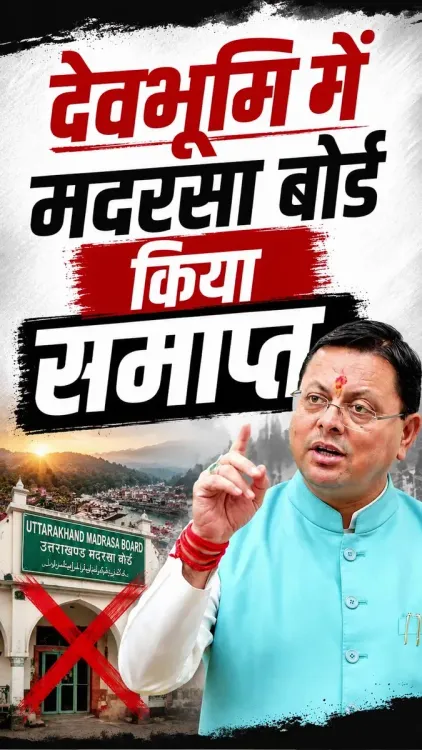
Uttarakhand CM Pushkar Singh Dhami dissolved the state Madrasa Board on 30 July 2026 and constituted a new State Minority Education Authority, citing commitment to national unity and opposition to separatist thinking in 'Devbhoomi' Uttarakhand.
Key Takeaways
The Uttarakhand Madrasa Board has been formally dissolved by the Dhami government .
A new State Minority Education Authority has been constituted in its place.
CM Dhami linked the move to opposing 'anti-national, separatist and extremist' thinking in the state.
The government framed the reform as upholding social harmony, national unity and constitutional values.
The structure, mandate and funding of the new authority are yet to be publicly detailed.
The move follows a broader BJP pattern of dissolving separate madrasa boards across multiple states.
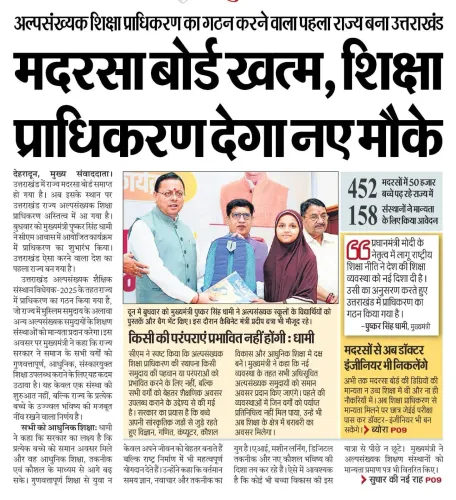
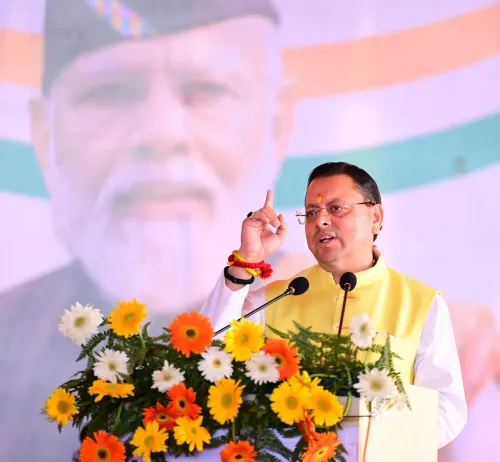
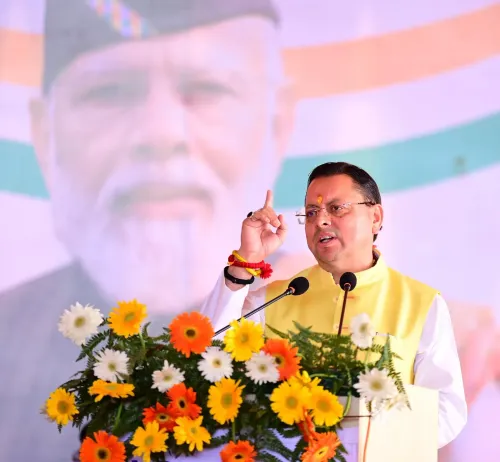
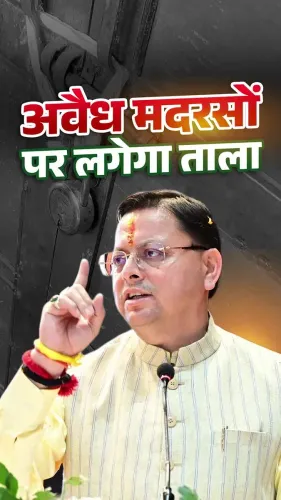
A significant institutional overhaul landed in Uttarakhand on Thursday, 30 July 2026, as Chief Minister Pushkar Singh Dhami announced the dissolution of the Uttarakhand Madrasa Board and its replacement with a new State Minority Education Authority — a move the BJP government framed squarely around national unity and constitutional values.
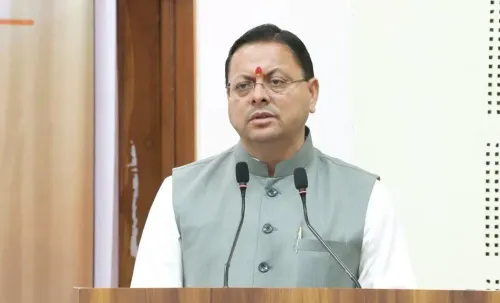
Posting on X, CM Dhami declared: 'The Uttarakhand Madrasa Board has been abolished and a State Minority Education Authority has been constituted. In Devbhoomi Uttarakhand [the Land of the Gods], anti-national, separatist and extremist thinking will not receive protection in any form. Our government is fully committed to social harmony, national unity and constitutional values.'
What the old board did — and why it is gone
The Uttarakhand Madrasa Board was the statutory body overseeing the curriculum, examinations and recognition of madrasa institutions across the state. Uttarakhand has been under BJP governance since 2017, and the party's administrations have periodically tightened regulatory oversight of minority institutions. The abolition follows a pattern seen in other BJP-governed states, where separate madrasa boards have been wound up in favour of integrating minority education into a single mainstream framework.
The new State Minority Education Authority is designed to replace that structure entirely. Its precise mandate, funding model and composition have not yet been detailed publicly — those specifics will be closely watched by minority communities, educators and legal observers in the weeks ahead.
Dhami's framing: security, sovereignty, and 'Devbhoomi'
CM Dhami chose pointed language — 'anti-national', 'separatist', 'extremist' — to explain the rationale, invoking Devbhoomi, the state's identity as a sacred land, as a value frame. This is a familiar register in BJP-led education reforms: policy change delivered alongside a security and sovereignty argument, linking institutional restructuring to the broader national-unity narrative the party has championed at both state and central levels.
Madrasa students and Uttarakhand's minority communities are the most directly affected stakeholders. How the new authority will handle existing student enrolments, teacher appointments and board-recognised certificates remains an open question — and a likely flashpoint for community response or legal challenge.
Whether the State Minority Education Authority delivers genuine educational integration or simply replaces one administrative structure with another will be the real test of this reform — and the answer will come from classrooms, not press releases.
Point of View
While anchoring the policy in the language of national security rather than purely administrative efficiency. For CM Dhami, the announcement serves a dual purpose — delivering a concrete institutional change ahead of any electoral cycle while reinforcing the party's 'Devbhoomi' cultural identity politics in a state with deep religious symbolism. The real political and legal test will come when the new State Minority Education Authority's mandate is published and community groups or courts scrutinise whether it genuinely integrates minority education or merely centralises control over it.
NationPress
13 Sept 2026
Frequently Asked Questions
Why did Uttarakhand abolish the Madrasa Board?
Chief Minister Pushkar Singh Dhami stated the board was dissolved to prevent protection of anti-national, separatist and extremist thinking in the state, and to uphold national unity and constitutional values.
What is the new State Minority Education Authority in Uttarakhand?
The State Minority Education Authority is a new body constituted by the Uttarakhand government to replace the dissolved Madrasa Board and oversee minority education in the state. Its detailed mandate and structure are yet to be publicly announced.
How does Uttarakhand's madrasa board abolition compare to other states?
Several other BJP-governed states have similarly wound up separate madrasa boards in favour of integrating minority education into mainstream frameworks, making Uttarakhand's move part of a broader national pattern.
What happens to madrasa students in Uttarakhand now?
The impact on existing students — including their enrolments, certificates and teachers — depends on the rules the new State Minority Education Authority will frame, details of which have not yet been released.
Can the Uttarakhand Madrasa Board abolition be challenged in court?
Legal challenges are possible, as similar moves in other states have faced judicial scrutiny. Any petition would likely examine whether the dissolution violates minority rights guaranteed under the Indian Constitution.