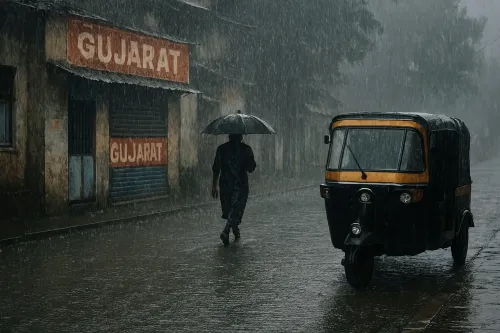
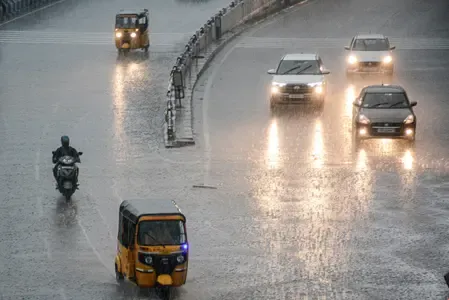
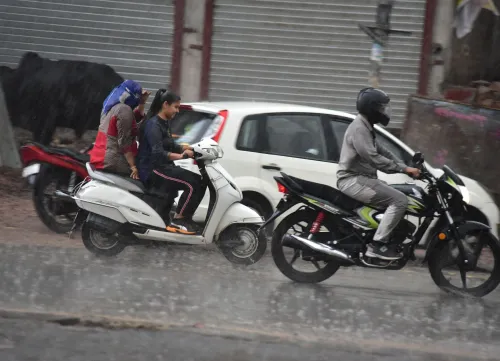
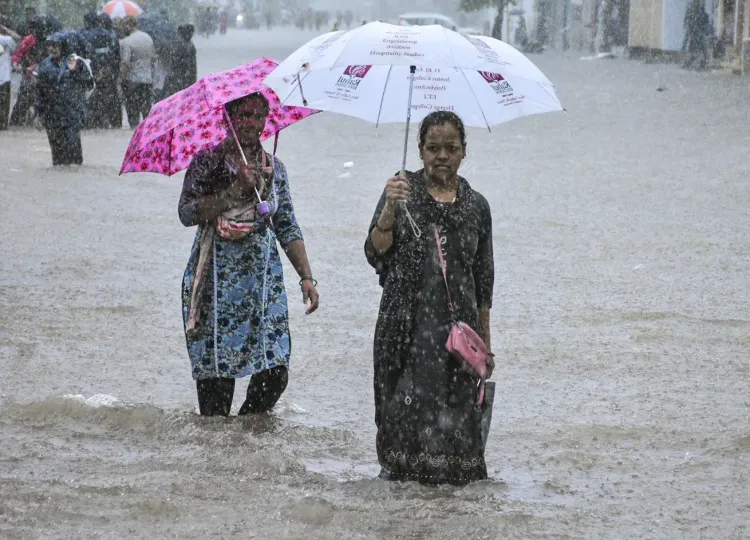
Gujarat monsoon: Vapi logs 8+ inches as 225 talukas see rainfall in 24 hours
Synopsis
Gujarat's monsoon arrived with force across 225 talukas on 7 July, with Vapi logging over 8 inches in a single day. The Sardar Sarovar Dam is already at 65% capacity, 11 dams are on High Alert, and Kutch — at just 1.92% of its seasonal average — remains a study in how uneven Gujarat's rainfall can be.
Key Takeaways
225 talukas across 34 districts received light to heavy rainfall in the 24 hours ending 7 July .
Vapi taluka , Valsad district , recorded the highest rainfall at more than 8 inches ; Pardi and Umargam each crossed 6 inches .
Gujarat's cumulative seasonal rainfall stands at 20.44% of the long-term average; Kutch trails at just 1.92% .
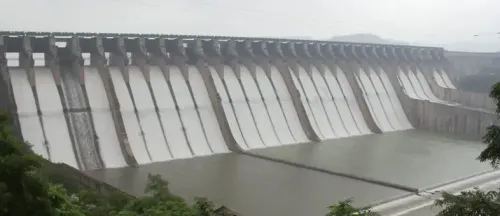
Sardar Sarovar Dam is at 65% capacity (2.17 lakh MCFT); 206 other reservoirs collectively at 40.01% .
11 dams placed on High Alert, 4 on Alert, 7 on Warning by the SEOC.
1,528 people evacuated and 134 rescued since 1 June ; 36 NDRF/SDRF teams remain deployed.
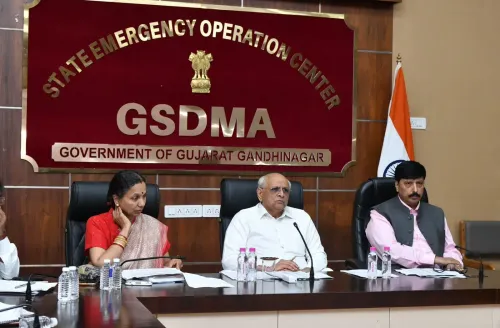
Gujarat recorded widespread monsoon rainfall over the 24 hours ending Tuesday morning, 7 July, with South Gujarat and parts of Saurashtra bearing the heaviest showers. Authorities have maintained high preparedness across the state, with disaster response teams deployed and reservoirs filling steadily, according to the State Emergency Operation Centre (SEOC) in Gandhinagar.
Rainfall Distribution Across the State
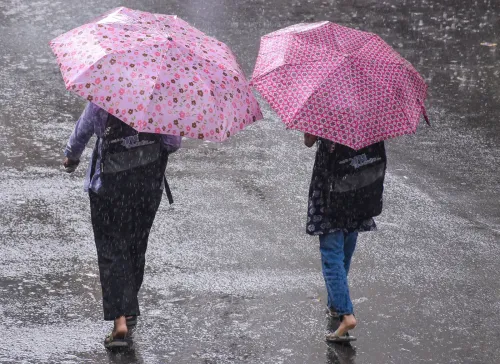
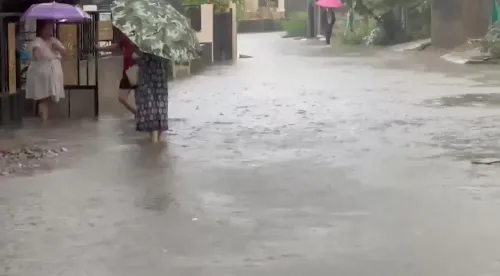
Light to heavy rainfall was recorded across 225 talukas in 34 districts during the period. Vapi taluka in Valsad district logged the state's highest single-location rainfall at more than 8 inches. Neighbouring Pardi and Umargam talukas in the same district each recorded more than 6 inches.
Kamrej taluka in Surat district and Ghogha taluka in Bhavnagar district also crossed the 6-inch mark. The pattern reflects a concentration of intense rainfall along the southern coastal belt and parts of the Saurashtra peninsula.
Seasonal Rainfall Status
Gujarat's cumulative seasonal rainfall stood at 20.44 per cent of the long-term average as of 6 am on 7 July. Saurashtra leads all regions with 26.79 per cent of its seasonal average recorded so far, followed by South Gujarat at 24.98 per cent. North and Central Gujarat have received 15.20 per cent, while North Gujarat stands at 11.99 per cent. Kutch has recorded the lowest rainfall this season at just 1.92 per cent — a stark contrast that underscores the uneven spatial distribution typical of Gujarat's monsoon.
Reservoir Levels and Dam Alerts
The rainfall surge has translated into improved water storage. The Sardar Sarovar (Narmada) Dam held 2.17 lakh million cubic feet (MCFT) of water as of 8 am on 7 July, equivalent to approximately 65 per cent of its total storage capacity. The state's remaining 206 reservoirs were collectively filled to 40.01 per cent of combined capacity.
The SEOC has placed 11 dams on High Alert, 4 on Alert, and 7 on Warning status in line with standard reservoir monitoring protocols — a sign that inflows are being watched closely to prevent uncontrolled releases downstream.
Rescue and Relief Operations
Since the monsoon's onset on 1 June, state authorities have shifted 1,528 people to safer locations and rescued 134 individuals from rain-related situations. A total of 36 teams of the National Disaster Response Force (NDRF) and State Disaster Response Force (SDRF) are deployed across districts to respond to any emergencies.
With Kutch still significantly below average and the season well underway, all eyes remain on whether the monsoon's westward advance will bring relief to the rain-shadow zones in the coming weeks.
Point of View
Teams deployed, evacuations managed — but the Kutch figure at 1.92% of seasonal average is the one that deserves attention. Gujarat's agricultural and pastoral economy in the west is acutely rainfall-dependent, and a prolonged deficit there will not be offset by Vapi's surplus. The dam alert cascade — 11 on High Alert within the first week of July — also signals that the state's reservoir management infrastructure is already under pressure, and the peak of the season is still weeks away.
NationPress
6 Oct 2026
Frequently Asked Questions
Which area in Gujarat received the highest rainfall on 7 July 2025?
Vapi taluka in Valsad district recorded the highest rainfall in Gujarat, logging more than 8 inches in the 24-hour period ending Tuesday morning, 7 July. Pardi and Umargam in the same district each received more than 6 inches.
What is the current water level at the Sardar Sarovar Dam?
As of 8 am on 7 July, the Sardar Sarovar (Narmada) Dam held 2.17 lakh MCFT of water, equivalent to approximately 65% of its total storage capacity. The state's 206 other reservoirs were collectively at 40.01% of combined capacity.
How many dams in Gujarat are on alert due to monsoon rains?
According to the SEOC, 11 dams have been placed on High Alert, 4 on Alert, and 7 on Warning status as of 7 July, in line with standard reservoir monitoring protocols triggered by rising inflows.
How many people have been evacuated or rescued in Gujarat this monsoon season?
Since the monsoon began on 1 June, state authorities have shifted 1,528 people to safer locations and rescued 134 individuals from rain-related situations. Thirty-six NDRF and SDRF teams remain deployed across districts.
Which region of Gujarat has received the least rainfall this monsoon?
Kutch has recorded the lowest seasonal rainfall in Gujarat at just 1.92% of the long-term average as of 7 July — significantly below Saurashtra, which leads all regions at 26.79% of its seasonal average.