Kerala CM Vijayan Defends Government Achievements, Rejects UDF’s Communal Alliances
Synopsis
As Kerala gears up for the April 9 Assembly elections, Chief Minister Pinarayi Vijayan passionately defends his government's decade-long achievements, emphasizing infrastructure and social sector growth while criticizing the UDF's alliances with communal forces.
Key Takeaways
Infrastructure Development: Key to LDF's success.
Social Sector Revival: Major investments improving education and health.
Political Landscape: UDF's alleged alliances with communal forces criticized.
Vision 2031: Strategic goals set for future development.
Pandemic Management: Kerala's effective handling of Covid-19 praised globally.
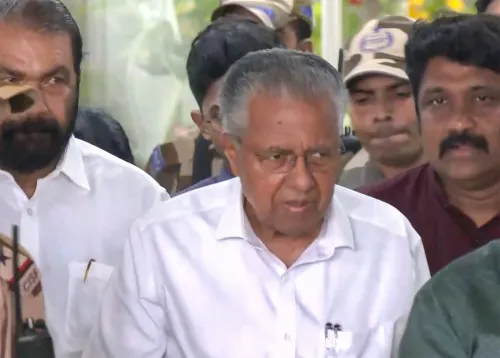
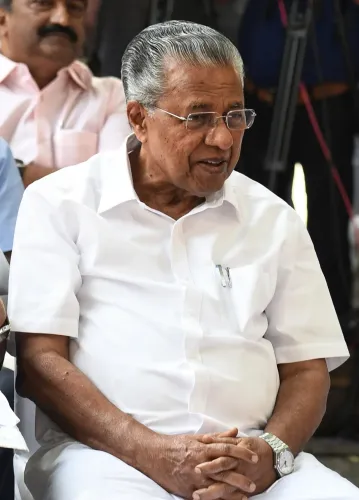
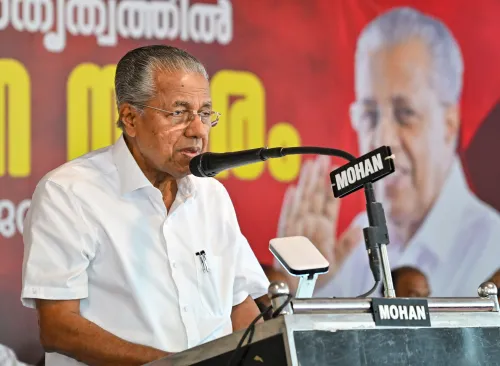
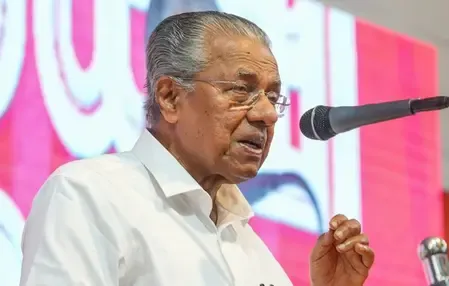
Thiruvananthapuram, March 21 (NationPress) As Kerala prepares for the Assembly elections on April 9, Chief Minister Pinarayi Vijayan has strongly defended his administration's achievements over the past decade. He emphasizes infrastructure development, revitalization of the social sector, and strategic planning as fundamental to the Left's quest for a third consecutive term.
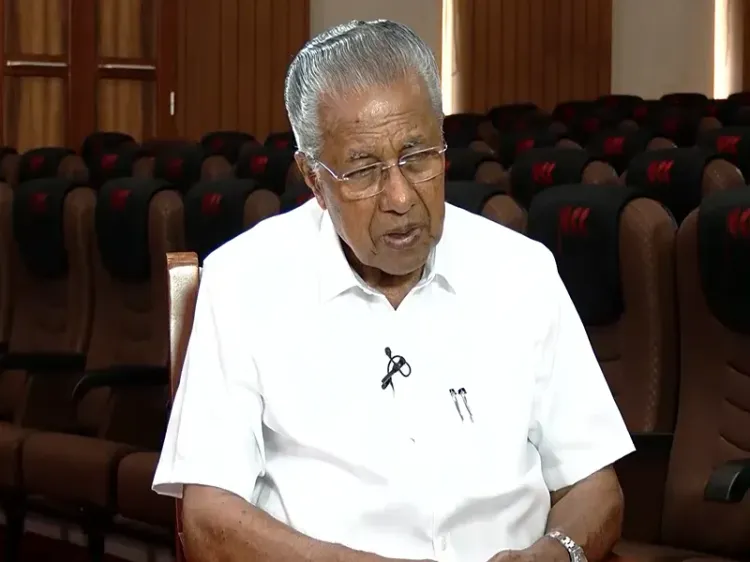
In a candid interview with IANS, Vijayan reflected on his government’s progress since 2016, stating that the Left Democratic Front (LDF) took office amid widespread dissatisfaction but quickly prioritized infrastructure as a key driver of growth.
He claimed that the Congress-led UDF has been collaborating with communal forces, criticizing defectors from the Left for being unwelcomed by the electorate.
"The UDF has, on numerous occasions, allied with communal elements. Their cooperation with the BJP during local body elections was evident, reflecting their compromise for a handful of votes. The LDF is not willing to engage in such tactics," asserted Chief Minister Vijayan.
“Those who abandoned the party (CPI-M) have betrayed us and the populace. They will not find acceptance among the people,” he stated.
Regarding the notable Sabarimala issue, Vijayan commented: “The Sabarimala topic did not appear to significantly influence the local body elections, even in Pandalam. The outcomes in Pandalam were positive, and the government made efforts to meet the people's expectations. Each local body faces unique governance challenges, and various issues likely shaped voting behavior in distinct regions.”
Highlighting the advancements in national highways, some of which were recently inaugurated by the Prime Minister, he argued that the evident enhancements in connectivity illustrate the state’s trajectory of development.
The Chief Minister asserted that crucial sectors, such as health, have been systematically improved after facing significant disarray.
In education, he noted a remarkable turnaround.
Government schools that were on the brink of closure, with nearly five lakh students dropping out, have been rejuvenated through an investment of Rs 5,000 crore, resulting in the establishment of 50,000 smart classrooms, upgraded labs, and improved teacher training.
He pointed to recognition from NITI Aayog as a testament to these initiatives.
On the topic of infrastructure financing, Vijayan attributed the resurgence of the Kerala Infrastructure Investment Fund Board as a pivotal factor.
From an initial investment plan of Rs 50,000 crore in 2016, the total investment increased to Rs 62,000 crore by 2021 and has now surpassed Rs 1.10 lakh crore.
Significant projects include the Hill Highway and Coastal Highway, which together have a budget of Rs 10,000 crore, in addition to an ambitious bridges initiative that has already exceeded its initial target of 100, surpassing 200 structures.
Looking forward, Vijayan presented "Vision 2031," developed in consultation with experts, outlining sector-specific development objectives for the next five years.
He emphasized that Kerala's management of the pandemic has garnered global recognition, asserting that the state effectively controlled Covid-19.
He also underscored Kerala's relatively low infant mortality rate in comparison to international standards.
Higher education and research remain another cornerstone of the strategy.
With 18 of India's top 100 colleges situated in Kerala, the government is now advocating for 13 centres of excellence and expanding skill development programs to prepare youth for global competitiveness while attracting multinational companies to invest in the region.
Politically, Vijayan downplayed the Bharatiya Janata Party's prospects in Kerala, asserting that the state would not allow its entry, predicting it would fail to secure even a single seat.
Framing the upcoming phase as a continuation of a successful model, Vijayan stated that a "New Kerala" by 2031 is not merely aspirational rhetoric but a feasible outcome rooted in a decade of effective governance.
Point of View
Chief Minister Pinarayi Vijayan's remarks highlight the ongoing tensions between the ruling Left Democratic Front and the opposition UDF. His emphasis on infrastructure and social development positions the LDF as a party committed to progress amid accusations of communal alliances against the UDF. This article illustrates the complexities of Kerala's political landscape as it approaches the elections.
NationPress
20 Sept 2026
Frequently Asked Questions
What is the significance of Kerala's upcoming Assembly elections?
The Assembly elections on April 9 are crucial for determining the future governance of Kerala, with incumbent Chief Minister Pinarayi Vijayan seeking a third consecutive term.
What are the main points of Chief Minister Vijayan's defense?
Vijayan emphasizes infrastructure development, social sector improvements, and strategic planning as key achievements of his government over the past decade.
How does Vijayan view the UDF's strategies?
Vijayan accuses the UDF of collaborating with communal forces and suggests that defectors from the Left will not be accepted by the public.
What initiatives have been taken in education under Vijayan's government?
Significant investment has been made in government schools, creating smart classrooms and enhancing teacher training, resulting in a revival of student enrollment.
What is 'Vision 2031'?
'Vision 2031' is a roadmap developed by Vijayan's government outlining sector-specific development goals for the next five years, aiming for a transformative 'New Kerala'.