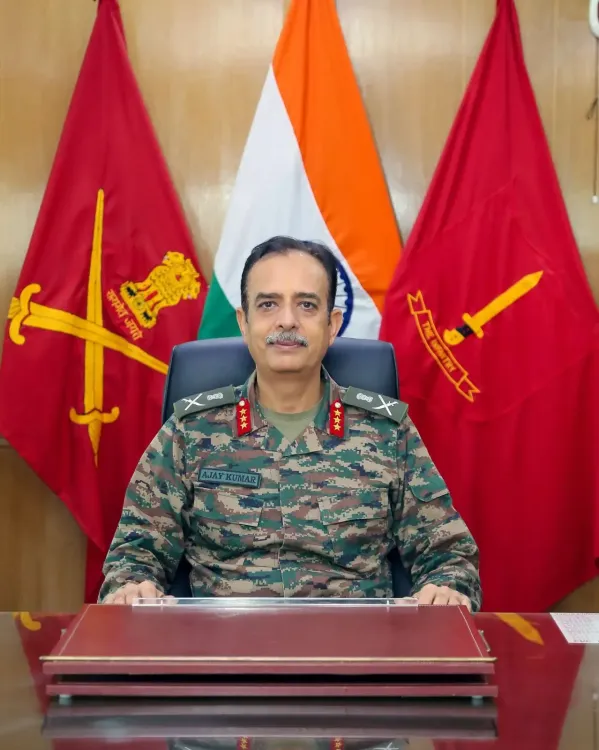
Are Wars Fought with Borrowed Weapons? Insights from DG Infantry Lt Gen Ajay Kumar
Synopsis
Discover how the Indian Infantry is transforming into a tech-savvy combat force under Lt Gen Ajay Kumar's leadership. As the nation aims for self-reliance, learn about the integration of advanced technologies and what it means for future warfare.
Key Takeaways
Transformation of Indian Infantry into a tech-driven force.
Focus on self-reliance in defense capabilities.
Integration of advanced technologies such as drones and AI.
Commemoration of Shaurya Diwas to honor Infantry history.
Shift towards non-contact warfare methodologies.
New Delhi, Oct 22 (NationPress) The Indian Infantry is swiftly evolving into a technology-driven, Atmanirbhar, and nimble combat force, in line with the vision for Viksit Bharat by 2047, stated Director General Infantry Lt Gen Ajay Kumar during a recent informal media briefing. He emphasized that “wars are not fought with borrowed weapons.”
Reiterating the Infantry's crucial role in the Indian Army, Lt Gen Kumar noted that the Army is experiencing a significant transformation under the Decade of Transformation initiative, which emphasizes modernisation, self-reliance, and excellence in human resources.
“The Infantry of the future will be technologically advanced, modular, and versatile — equipped to fight and prevail in multi-domain battlefields,” the DG asserted.
As he commemorated Shaurya Diwas — previously known as Infantry Day — on October 27, the DG reflected on the historic 1947 air landing of the 1 SIKH Regiment in Srinagar, which played a pivotal role in protecting Jammu and Kashmir.
“Shaurya Diwas symbolizes the courage, sacrifice, and unwavering spirit of the Infantry, linking our rich history with present-day acknowledgment,” he remarked.
Discussing insights from Operation Sindoor, Lt Gen Kumar highlighted the necessity for precision, joint operations, and a technology-centric approach to warfare.
He also mentioned the integration of advanced Intelligence, Surveillance, and Reconnaissance (ISR) capabilities in the context of Operation Sindoor.
He further emphasized the shift towards non-contact, technology-driven warfare — where innovations such as drones, AI systems, and precision weaponry are reshaping the battlefield.
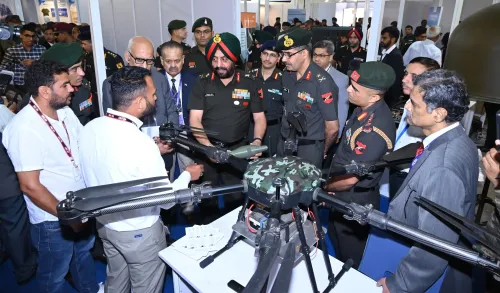
Dedicated Drone Platoons are now incorporated into each Infantry battalion, improving surveillance capabilities and enabling FPV-based precision strikes.
The newly established Bhairav Battalions are also operational for high-mobility, high-intensity tactical missions, effectively bridging the gap between Infantry and Special Forces.
This transformation is founded on six key elements — lethality, mobility, communication, battlefield transparency, survivability, and training — all driven by indigenous innovations.
From advanced 7.62 mm rifles and cutting-edge anti-tank systems to SDR-based encrypted communications and AI-enabled frameworks, Infantry units are adopting next-generation warfare technologies.
Lt Gen Kumar underscored that India’s Atmanirbhar defense ecosystem, bolstered by collaborations with industry, DRDO, and academic institutions, is guaranteeing that “wars are not fought with borrowed weapons.”
Point of View
It is imperative to recognize the commitment of the Indian Army towards self-reliance and modernization. Lt Gen Ajay Kumar's insights reflect a strategic shift that is essential for national security, ensuring that India stands strong and prepared in an ever-evolving global landscape. The emphasis on technology and indigenous capabilities not only strengthens our military but also fosters national pride and resilience.
NationPress
27 Sept 2026
Frequently Asked Questions
What is the vision for the Indian Infantry by 2047?
The vision is to evolve into a tech-driven, Atmanirbhar, and agile combat force aligned with the concept of Viksit Bharat.
What does 'Shaurya Diwas' represent?
'Shaurya Diwas' symbolizes the valor, sacrifice, and spirit of the Infantry, commemorating its historical contributions.
How is technology integrated into the Infantry?
The Infantry is incorporating advanced technologies such as drones, AI systems, and ISR capabilities to enhance operational effectiveness.
What are the six pillars of transformation for the Infantry?
The six pillars are lethality, mobility, communication, battlefield transparency, survivability, and training.
Why is self-reliance important for the Indian military?
Self-reliance ensures that India can independently meet its defense needs and maintain operational readiness without relying on foreign sources.