India's Ambassador Kwatra champions 'AI for All' at US-India Tech Forum

Synopsis
India's Ambassador Vinay Kwatra used the US-India AI and Emerging Technology Forum to reframe the AI debate — arguing that intelligence itself must be democratised, not just developed. With a New Delhi Declaration already in place and a joint India-US cooperative framework potentially on the way, the bilateral tech agenda is moving from aspiration to architecture.
Key Takeaways
Ambassador Vinay Kwatra addressed the US-India AI and Emerging Technology Forum in Washington on 9 May 2025 .
India's AI vision, framed as "AI for all" , calls for the democratisation of AI outcomes — wider access to AI's benefits for people globally.
The recently held AI summit in India was attended by more than 20 heads of state and government and produced the New Delhi Declaration .
Kwatra flagged a potential joint India-US cooperative framework on AI and emerging technologies.
Future cooperation areas include quantum computing , quantum communication , and nuclear fusion .
India is focused on safe, secure and trusted AI , with security against malicious attacks cited as a standing priority.
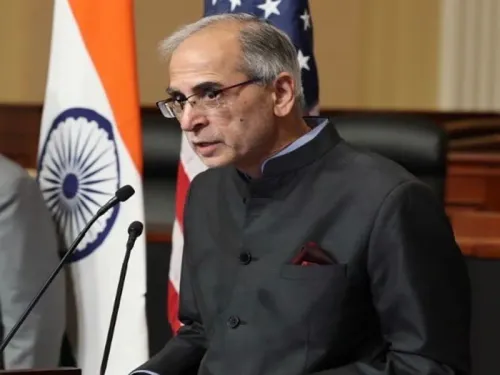
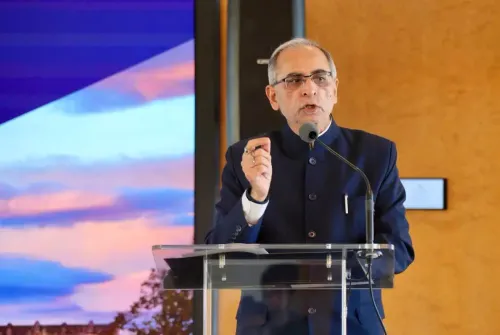
Indian Ambassador to the United States Vinay Kwatra on 9 May called for the democratisation of artificial intelligence as a cornerstone of expanding India-US technology cooperation, speaking at the US-India AI and Emerging Technology Forum in Washington. Kwatra outlined how India's approach — encapsulated in Prime Minister Narendra Modi's "AI for all" vision — aims to ensure that the benefits of AI are accessible to people globally, not just to a technological elite.
The Case for Democratising AI
Kwatra drew on the recently concluded AI summit in India, which brought together more than 20 heads of state and government, global research communities, scientists, and industry leaders. "One of the driving thrust…was eventually the democratisation of AI," he said at the forum.
He elaborated on the underlying principle: "If the end product of this technology is intelligence… the diffusion of that intelligence has to be democratised for the benefit of people." This vision, he noted, was formally captured in the New Delhi Declaration that emerged from the summit, and reflects Modi's stated approach of "AI for all in many ways."
Growing India-US Technology Partnership
Kwatra pointed to deepening bilateral cooperation as a structural feature of the relationship, not merely a diplomatic aspiration. "We could also sign a joint cooperative framework between India and the US in this space," he said, referencing the momentum built across technology, innovation, and manufacturing sectors.
He described the partnership as one that is already reshaping supply chains and driving economic activity across both nations. Notably, he cited semiconductor investment as a concrete example linking capital, technology, and talent — a domain where India and the US have moved swiftly in recent years.
AI as a Hardware and Infrastructure Story
Kwatra challenged the common framing of AI as a purely software-driven phenomenon. "It's a hardware story… whether it's power, whether it's data centers, whether it's critical minerals," he said. This framing underscores why India-US cooperation on semiconductors and critical mineral supply chains is central to the AI agenda, not peripheral to it.
He also acknowledged the pace of change: "Artificial intelligence is both current and naturally emerging at a scale and speed which is very difficult… to fathom."
Future Frontiers: Quantum and Nuclear Fusion
Looking ahead, Kwatra highlighted quantum computing, quantum communication, and nuclear fusion as priority areas for future bilateral collaboration. He also stressed that university-to-university research partnerships remain a key driver of long-term innovation between the two countries.
Governance, Security, and Safe AI
On the governance front, Kwatra said India is committed to building "safe, secure and trusted AI" systems. "Security… from any kind of malicious attack is always a priority," he said, adding that the focus extends to protecting critical infrastructure and maintaining social harmony.
India and the United States have been actively working to align standards on trusted and secure AI systems, even as they scale deployment across industries. With a joint cooperative framework potentially on the horizon, the bilateral AI agenda appears set to move from vision to verifiable commitments in the months ahead.
Point of View
But as a norm-setter shaping how AI governance should be structured globally. The New Delhi Declaration and the prospect of a joint India-US cooperative framework suggest India is moving to institutionalise its AI diplomacy at a moment when the global rulebook is still being written. What remains to be seen is whether the 'AI for all' vision translates into concrete mechanisms — open-access compute, shared datasets, or interoperable standards — or stays at the level of aspirational declaration. India's leverage is real, but so is the gap between summit communiqués and ground-level deployment.
NationPress
12 May 2026
Frequently Asked Questions
What did Indian Ambassador Vinay Kwatra say at the US-India AI Forum?
Ambassador Vinay Kwatra called for the democratisation of AI, arguing that the benefits of artificial intelligence must be made accessible to all people, not just a technological elite. He outlined India's 'AI for all' vision and pointed to the New Delhi Declaration as its formal expression.
What is the New Delhi Declaration on AI?
The New Delhi Declaration is a document that emerged from India's recent AI summit, which was attended by more than 20 heads of state and government, global scientists, and industry leaders. It captures India's vision for a democratised, inclusive approach to artificial intelligence.
What is the proposed India-US joint cooperative framework on AI?
Ambassador Kwatra referenced the possibility of signing a joint cooperative framework between India and the United States on AI and emerging technologies. It would formalise and expand existing bilateral cooperation spanning technology, innovation, manufacturing, and supply chains.
Why does India treat AI as a hardware story?
Kwatra argued that AI is not just a software challenge — it depends on physical infrastructure including data centres, power systems, and critical minerals. This is why semiconductor investment and critical mineral supply chains are central to the India-US AI partnership.
What are the future areas of India-US technology cooperation?
Beyond AI, Kwatra highlighted quantum computing, quantum communication, and nuclear fusion as priority domains for future India-US collaboration, alongside continued university research partnerships.