Kim Jong-un reaffirms DPRK-Russia alliance in Victory Day message to Putin
Synopsis
A year after signing a sweeping strategic treaty, Kim Jong-un has used Russia's Victory Day to publicly reaffirm the DPRK's alliance-like bond with Moscow — a relationship that has already sent 15,000 North Korean troops into the Ukraine war and shows no sign of cooling.
Key Takeaways
Kim Jong-un sent a Victory Day congratulatory message to Vladimir Putin on 9 May 2025 , reaffirming the DPRK-Russia strategic partnership.
Kim pledged to "faithfully fulfill" obligations under the inter-state treaty signed in June 2024 .
Pyongyang reportedly deployed around 15,000 combat troops to support Russia in its war against Ukraine following the treaty.
Victory Day marks the Soviet Union's defeat of Nazi Germany in 1945 , with the USSR losing approximately 25 million citizens in the conflict.
The deepening alliance poses growing strategic concerns for Seoul , Washington , and NATO allies.
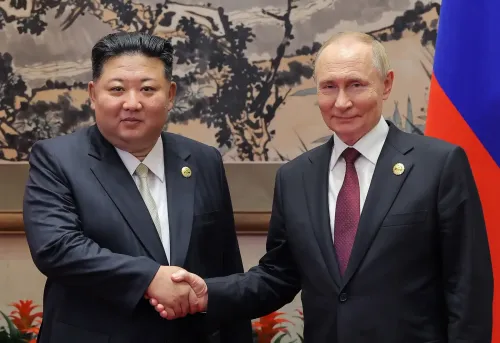
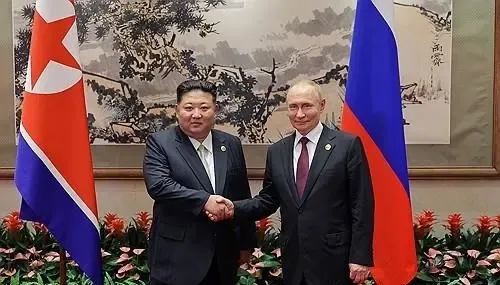
North Korean leader Kim Jong-un sent a congratulatory message to Russian President Vladimir Putin on 9 May 2025, reaffirming Pyongyang's commitment to deepening its strategic partnership with Moscow on the occasion of Russia's 81st Victory Day, according to the North's state media Korean Central News Agency (KCNA).
What Kim Said
Kim extended his "sincerest congratulations" to Putin and expressed satisfaction with what he described as a "brilliant history of independence, dignity, peace and prosperity" shared by the two nations. In his message, Kim used the North's official name — the Democratic People's Republic of Korea (DPRK) — to restate Pyongyang's formal position.
"Reaffirming the stand of the government of the Democratic People's Republic of Korea to give top priority to and steadily develop the alliance-like comprehensive strategic partnership between our two countries, I affirm once again that we will always faithfully fulfill the obligations under the inter-state treaty between the DPRK and Russia," Kim said.
Background: The 2024 Treaty and Military Cooperation
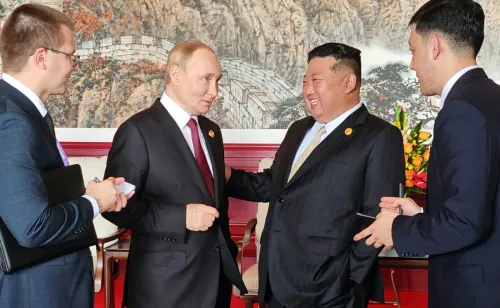
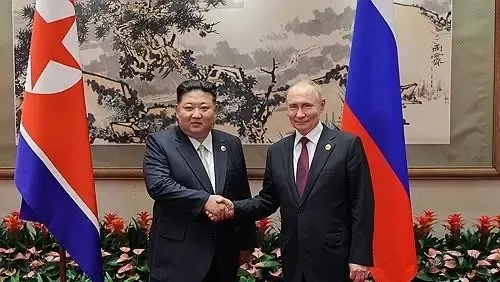
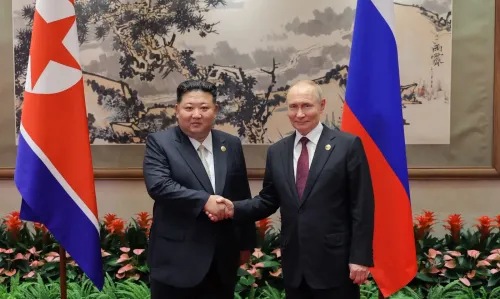
The message comes roughly a year after Kim and Putin signed a "comprehensive strategic partnership" treaty in June 2024, which effectively revived the two countries' Cold War-era military alliance. Following that signing, Pyongyang reportedly deployed around 15,000 combat troops to support Russia in its ongoing war against Ukraine, according to reports. Bilateral cooperation has since deepened across multiple fronts, underscoring a relationship that has accelerated sharply since Russia's full-scale invasion of Ukraine in 2022.
Significance of Victory Day for Russia
Victory Day, observed every year on 9 May, is one of Russia's most significant national holidays, commemorating Germany's surrender to the Soviet Union in 1945 and marking the end of what Russia calls the Great Patriotic War. The Soviet Union lost an estimated 25 million citizens over the four years of fighting. The holiday, while deeply embedded in Russian national identity, only became a major public celebration from 1965 onwards, and the tradition of military parades only began in 1995.
What This Signals
Kim's message is the latest in a series of high-profile gestures reinforcing the DPRK-Russia axis at a time when both nations face significant international pressure — North Korea over its nuclear programme and Russia over its war in Ukraine. Analysts have noted that the partnership offers both countries strategic insulation: Pyongyang gains economic relief and military technology access, while Moscow secures ammunition and manpower. As the war in Ukraine continues with no resolution in sight, the depth of this alignment is expected to remain a central concern for Seoul, Washington, and NATO capitals.
Point of View
000 North Korean troops is not a symbolic gesture; it is battlefield integration. What mainstream coverage often underplays is the transactional logic on Pyongyang's side: in exchange for manpower and ammunition, North Korea is reportedly receiving satellite technology, energy support, and a degree of great-power legitimacy it has long craved. For Seoul, the concern is not just the Russia-Ukraine theatre but what military knowledge and hardware flow back to the Korean Peninsula. The DPRK-Russia treaty is now one of the most consequential bilateral arrangements in the current global order, and it is hardening, not softening.
NationPress
26 Sept 2026
Frequently Asked Questions
What did Kim Jong-un say in his Victory Day message to Putin?
Kim Jong-un extended his 'sincerest congratulations' to Vladimir Putin on Russia's 81st Victory Day on 9 May 2025, reaffirming the DPRK's commitment to giving 'top priority' to its alliance-like comprehensive strategic partnership with Russia and pledging to fulfill obligations under their inter-state treaty.
What is the DPRK-Russia comprehensive strategic partnership?
It is a treaty signed by Kim Jong-un and Vladimir Putin in June 2024 that effectively revived the two countries' Cold War-era military alliance. Following the signing, North Korea reportedly deployed around 15,000 combat troops to support Russia in its war against Ukraine.
Why is Russia's Victory Day significant?
Victory Day, observed on 9 May, commemorates Germany's surrender to the Soviet Union in 1945 and marks the end of what Russia calls the Great Patriotic War, in which the USSR lost an estimated 25 million citizens. It is one of Russia's most important national holidays.
Why does the Kim-Putin alliance matter for global security?
The deepening DPRK-Russia partnership is a growing concern for South Korea, the United States, and NATO allies, as it provides Russia with troops and munitions while potentially giving North Korea access to advanced military technology. Analysts warn that hardware and knowledge transfers could strengthen Pyongyang's capabilities on the Korean Peninsula.
How has North Korea supported Russia since the 2024 treaty?
Following the June 2024 treaty, Pyongyang reportedly deployed around 15,000 combat troops to support Russia's war effort in Ukraine, and the two countries have deepened bilateral cooperation across multiple fronts, according to reports.