What Are the New Guidelines Issued by WBBSE for Teachers and Students?
Synopsis
In a significant move, the West Bengal Board of Secondary Education has rolled out new guidelines for teachers and students in state-run schools. These regulations aim to enhance educational quality and discipline. Let's delve into the changes that are set to impact the academic environment in West Bengal's educational institutions.
Key Takeaways
Teachers cannot offer private tuition.
Use of smartphones in classrooms is banned.
Teachers must attend the prayer assembly by 10:40 AM .
Students must stay until 4:30 PM .
Headmasters must keep schools tobacco-free.
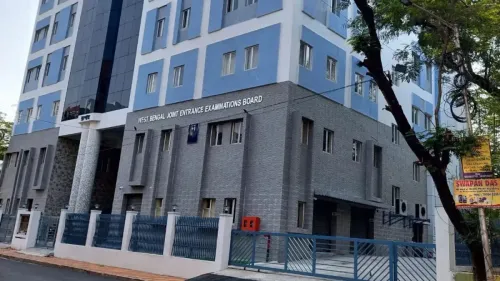
Kolkata, Jan 6 (NationPress) The West Bengal Board of Secondary Education (WBBSE) has released a set of guidelines aimed at both teachers and students in state-run and state-supported schools, according to sources from the Education Department.
Reports indicate that the WBBSE has distributed a new circular directed at teachers and school management. This document outlines several directives, although the specifics have not been publicly disclosed.
As per the sources, one of the key stipulations is that school teachers are prohibited from offering private tuition for personal profit.
Additionally, the use of smartphones within classrooms is strictly forbidden.
Complaints regarding teachers utilizing smartphones during class sessions have prompted the board to mandate that school administrations enforce supervision to prevent disruptions in teaching and learning due to mobile phone usage.
The guidelines emphasize that any actions that interfere with classroom instruction are not allowed.
Sources confirmed that the entry and exit times for teachers have been standardized. The regulations specify that all teachers must attend the school prayer assembly at 10:40 AM. Arriving late will be classified as 'tardy,' while any arrival after 11:15 AM will be deemed an absence for the day.
Moreover, students are not permitted to leave school before 4:30 PM, marking the conclusion of the school day. The headmaster is responsible for maintaining a tobacco-free environment on school grounds and promoting health awareness and hygiene among students.
The directives also require teachers to serve as 'nodal teachers' to ensure the effective implementation of state welfare programs, including Kanyashree and Sabuj Sathi, to benefit students.
According to the board, these measures are designed to enhance the quality of education and uphold discipline among both teachers and students in government-run and government-supported institutions.
Point of View
The recent guidelines from the West Bengal Board of Secondary Education reflect a proactive approach to enhancing the educational landscape. By prioritizing discipline and quality, the board is taking essential steps to ensure that both teachers and students are accountable and focused on learning. This initiative resonates with the broader goal of improving education standards nationwide.
NationPress
30 Sept 2026
Frequently Asked Questions
What are the main restrictions for teachers in the new guidelines?
Teachers are prohibited from conducting private tuition for personal gain and are not allowed to use smartphones in classrooms.
What time must teachers be present at school?
Teachers are required to be at the prayer assembly by 10:40 AM; arriving after 11:15 AM will be marked as an absence.
What are the guidelines regarding student departure times?
Students are not allowed to leave school before 4:30 PM.
Who is responsible for maintaining a tobacco-free environment at schools?
The headmaster is tasked with ensuring that school premises remain tobacco-free.
What role do teachers play in the state's welfare schemes?
Teachers are designated as 'nodal teachers' to facilitate the effective implementation of state government welfare schemes.