Is West Bengal Facing an Increase in Judicial Oversight?
Synopsis
West Bengal is grappling with a surge in judicial oversight as political interests reportedly overshadow crucial procedural matters. From public rallies to electoral discrepancies, the courts are increasingly involved, raising questions about governance and political dynamics in the state.
Key Takeaways
Judicial oversight is on the rise in West Bengal, addressing procedural and administrative issues.
Political disputes are increasingly being resolved through court interventions.
Recent cases highlight the judiciary's significant role in maintaining governance and public trust.
The Supreme Court has emphasized the need for transparency and fairness in electoral processes.
Challenges faced by political parties in organizing public events reflect deeper governance issues.
New Delhi, Feb 20 (NationPress) West Bengal is experiencing a rising demand for judicial oversight concerning procedural matters and administrative stagnation, where it is alleged that political agendas are overshadowing other essential aspects.
Recent instances highlighting this court involvement have emerged, spanning from law-and-order issues to the organization of rallies.
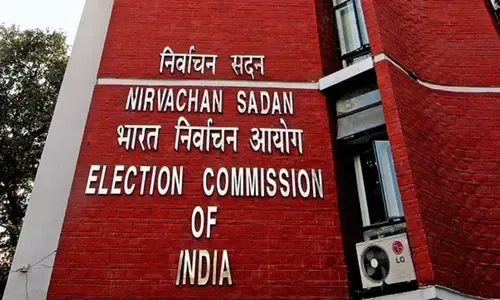
The recent decision to assign judicial officers to address claims from voters categorized under "logical discrepancy" in the Election Commission's ongoing Special Intensive Revision (SIR) process has been labeled as unprecedented in various reports.
In recent years, courts have frequently been approached for permissions regarding public assemblies, the legality of administrative transfers, and clarifications regarding police authority.
Reports and legal documents reveal a continuous influx of petitions requesting court orders to resolve disputes that could typically be addressed through administrative or political means.
In 2024, the West Bengal Bharatiya Janata Party (BJP) was compelled to approach the Calcutta High Court after the Kolkata Police denied its request to hold a meeting in November, which was expected to be addressed by Union Home Minister Amit Shah.
When a single judge bench permitted the BJP to conduct the meeting at Esplanade in Kolkata, the state government led by Trinamool Congress challenged the decision.
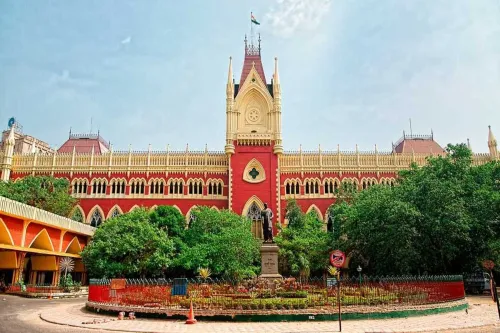
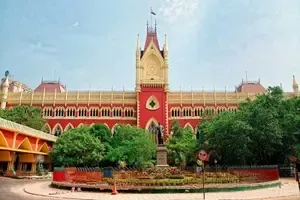
Noting that processions, rallies, and meetings are a customary aspect of life in West Bengal, particularly in Kolkata, a division bench upheld the single judge's ruling allowing the meeting.
Such occurrences frequently arise when BJP leaders seek permission for public gatherings, the party claims.
Court intervention has even been deemed necessary for matters concerning national security.
At the end of January, a division of the Calcutta High Court set a deadline of March 31 for the West Bengal government to transfer land already designated in nine districts to the Border Security Force (BSF) without delay, facilitating the installation of barbed wire fencing along the India-Bangladesh border.
This order was issued while addressing a petition from a retired Army officer.
The petitioner, Subrata Saha, had previously accused the state of neglecting to hand over the land for fencing, which he argued had fueled smuggling and infiltration activities at the border.
Furthermore, the heinous rape and murder case at Kolkata's R.G. Kar Medical College and Hospital was referred to the Central Bureau of Investigation (CBI) by the Calcutta High Court following concerns regarding the thoroughness, impartiality, and reliability of the local investigation.
Allegations of a broader conspiracy that the state police were ill-equipped to investigate were also raised.
In previous cases, the apex court has directed the transfer of complex, high-profile, or multi-state investigations to the CBI when public concerns about fairness arise.
In another case, the Calcutta High Court mandated the CBI to further investigate the West Bengal teacher recruitment scam, a significant educational fraud involving the illegal appointment of teachers and non-teaching staff via the State Level Selection Test (SLST) in 2016.
This scam was uncovered following the arrest of former State Education Minister Partha Chatterjee and several officials from the West Bengal School Service Commission in July 2022.
The ramifications of this incident have been profound on job seekers, educational policies, and the political landscape in West Bengal.
Numerous other incidents have seen courts inundated with petitions challenging executive orders, transfers, and police actions during political events.
Legal interventions have consistently been sought to annul arbitrary orders or to establish conditions for enforcement.
What began as disputes over officer deputation and procedural matters in the SIR process has escalated into a constitutional intervention.
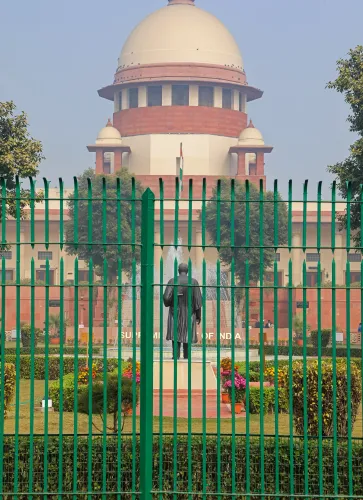
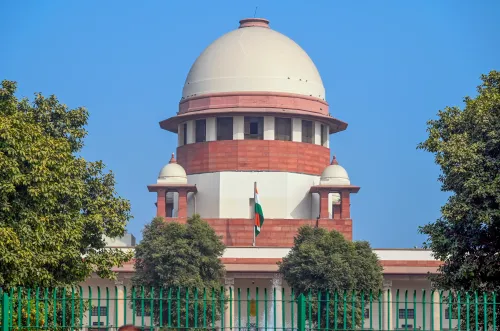
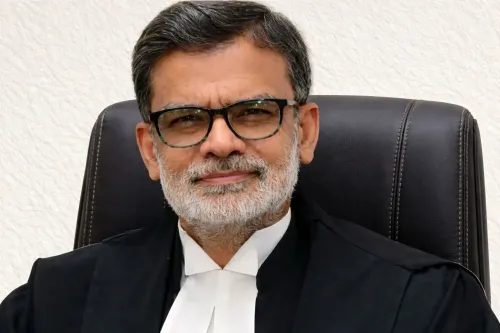
The Supreme Court, highlighting a "trust deficit" between the state government and the Election Commission, directed Justice Sujoy Paul, Chief Justice of the Calcutta High Court, to appoint serving and retired judicial officers to serve as Electoral Registration Officers for resolving claims and objections.
Point of View
The increasing reliance on judicial intervention in West Bengal highlights a worrying trend where political processes are perceived as insufficient. As the judiciary steps in to address administrative issues, it underscores the need for robust governance and the importance of maintaining public trust in political institutions.
NationPress
29 Sept 2026
Frequently Asked Questions
Why is there an increase in judicial involvement in West Bengal?
The rise in judicial involvement is attributed to perceived administrative inertia and political interests overshadowing procedural matters, prompting citizens and political parties to seek court intervention.
What recent cases illustrate this trend?
Recent cases include the BJP's legal action regarding public rally permissions and the Calcutta High Court's intervention in matters of national security and electoral discrepancies.
How has the judiciary responded to political disputes?
The judiciary has increasingly accepted petitions challenging administrative decisions, reflecting a growing role in resolving political disputes and maintaining fair governance.