Will the Wolf Supermoon Shine Brightly on Paush Purnima Today?
Synopsis
On January 3, the enchanting Wolf Supermoon coincides with Paush Purnima, offering a unique opportunity for stargazers and spiritual seekers alike. This celestial event promises not only a visual spectacle but also profound cultural significance, inviting everyone to witness its mesmerizing glow.
Key Takeaways
Paush Purnima is the first full moon of the Hindu lunar calendar in 2026.
The Wolf Supermoon is expected to be larger and brighter than usual.
A supermoon occurs when the moon is closest to Earth, known as perigee .
January's full moon is culturally significant and linked to folklore.
The event invites spiritual practices among devotees.
New Delhi, Jan 3 (NationPress) The Paush Purnima, marking the first full moon of the Hindu lunar calendar in 2026, will take place this Saturday. This date coincides with a stunning astronomical occurrence, the year's inaugural supermoon, famously known as the 'Wolf Supermoon'.
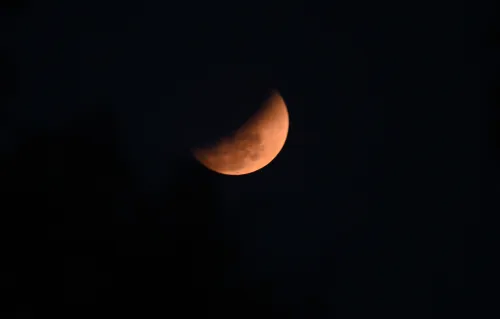
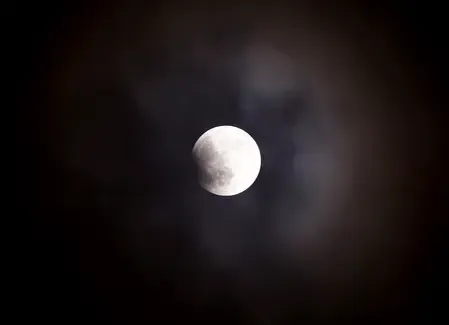
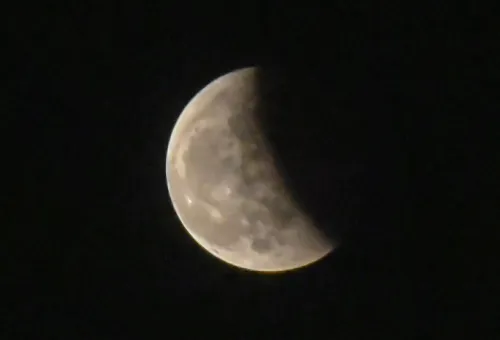
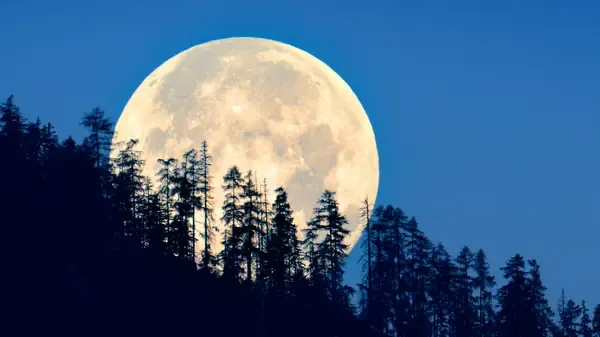
The radiant Wolf Supermoon is anticipated to light up the night sky, appearing larger and more luminous than an average full moon as it ascends in the constellation Gemini, directly opposite the sun. This marks the first full moon of 2026 and is the beginning of a trio of supermoons expected throughout the year.
A supermoon arises when a full moon aligns with perigee, the point in the moon's elliptical orbit when it is closest to Earth. The distance varies from approximately 356,000 km to 406,000 km, affecting its perceived size and brightness.
On January 3, the moon will be positioned about 362,000 km from Earth, making it look 6% to 14% larger and 13% to 30% brighter compared to when it is at apogee, its farthest distance from Earth.
Traditionally, January's full moon is termed the Wolf Moon, a name rooted in Northern Hemisphere folklore, associated with midwinter nights when wolves would howl near human settlements. While it carries significant cultural meaning, it is now widely recognized as the first full moon of the year.
As reported by Time and Date, the Wolf Moon is expected to rise around 3:32 PM IST on Saturday. Although the moon may appear fully lit for several nights, the peak illumination will occur on January 3.
A full moon takes place when the moon is positioned directly opposite the sun, allowing its entire face to be illuminated. This alignment happens approximately every 27 days. While casual observers might see a full moon on adjacent nights, the exact moment of full illumination signifies the official full moon.
Paush Purnima holds deep religious significance, with many devotees engaging in holy baths, prayer, fasting, and charitable deeds.
The Purnima Tithi began on the evening of January 2 and will conclude on the afternoon of January 3, making Saturday a significant day of observance. The Paush month is highly regarded for spiritual practices, especially during the winter.
Point of View
I recognize the blend of astronomical wonder and cultural significance that events like the Wolf Supermoon on Paush Purnima bring to our lives. They remind us of our connection with the universe and the traditions that shape our identities. While astronomy fascinates us, the spiritual practices surrounding these events encourage reflection and community engagement.
NationPress
29 Sept 2026
Frequently Asked Questions
What is a supermoon?
A supermoon occurs when a full moon coincides with perigee , the point in the moon's orbit when it is closest to Earth, making it appear larger and brighter.
When can we see the Wolf Supermoon?
The Wolf Supermoon is expected to rise at approximately 3:32 PM IST on January 3, 2026.
Why is it called the Wolf Moon?
January's full moon is traditionally known as the Wolf Moon , a name derived from folklore associated with wolves howling during midwinter nights.
What is the significance of Paush Purnima?
Paush Purnima holds religious importance in Hinduism, with devotees engaging in fasting, prayers, and charitable activities.
How often does a full moon occur?
A full moon occurs roughly every 27 days , but the precise moment of full illumination marks its official occurrence.