World Bank approves $105mn for Uzbekistan education, $700mn for Jordan reforms
Synopsis
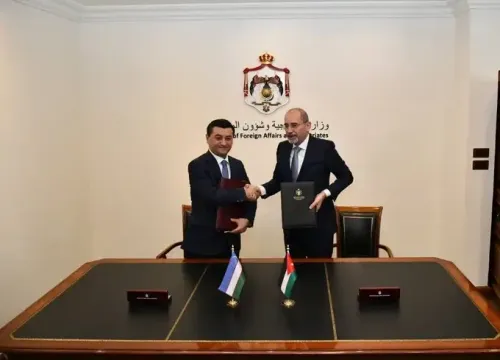
The World Bank has committed $805 million across two economies in a single sweep — $105 million to fix Uzbekistan's school deficit driven by a population boom requiring 300 new schools a year, and $700 million to help Jordan capitalise on its first sovereign credit upgrade in over two decades. The scale and simultaneity signal a sharpened multilateral bet on reform-minded governments in geopolitically sensitive regions.
Key Takeaways
The World Bank approved a $105 million package for Uzbekistan's primary education, including a $100 million IDA credit and a $5 million education grant.
Uzbekistan's school enrolment is projected to exceed 7.6 million students in 2026 , requiring approximately 300 new schools annually .
Around 2 million students in grades 1–4 and 50,000 teachers are expected to benefit; 27,000 new school seats will be added across six regions by 2030 .
The World Bank also approved a $700 million loan to Jordan under the second phase of its Growth and Competitiveness Development Policy Financing programme.
Jordan's real GDP grew 2.8% in 2025 ; the kingdom secured its first sovereign credit rating upgrade in over two decades in 2024 .
The World Bank has approved two major financing packages — a $105 million support package for Uzbekistan's primary education overhaul and a $700 million loan to bolster Jordan's private sector and economic competitiveness — signalling renewed multilateral focus on human capital and structural reform across two strategically positioned economies.
Uzbekistan: Transforming Primary Education by 2030
The $105 million package for Uzbekistan is structured to fund the country's 'Transforming Public Education for Economic Growth' programme, running through 2030. It comprises a $100 million concessional credit from the International Development Association (IDA) and a $5 million grant from the International Finance Facility for Education, according to the bank's press release.
According to World Bank data, school enrolment in Uzbekistan is expected to exceed 7.6 million students in 2026. Rapid population growth means the country must construct approximately 300 new schools annually to keep pace with demand — a scale of infrastructure deployment that underscores the urgency behind the programme.
Najy Benhassine, World Bank Country Director for Central Asia, noted that strengthening foundational skills in primary schools is central to building Uzbekistan's human capital base and advancing its long-term socio-economic development. Under the programme, roughly 50,000 teachers and school administrators are set to receive professional development, while 27,000 additional primary school seats will be created across six regions. Around 2 million students in grades 1 to 4 are expected to benefit directly.
Jordan: $700 Million Push for Private Investment and Green Transition
Separately, the World Bank on Wednesday approved a $700 million loan to Jordan under the second phase of the Jordan Growth and Competitiveness Development Policy Financing programme. The loan targets private investment stimulation, expanded financial access, job creation, and acceleration of the kingdom's green and digital transition.
The approval comes against a backdrop of regional turbulence. Despite a challenging environment, Jordan recorded real GDP growth of 2.8% in 2025, according to the bank's statement. Notably, the kingdom also secured its first sovereign credit rating upgrade in over two decades in 2024, reinforcing its stable macroeconomic outlook.
Why These Approvals Matter
Both packages reflect the World Bank's broader strategic pivot toward human capital investment and private-sector-led growth in developing economies. For Uzbekistan, the education push directly addresses a demographic challenge — a young, rapidly expanding population that risks outpacing the country's school infrastructure without sustained intervention. For Jordan, the financing provides a credibility anchor as the kingdom navigates an economically difficult region, building on its recent credit rating milestone to attract private capital.
This is the second phase of Jordan's competitiveness financing, suggesting a multi-year reform trajectory that the World Bank is co-authoring with Amman. Both programmes will be closely watched as benchmarks for multilateral development effectiveness in their respective regions.
Point of View
Its economic growth story stalls at the foundation. Jordan's case is more nuanced: the $700 million is as much a confidence signal to private investors as it is a reform instrument, leveraging the 2024 credit upgrade to crowd in capital the bank itself cannot provide. The real question for both programmes is execution fidelity — multilateral approvals routinely outpace on-ground delivery, and neither country has unlimited institutional bandwidth to absorb reform at the pace the financing implies.
NationPress
30 Sept 2026
Frequently Asked Questions
What is the World Bank's $105 million package for Uzbekistan?
It is a financing package to support Uzbekistan's 'Transforming Public Education for Economic Growth' programme through 2030, comprising a $100 million IDA concessional credit and a $5 million International Finance Facility for Education grant. The programme aims to benefit around 2 million primary school students and train 50,000 teachers and administrators.
Why does Uzbekistan need 300 new schools every year?
Rapid population growth is driving a surge in school-age children, pushing projected enrolment beyond 7.6 million students in 2026, according to World Bank data. Without building approximately 300 new schools annually, the country risks a significant shortfall in primary school capacity.
What will Jordan's $700 million World Bank loan be used for?
The loan, the second phase of the Jordan Growth and Competitiveness Development Policy Financing programme, is designed to stimulate private investment, expand financial access, create jobs, and accelerate Jordan's green and digital economic transition.
How has Jordan's economy been performing ahead of this loan?
Jordan recorded real GDP growth of 2.8% in 2025 despite a challenging regional environment, and secured its first sovereign credit rating upgrade in over two decades in 2024, according to the World Bank statement. These indicators underpin the kingdom's stable macroeconomic outlook.
Who oversees the World Bank's engagement with Central Asia?
Najy Benhassine serves as the World Bank Country Director for Central Asia. He stated that strengthening foundational skills in primary schools is central to building Uzbekistan's human capital base and long-term socio-economic development.