World Bank readies $100 billion crisis shield for Middle East fallout
Synopsis
The World Bank is putting up to $100 billion on the table — its biggest crisis mobilisation since the pandemic — as the Middle East conflict triggers what Chief Economist Indermit Gill calls the largest supply shock in over 50 years. With global growth slipping to a post-pandemic low of 2.5% and more than 30 developing nations already in triage mode, the scale of the response signals just how serious the economic contagion has become.
Key Takeaways
The World Bank Group is prepared to deploy up to $100 billion over 15 months to cushion developing economies from Middle East conflict fallout.
Between $50 billion and $60 billion , including $25 billion in pre-arranged financing, is immediately available.
More than 30 countries are already preparing rapid-response measures with the Bank.
The Bank cut its 2026 global growth forecast to 2.5 per cent — the weakest since the Covid-19 pandemic .
Developing economies are projected to grow just 3.6 per cent in 2026, down from 4.4 per cent in 2025.
Chief Economist Indermit Gill called the current supply shock the biggest in more than 50 years .
The World Bank Group announced on Thursday, 11 June that it stands ready to deploy up to $100 billion over the next 15 months to help developing nations absorb the economic shockwaves of the Middle East conflict, as surging energy prices and decelerating growth tighten the squeeze on vulnerable economies.
Immediate Funding Available
The multilateral lender said it is making available between $50 billion and $60 billion through existing instruments immediately, including $25 billion in pre-arranged financing, to support countries already facing economic stress. More than 30 countries are actively working with the institution to prepare rapid-response measures under the programme.
The funding is designed to shore up social safety nets, stabilise government finances, and provide working capital and liquidity support for businesses and farms hit by the crisis. Should conditions deteriorate further, the Bank said it can scale its commitment to the full $80–100 billion envelope.
What World Bank Leadership Said
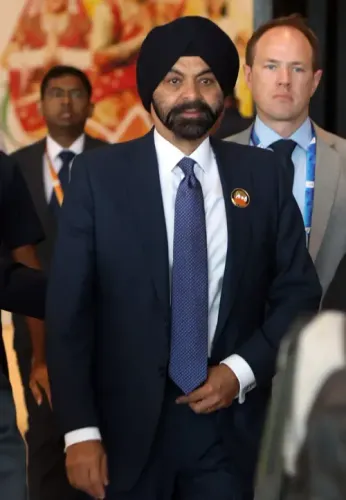
World Bank President Ajay Banga described the institution's immediate priority as helping countries absorb the shock without sacrificing long-term development goals. 'Developing countries have faced a series of challenges over the last decade,' Banga said. 'The impact differs by country, but the basic test is the same: protect people and preserve stability today, without giving up on growth and jobs tomorrow.'
He added that the Bank was 'providing liquidity where it is needed now' and stood ready with 'additional financing, guarantees, and private-sector solutions if pressures deepen.'
Weakest Global Growth Since the Pandemic
The announcement accompanied a downward revision in the Bank's global growth forecast for 2026 to just 2.5 per cent — the weakest pace since the Covid-19 pandemic — driven by higher energy prices, rising inflation, and tighter financial conditions linked to the conflict.
Chief Economist Indermit Gill described the current environment as 'the biggest supply shock in more than 50 years,' pointing to the surge in oil, gas, and fertiliser prices following the outbreak of hostilities in the Gulf. Developing economies are now projected to grow just 3.6 per cent this year, down sharply from 4.4 per cent in 2025, marking a post-pandemic low.
Who Bears the Brunt
Economies directly affected by the conflict are projected to face the sharpest slowdown, while energy-importing nations across Asia, Africa, and Latin America face mounting import bills and accelerating inflation. Many of these governments entered the current crisis with limited fiscal headroom, having spent years managing the fallout from the pandemic, successive inflation shocks, and geopolitical disruptions.
This is the context that makes the Bank's response framework significant: it is not merely emergency lending, but a layered strategy combining fresh credit, reprioritisation of existing projects, and contingent expansion of financing if conditions worsen further.
What Comes Next
The World Bank's crisis package is designed to keep essential services running and protect vulnerable populations while longer-term recovery strategies take shape. With elevated debt burdens already constraining policy options across the developing world, the institution's ability to scale rapidly to $100 billion could prove a critical buffer — provided the conflict does not widen beyond current projections.
Point of View
Contingent, and explicitly scalable. Yet the harder question is whether emergency liquidity can substitute for the fiscal space that developing nations have systematically lost over the past five years. Many of the 30-plus countries in the programme carry debt-to-GDP ratios that make fresh borrowing a double-edged sword. Gill's 'biggest supply shock in 50 years' framing is striking, but the Bank's own growth revisions suggest the institution may still be underpricing the downside. The real test of this package is speed of disbursement — in past crises, multilateral pledges have arrived after the acute phase had passed.
NationPress
19 Sept 2026
Frequently Asked Questions
What is the World Bank's $100 billion Middle East crisis package?
It is a crisis-response framework announced on 11 June under which the World Bank Group can deploy up to $100 billion over 15 months to help developing countries manage the economic fallout from the Middle East conflict. Between $50 billion and $60 billion, including $25 billion in pre-arranged financing, is immediately accessible.
Which countries will benefit from the World Bank crisis fund?
More than 30 developing countries are already working with the World Bank to prepare rapid-response measures. Energy-importing nations facing rising import bills, as well as economies directly affected by the conflict, are expected to be the primary beneficiaries.
Why has the World Bank cut its 2026 global growth forecast?
The World Bank revised its 2026 global growth forecast down to 2.5 per cent — the weakest since the Covid-19 pandemic — citing higher energy prices, rising inflation, and tighter financial conditions resulting from the Middle East conflict. Developing economies are projected to grow just 3.6 per cent, down from 4.4 per cent in 2025.
What did World Bank President Ajay Banga say about the crisis?
Banga said the Bank's immediate priority was helping countries absorb the economic shock while preserving long-term development goals. He stated the institution was 'providing liquidity where it is needed now' and stood ready with 'additional financing, guarantees, and private-sector solutions if pressures deepen.'
What does Chief Economist Indermit Gill mean by the biggest supply shock in 50 years?
Gill was referring to the sharp surge in oil, gas, and fertiliser prices triggered by the outbreak of conflict in the Gulf, which he described as the most severe supply-side disruption in over half a century. The shock is pushing up inflation and slowing growth simultaneously across both developed and developing economies.